
The National Bank of Ethiopia (NBE) has announced a significant change in its regulatory approach, focusing on the “shadow” financial sector to mitigate systemic risks and promote fair market competition. NBE Vice Governor Solomon Desta emphasized the importance of this initiative for national financial stability, revealing that Savings and Credit Cooperative Societies (SACCOs) and pension funds will soon be subject to rigorous central oversight.
For decades, Ethiopia’s financial landscape has been divided. On one side are commercial banks and microfinance institutions, which are closely regulated by the NBE. On the other are SACCOs and large pension funds, which handle billions of Birr but operate under fragmented regulations.
SACCOs, in particular, have transformed from small community-based entities into significant financial players. Traditionally governed by the Ethiopian Cooperative Commission rather than the NBE, these institutions have benefited from lower regulatory costs and lighter capital requirements compared to commercial banks.
Vice Governor Solomon highlighted that “some SACCOs are now competing with licensed and regulated financial institutions.” He cautioned that “if we want a stable and robust financial system, this regulatory gap can no longer persist.”
The Governor pointed out that a modern financial system cannot thrive while substantial capital accumulations remain unregulated. With some SACCOs now rivaling commercial banks in scale, he warned that a liquidity crisis in one could lead to a “contagion effect” throughout the economy. The reform will also extend NBE oversight to pension funds.
The NBE defines “Regulatory Arbitrage” as the practice where financial institutions exploit sectors with looser oversight to gain an unfair market advantage. In Ethiopia, this manifests when cooperatives offer inflated interest rates or loan terms that banks, constrained by strict NBE reserve and prudential requirements, cannot match.
The concern extends beyond unfair competition to encompass systemic stability. Without NBE oversight, these institutions lack the safety nets available to the banking sector, such as the Ethiopia Deposit Insurance Fund.
Narayana SL, Managing Director of Skydive Consulting, stated, “If a large SACCO or pension fund encounters a liquidity crisis, the repercussions for the overall economy could be catastrophic. You cannot implement a ‘Homegrown Economic Reform’ while leaving billions in assets unregulated.”
Currently, the NBE acts more as an owner than a supervisor, but it plans to introduce strict investment guidelines to safeguard the lifelong savings of millions of Ethiopians. This will prevent pension assets from being invested in high-risk projects or non-performing government debts.
While industry experts support this initiative, they caution that implementation may be challenging. Consolidating thousands of community-based associations will require a significant digital transformation and must be executed carefully to avoid undermining financial access for lower-income segments of society.
Although pension funds currently report to the NBE, the bank is seen more as a “passive owner” than an active supervisor. The Vice Governor made it clear that the era of “indirect” oversight has ended. The NBE is now advocating for pension funds to be treated as systemic financial institutions, requiring them to adhere to strict investment guidelines, actuarial supervision, and transparent reporting.
Integrating these institutions into the regulatory framework presents significant challenges. The experience of six large microfinance institutions that transitioned to commercial banks demonstrated that moving to a higher level of regulation demands considerable human resources and the development of digital infrastructure.
The National Bank is currently collaborating with the Ethiopian Cooperative Commission to study how to incorporate SACCOs into the regulatory framework without compromising their social utility. Additionally, recommendations are being made to policymakers to empower the National Bank of Ethiopia (NBE) to directly supervise pension funds.
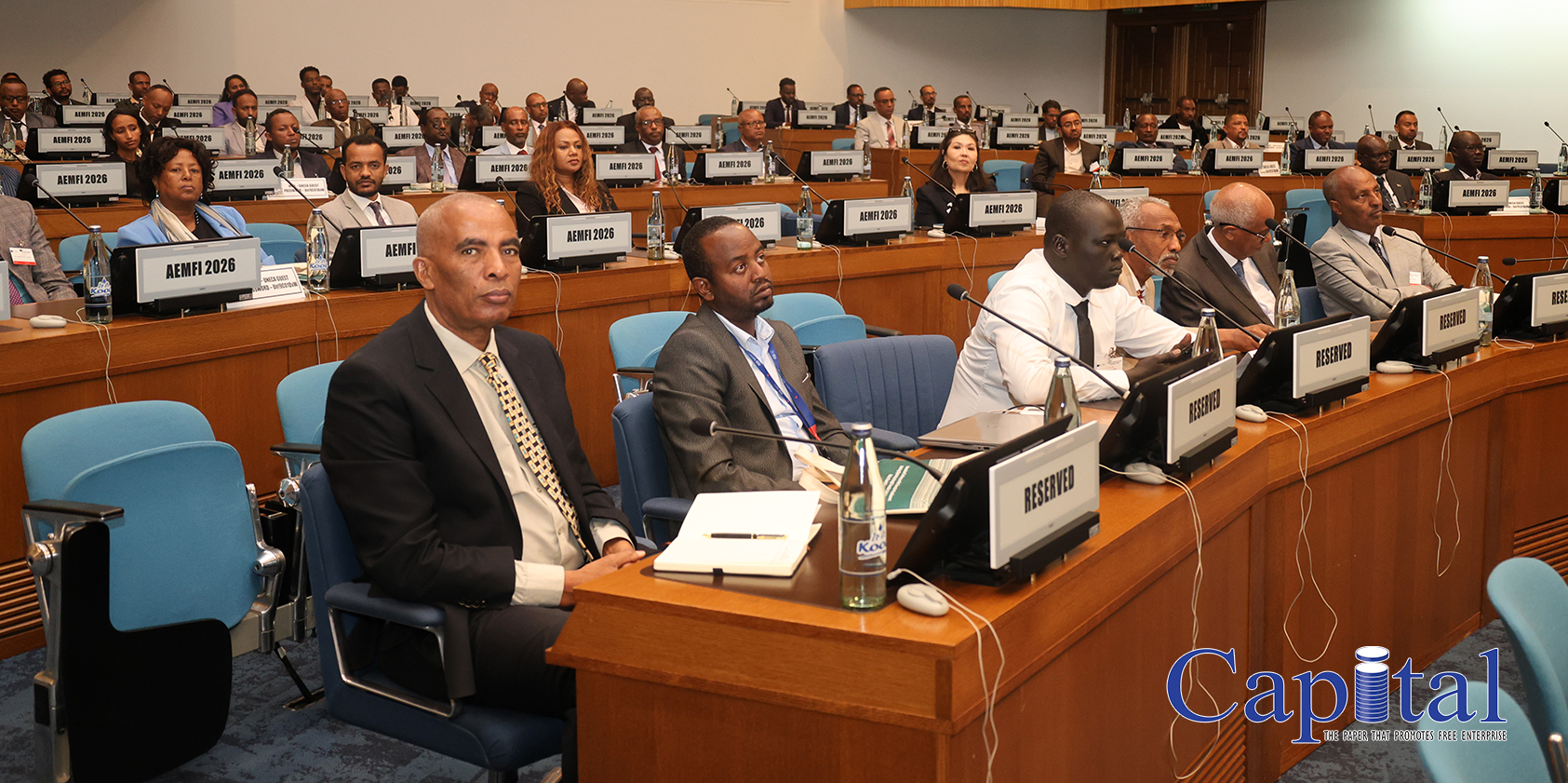
These developments were showcased at the 13th International Microfinance Conference in Addis Ababa, organized by the Association of Ethiopian Microfinance Institutions (AEMFI) in partnership with the European Union and the International Fund for Agricultural Development (IFAD).
Teshome Kebede, CEO of AEMFI, noted that while the microfinance sector has supported nearly 5 million citizens over the past 28 years, both global and national financial landscapes are shifting rapidly. “Customer needs from five or six years ago are vastly different from today and what will be expected in the future,” he stated, emphasizing that institutions can no longer rely on traditional, slow processes and must embrace customer-centric services.
The evolving financial sector in Ethiopia—marked by the entry of foreign banks and licensed Fintech firms—will intensify competition. To remain viable, institutions must prioritize digitalization, enabling customers to access services via mobile phones from anywhere.
In addition to technological advancements, there is a call for institutions to modernize service delivery by aligning loan and savings products with the living conditions of customers, focusing on innovation, and creating accessible financial options for youth and women to broaden their market reach.
Currently, there are 62 microfinance institutions in the country. It is crucial for these institutions to leverage international experience and address capacity gaps to effectively reach the millions of citizens still lacking access to essential services.