
For the past decade, launching a technology-oriented business in Ethiopia has been a challenging and time-consuming endeavor. After securing funding, visionary entrepreneurs often face the “six-month wall,” which involves delays in purchasing servers, navigating customs, setting up cooling systems, and hoping the “blue lights” remain on.
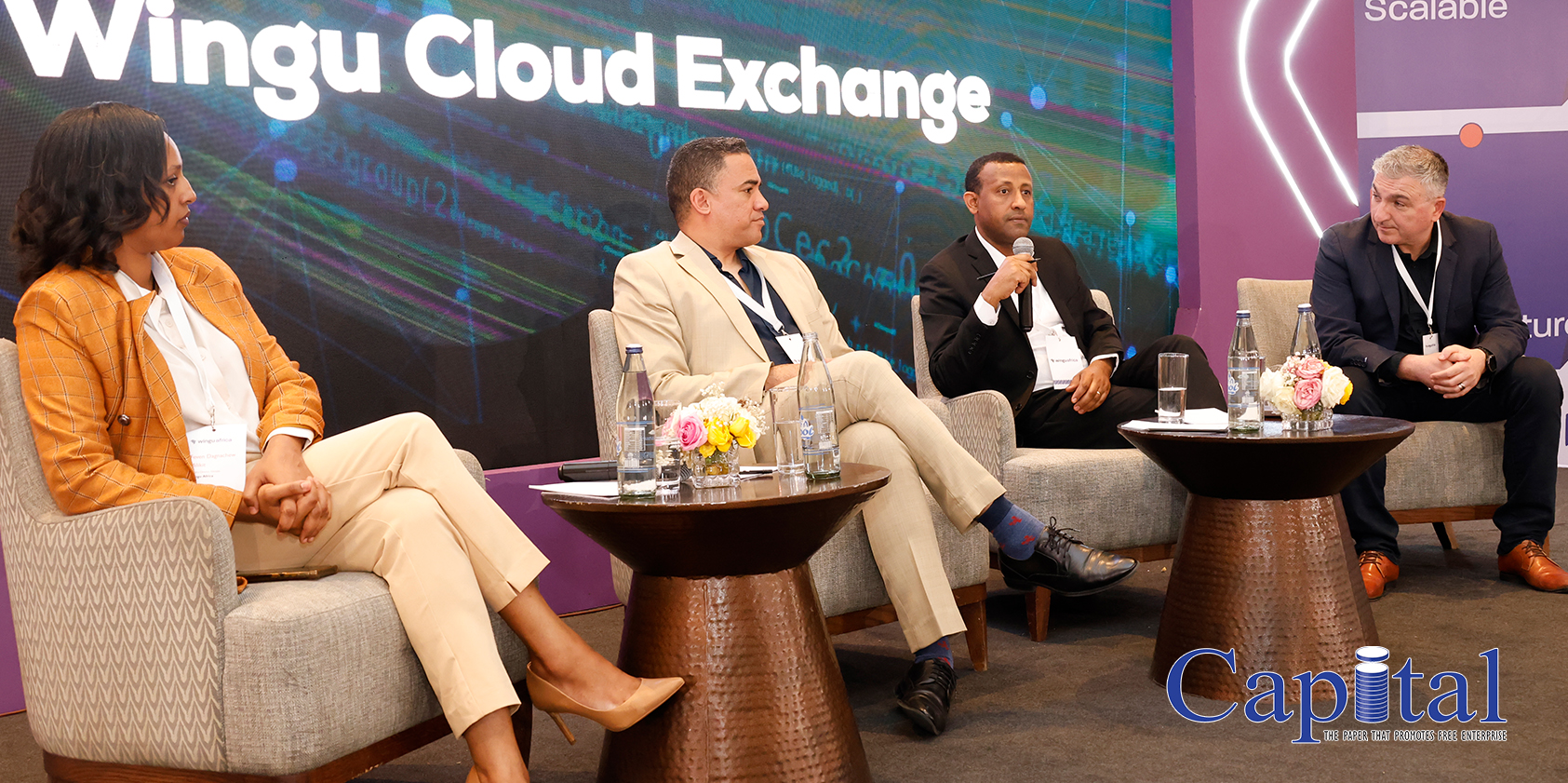
At a panel discussion during the inauguration of the Wingu Africa Cloud Exchange (WCX) on March 31, 2026, it was announced that hardware procurement would no longer be a bottleneck for startups.

Officially launched on March 31, 2026, this service is poised to significantly transform the digital landscape for local organizations. By offering carrier-neutral infrastructure services, Wingu Africa aims to establish the foundation necessary for accelerating Ethiopia’s transition to a digital economy.
The message to the Ethiopian market was clear: in the digital age, success is determined not by the size of one’s server but by the speed of execution. Sintayehu Abebe, General Manager of AACTS, remarked, “In Ethiopia, physically handling hardware is often regarded as a sign of prestige.”
“A CEO wants to see and touch the $100,000 he invested. However, by the time he waits six to nine months for that machine to clear customs and be set up, the market has already moved on,” Sintayehu explained. He likened this situation to purchasing an advanced smartphone in 2008 and trying to use it today for AI-generated videos.
By the time physical infrastructure is installed and operational, it often becomes outdated. Wingu Africa’s local cloud service changes this dynamic, enabling companies to accomplish tasks in six minutes that previously took six months.
Experts at the event openly discussed the legacy data centers found in Ethiopian banks and institutions, referring to these spaces as “museums.” IT professionals often find themselves dusting equipment and monitoring air conditioning instead of innovating.
By transitioning from Capital Expenditure (CapEx) to Operational Expenditure (OpEx), businesses can shift their focus from functioning like power utility operators to concentrating on their core missions—whether in finance, logistics, or retail.
“I don’t generate my own electricity; I just use the switch,” Sintayehu argued. “Cloud services are a 21st-century utility, akin to electricity and water. We should approach them as such.”
In addition to speed, the launch of Wingu addresses the longstanding “latency” issue that has hampered digital services in Ethiopia. Many local organizations previously stored their data in Europe or South Africa.
Data travels via fiber cables, and experts explained that latency accumulates every 100 kilometers. A request sent to Europe can take 50 milliseconds or more. By situating the infrastructure in Addis Ababa, next to internet service providers like Ethio Telecom and Safaricom, Wingu has reduced latency to under 10 milliseconds.
Furthermore, WCX allows data to be securely stored within Ethiopia, enabling organizations to fully comply with local data protection regulations. This helps businesses safeguard sensitive information from complex international legal issues while benefiting from faster services, improved efficiency, and reliable local support.
Demos Kyriacou, Deputy CEO, COO, and Co-founder of Wingu Africa, stated that WCX is setting a new standard for digital infrastructure in the region by providing cloud solutions tailored to local needs.
The platform makes advanced technology accessible to companies of all sizes, integrating essential cloud services such as computing, storage, container management, and security. It includes offerings like Wingu Compute, Wingu Kubernetes, Wingu Drive, and Wingu Security, allowing organizations to deploy and manage their applications with confidence.
Additionally, WCX easily integrates with existing local infrastructure and offers customers hybrid options by connecting with global providers like Azure and AWS. Wingu Africa enters the Ethiopian cloud market with over a decade of regional experience, having operated as the first carrier-neutral data center in strategic locations across Djibouti, Ethiopia, and Tanzania since 2012.