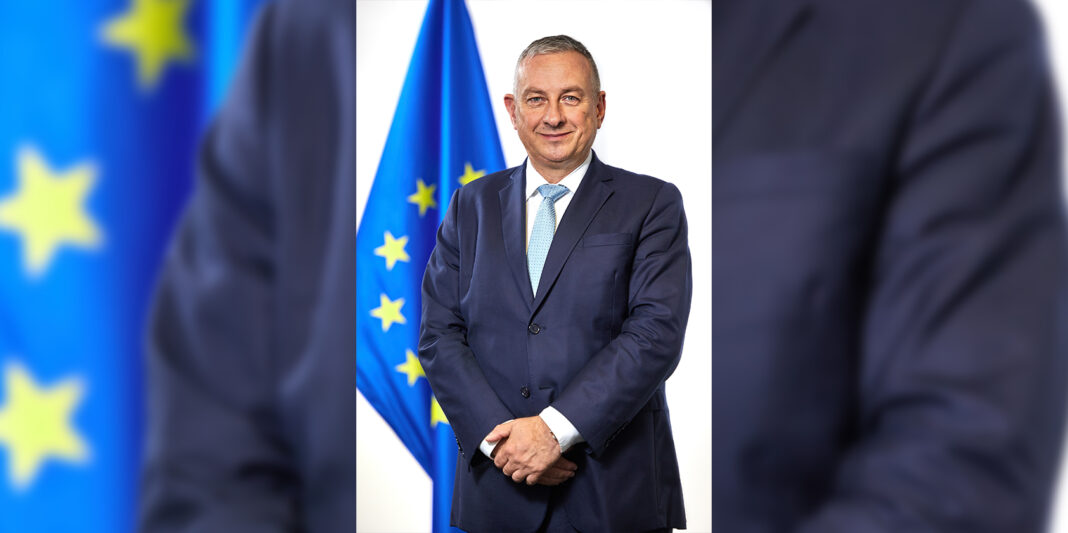
As Ethiopia accelerates economic reforms and positions itself as a key investment destination in Africa, the European Union is signaling a shift from dialogue to delivery. In this exclusive interview ahead of his visit to Addis Ababa, European Commissioner for International Partnerships Jozef Síkela outlines how the EU’s Global Gateway strategy aims to unlock large-scale investment in sectors ranging from energy and digital infrastructure to agriculture and health. With over €3.5 billion already invested and more than 300 European companies operating in the country, Síkela emphasizes that the next phase of EU–Ethiopia relations will be defined by bankable projects, reduced risk for investors, and long-term economic transformation driven by concrete partnerships. Excerpts;
Capital: What makes Ethiopia stand out right now as a destination for European investment?
Jozef Síkela: Scale, ambition, and reform momentum. Ethiopia has around 135 million people, two thirds of them under 30, and it is growing above 7% a year. That combination of a young population and a government that is pursuing economic reform, in foreign exchange, in financial services, in market opening, creates real opportunities.
European companies have recognised this. There are already around 300 of them active in Ethiopia, from energy to agribusiness to telecoms. The EU is Ethiopia’s second largest investor, with over €3.5 billion in investment stock. So this is not about convincing people to take a first look. It is about going further.
Capital: Which sectors offer the strongest potential for European investors today, and why?
Jozef Síkela: Digital infrastructure, clean energy, health, and sustainable agri-food value chains. These are the areas where European companies have genuine competitive advantage in technology, standards, and long term financing. These are also the sectors that Ethiopia needs most urgently for its own development agenda.
Take coffee. Fifteen million Ethiopians depend on the sector. Europe is the largest buyer. There is a direct interest on both sides in making that value chain stronger, more sustainable, and more profitable for Ethiopian farmers.
The same logic applies to energy. Ethiopia has enormous clean energy potential in hydropower, wind, and geothermal. Reliable electricity is the precondition for almost everything else: running a clinic, connecting a school, manufacturing goods for export. European companies have the technology and experience to help build that system. That is an opportunity, not just a priority.
Capital: What concrete outcome do you most want this forum to deliver?
Jozef Síkela: I am a former banker. What I want from this forum is deals. Not just political declarations, but real business-to-business and business-to-government connections that lead to bankable projects with transformative impact.
The Business Forum is the right space for that. We have over 500 participants: Ethiopian and European companies, development banks, government officials. The ingredients are there. My job is to help create the conditions where matches are made and commitments follow. I will be coming with good news in several areas that will allow us to invest significantly more together, and I look forward to sharing those during the visit.
Capital: How can EU development finance help unlock more private investment in Ethiopia?
Jozef Síkela: By reducing risk and improving project preparation. This way we can bring to life projects that would not happen otherwise and mobilise private investors for whom such initiatives would otherwise be too risky.
Through Global Gateway, we can offer grants for studies and project preparation, loans, guarantees, political risk cover, local currency solutions, and technical assistance.
Capital: What is still the biggest obstacle holding European investors back, and what needs to change?
Jozef Síkela: Predictability. European companies can manage risk. What they struggle with is unpredictability in areas like tax and customs, legal frameworks, and security in certain regions.
But the good news prevails. The Ethiopian government understands this and is actively working on it. The macroeconomic reforms of recent years have already improved the picture significantly. Exports are up. The investment climate is moving in the right direction. The next step is making that consistent across institutions and regions. We are supporting that directly through investments in governance, tax administration reform, and business environment support. These are not abstract commitments. They are funded programmes already running.
Capital: How do you see EU-Ethiopia economic relations evolving in the coming years?
Jozef Síkela: More strategic, more investment-driven, and with concrete benefits for both sides. Ethiopia is looking for fair, reliable partners who invest, who bring technology and standards, who commit for the long term. That is exactly what Europe offers.
The EU is already Ethiopia’s largest export destination and a key long term investor. The next phase for our cooperation will be about building resilient value chains, advancing the clean and digital transitions, and positioning Ethiopia more strongly in regional and global markets. That is what I am going to Addis Ababa to advance.