As Ethiopia’s financial sector undergoes its most significant institutional and policy reforms in history, it has become clear that simply increasing banks’ capital size should not be the ultimate objective. Instead, the primary goal is to foster regional and international competitiveness, enhance technological adoption, and establish robust corporate governance systems.
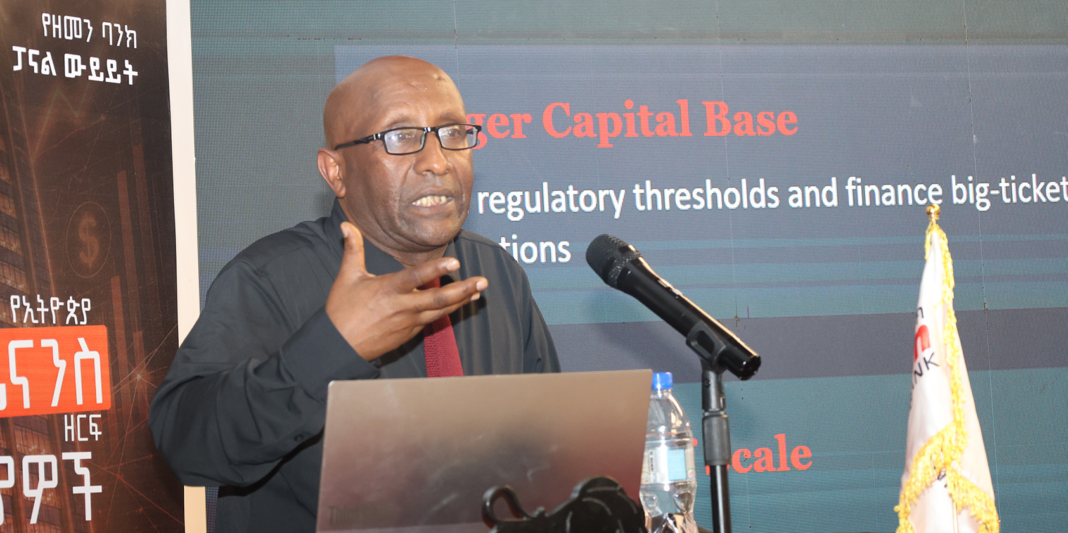
This perspective was emphasized during a panel discussion hosted by Zemen Bank, themed “Financial Sector Reforms in Ethiopia: Capitalization, Mergers, and the Role of Shareholders.” The event convened banking experts, economic researchers, and stakeholders, generating extensive debate on the sector’s current challenges and its future strategic direction.
Dereje Zebene, CEO of Zemen Bank, highlighted that the dynamic growth of both the global and domestic economies, coupled with market expansion, technological innovation, and policy reforms, is compelling local banks to become stronger, more competitive, and more capable.
“Globally, mergers and acquisitions (M&A) in banking, as well as decisions to increase capital, have served as reform tools across different eras and under various circumstances,” the CEO stated. He observed that while some countries have leveraged these options to strengthen financial institutions and enhance market competitiveness, others have prioritized internal capacity, opting for organic growth, capital increases, or structural reforms.
According to Dereje, a key lesson from Africa and other regions is that no single solution fits every country. Nevertheless, despite differences in timing and implementation, the overarching objective remains consistent: to cultivate strong institutions with greater capital, the capacity to finance major national projects, the ability to support technology investments, and the resilience to withstand market competition.
Dereje further elaborated: “The growing capital requirement enables banks to strengthen their financial position and better compete with regional and international institutions.
However, capital size alone is not the ultimate goal. The main objective is to build financial institutions that can withstand global competition, are technologically advanced, possess strong governance, and create tangible value for the economy.”
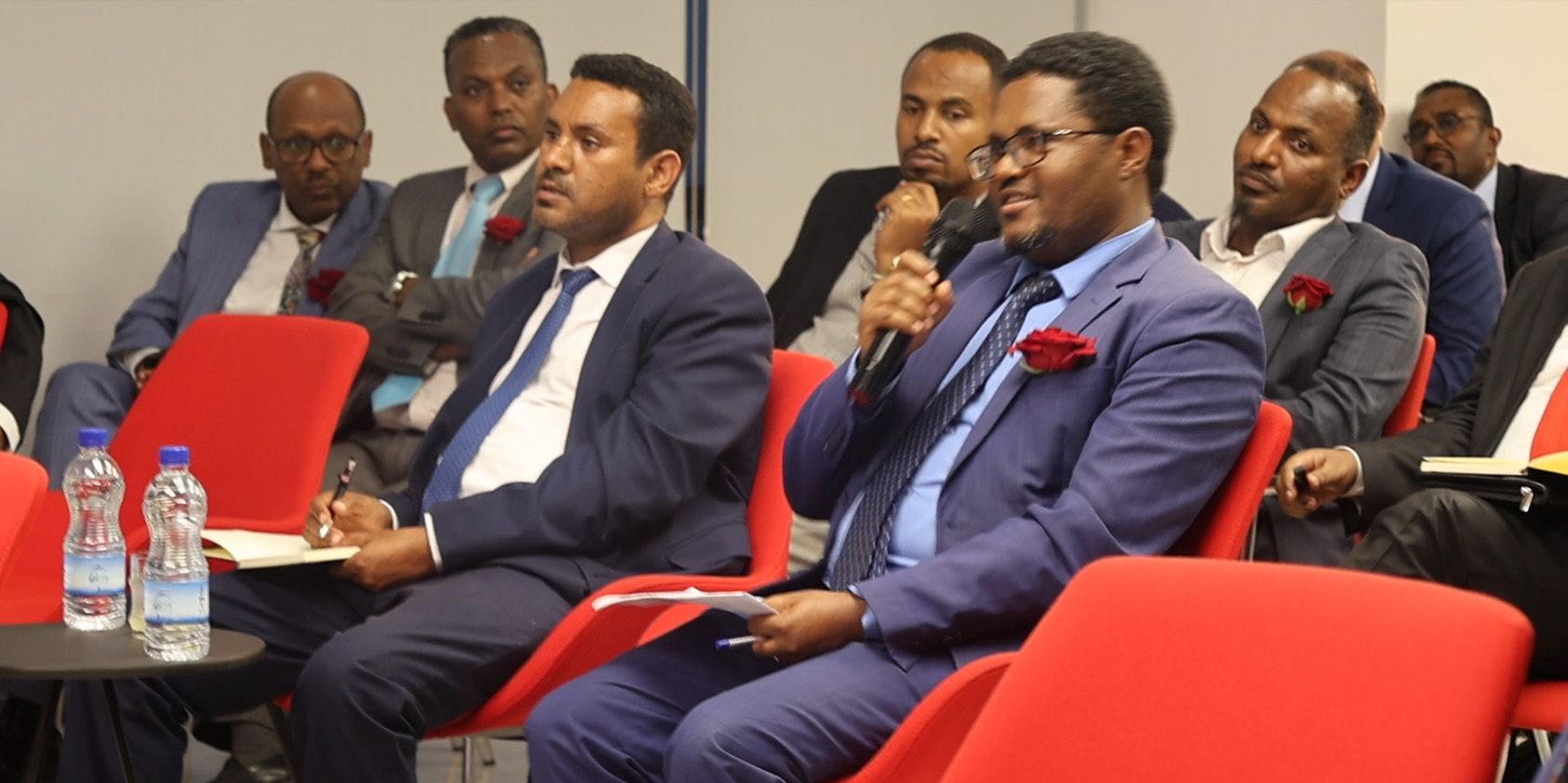
He also stressed that, throughout this process, shareholders must play a more critical role than ever, not only by contributing capital but also by providing strategic direction and helping to embed sound corporate governance.
Sharing his insights at the panel, renowned economics researcher Professor Alemayehu Geda suggested that the current deadline for capital fulfillment in the banking industry might not be the final benchmark.
He said the National Bank of Ethiopia (NBE) might introduce additional policy measures to achieve its envisioned level of institutional strength.
“Some argue, ‘Why do we need such huge capital? We can just take our market segment and operate.’ But where will the next structural pressure come from?” the professor asked, explaining that the central bank views the mandatory capital increase as merely one tool.
He clarified that the regulator’s primary goal is to foster banks that can withstand the entry of foreign banks, are easier for the National Bank to supervise, are efficient, and can expand internationally.
Alemayehu highlighted the risk-weighted capital adequacy ratio and stress testing as potential future requirements from the National Bank of Ethiopia.
Regulatory signals indicate that banks must raise their risk-weighted capital adequacy ratio to at least 11 percent by year-end. Through stress testing, the National Bank will evaluate banks’ ability to withstand market risks under various scenarios without resorting to mergers and acquisitions.
“Therefore, I do not think surpassing the 5 billion birr capital adequacy threshold is a reason to relax,” the professor warned.
According to Professor Alemayehu Geda’s analysis, approximately nine recently established third-tier banks have not yet met the capital requirement. However, once the National Bank implements the risk-weighted capital adequacy ratio and stress tests, an additional four banks, currently believed to have met the requirements, could also become vulnerable. This means at least 13 banks could face significant challenges under the new framework, increasing pressure for them to merge.
The professor specifically urged the National Bank to prioritize institutions offering interest-free, or Islamic, banking services. He noted that conventional banks have diverse merger options. However, due to their religious and ideological structure, Islamic banks cannot merge with conventional banking windows. Consequently, he argued they might be left without alternatives unless a distinct regulatory framework is developed for them.