The Ministry of Finance projects the birr will stabilize in the upcoming 2026/27 fiscal year, despite a 15 percent depreciation against major foreign currencies over the past year.
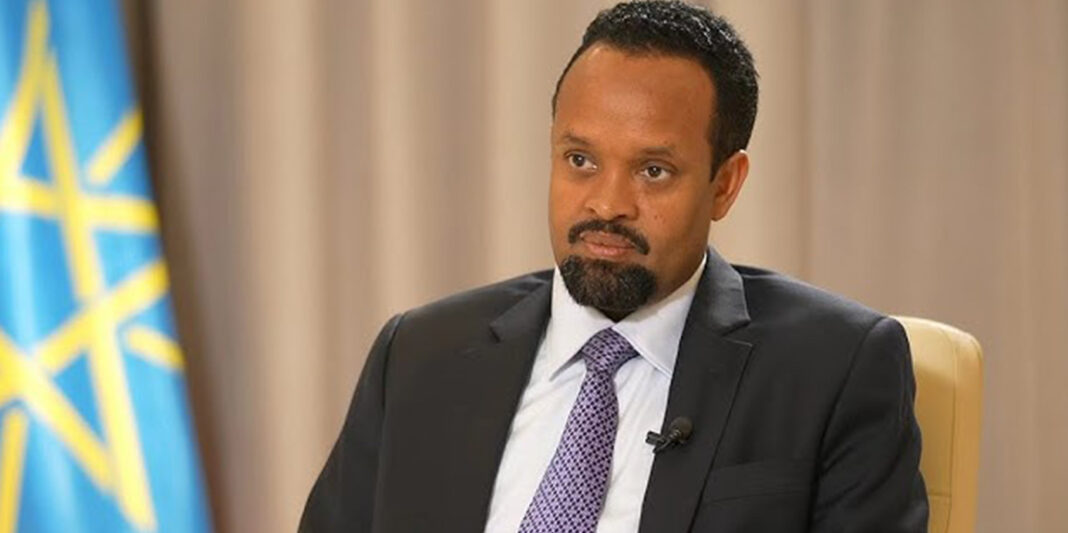
During his federal budget presentation to Parliament last week, Finance Minister Ahmed Shide forecasted a 9.8 percent overall economic growth for the coming fiscal year. This growth is expected to be driven by a 7.1 percent increase in agriculture, 11.6 percent in industry, and 8.5 percent in the services sector, with the economy maintaining strong momentum despite unforeseen global developments.
However, Ahmed acknowledged potential challenges from the ongoing Middle East conflict, which has been factored into the government’s budget planning.
Ethiopia is projected to import goods worth USD 25.8 billion in 2026/27, with fuel imports alone accounting for approximately USD 6 billion. The minister attributed this higher fuel import bill to rising global energy prices, exacerbated by Middle
Eastern tensions. “The impact of the conflict in the Middle East has been considered in our forecasts,” Ahmed informed lawmakers.
The government will continue implementing measures to stabilize the foreign exchange market. Ongoing reforms are expected to strengthen the market and contribute to greater stability in the birr’s exchange rate.
Despite official claims that the gap between the official and parallel foreign exchange markets has narrowed significantly, the birr has depreciated by at least 15 percent over the current fiscal year, based on average winning rates from National Bank of Ethiopia (NBE) foreign exchange auctions.
Officials maintain that monetary and macroeconomic policies under the government’s reform agenda have reduced disparities between the formal and informal forex markets.
Since broad economic reforms began in July 2024, the government has introduced various measures to modernize foreign exchange administration. Recently, new directives have granted commercial banks greater authority to approve deferred import transactions for their customers.
Economists suggest these reforms, which decentralize foreign exchange decision-making from the central bank to commercial banks, could channel foreign currency transactions into formal financial systems and curb illegal market activities.
Experts also anticipate these measures will further reduce the gap between official and parallel exchange rates. While some analysts estimate the parallel market premium remains above 15 percent, NBE officials indicate it has fallen below 11 percent.
Nevertheless, the parallel market has faced renewed pressure recently, particularly following escalating tensions in the Persian Gulf region, with exchange rates reportedly strengthening by as much as 3 percent.
The NBE is preparing additional legislation and amendments to foreign exchange directives to improve ease of doing business, expand access to foreign currency, and further narrow the gap between official and unofficial exchange rates.
Ahmed stated that additional measures would be introduced in the new fiscal year, beginning July 8.
During the first ten months of the current fiscal year, Ethiopia allocated USD 18.4 billion for imports, an 18 percent increase year-on-year. Government officials cited Middle East developments as a primary driver for this surge in foreign exchange demand for imports.
For 2026/27, total imports are projected to reach USD 25.8 billion, with fuel imports alone expected to comprise USD 6 billion.
The proposed federal budget for the fiscal year totals 2.34 trillion birr, with an overall fiscal deficit projected at 2.36 percent of GDP. Excluding principal debt repayments of 214 billion birr, the deficit would decrease to approximately 1.4 percent of GDP.
The government plans to allocate 293 billion birr (approximately USD 1.8 billion), or 12.5 percent of the total proposed budget, to service external debt obligations. Authorities have previously secured temporary external debt servicing relief and are nearing the final stages of negotiations to restructure these repayments.
Domestic debt servicing is projected to reach 249 billion birr, comprising 26 billion birr (11 percent) in principal repayments and 222 billion birr (89 percent) in interest payments.
As part of its ongoing macroeconomic and foreign exchange reform agenda, the National Bank of Ethiopia (NBE) plans to establish an interdealer foreign exchange trading platform and further relax surrender requirements for commodity exporters.
The interbank foreign exchange market officially launched on January 28. It operates through a technology platform built on the infrastructure of the Ethiopian Securities Exchange (ESX), which includes a dedicated foreign exchange trading segment. This platform aims to enhance transparency, competitive pricing, and real-time transaction execution, though its performance to date remains unclear.
The central bank is currently developing a roadmap to deepen the interbank foreign exchange market. In line with commitments made to development partners, this roadmap will include creating an electronic interdealer trading platform that facilitates anonymous, real-time trading among major financial institutions.
This initiative is a key structural benchmark within Ethiopia’s reform program, which began at the start of the 2024/25 fiscal year. The NBE aims to operationalize the platform during the first quarter of the 2026/27 fiscal year.
Officials believe a well-functioning interbank market will improve banks’ foreign exchange risk management capabilities and increase transparency. Efforts are also underway to upgrade settlement systems to enable domestic settlement of interbank foreign exchange transactions.
According to the latest IMF review, the NBE will develop new indicators and benchmarks to assess the progress of the foreign exchange market. These metrics will include the size and persistence of the parallel market premium, interbank trading volumes, unmet foreign exchange demand, and banks’ net open positions.
These indicators will guide decisions on the gradual reduction and eventual elimination of surrender requirements by the end of the IMF-supported program, which is expected to continue for another 24 months.
The IMF review also notes that the NBE plans to relax rules governing exporters’ use of foreign currency retained in foreign exchange accounts. These changes will provide exporters with greater flexibility to meet surrender obligations and capitalize on favorable exchange rates. Implementation is expected at the start of the new fiscal year.
Under Foreign Exchange Directive No. FXD/01/2024, issued on July 29, 2024, exporters were required to convert 50 percent of export proceeds into birr, retaining the remaining 50 percent in foreign currency accounts.
However, a significant amendment introduced on February 11 substantially altered this framework. Service exporters are now exempt from surrender requirements and may retain 100 percent of their foreign currency earnings indefinitely. Exporters operating within Special Economic Zones (SEZs) are also entitled to full retention of export proceeds.
The revised Directive No. FXD/04/2026 represents one of the most comprehensive overhauls of Ethiopia’s foreign exchange regime in decades, incorporating key recommendations under the IMF’s Article VIII framework.
Major reforms include the elimination of long-standing exchange restrictions and the authorization for banks to issue internationally recognized foreign currency payment cards for retail and e-commerce transactions abroad. Foreign currency account holders now have expanded rights to directly cover education, medical, and travel expenses for immediate family members.
The minimum balance requirement of USD 100 to open a foreign currency savings account has also been abolished.
Furthermore, profit-making institutions are now permitted to open foreign currency accounts funded by grants and other non-export sources. Ethiopian nationals may also be allowed to make outbound investments on a case-by-case basis, subject to National Bank of Ethiopia (NBE) approval.
Collectively, these measures signify a substantial move toward a more market-oriented and flexible foreign exchange regime.
Directive No. FXD/05/2026, issued last month, further liberalizes the country’s foreign exchange system by transferring the authority for approving deferred Letters of Credit (LCs) and Cash Against Documents (CAD) transactions from the NBE to commercial banks.