The Federal Office of the Auditor General (OFAG) announced that, out of a staggering 21.57 billion birr and an additional USD 23,200.43 identified for recovery due to illegal or irregular financial practices in past budget years, only 31 percent — approximately 6.61 billion birr — has been successfully recovered. This leaves more than 14.95 billion birr and the entire foreign currency amount unrecovered to date, underscoring what the audit report describes as a persistent culture of financial unaccountability.
OFAG recently presented its consolidated audit report for the 2017 Ethiopian fiscal year to the House of Peoples’ Representatives, exposing severe delays and weaknesses in federal institutions. While a few entities, such as the Kombolcha Customs Branch Office and Arba Minch University, showed commendable corrective efforts by recovering 99 percent and 80 percent of their irregular payments respectively, major branches such as Kality, Modjo and Adama Customs lagged far behind.
Federal institutions also largely ignored directives to provide full documentation for unsupported expenditures. Out of 2.92 billion birr identified over the years as lacking supporting evidence, valid documentation was presented for only 1.8 percent, leaving nearly 2.87 billion birr completely unaccounted for.
In response to these persistent irregularities, the Ministry of Finance intervened during the budget year by imposing financial penalties and issuing stern written warnings to the top management of seven federal institutions that failed to implement laws and directives.
Beyond the outstanding arrears from previous years, the Auditor General’s Office carried out extensive oversight work during the 2017 budget year. After revising its plan due to security concerns and institutional mergers, the office audited 1.51 trillion birr, achieving 99.53 percent of its annual target. The financial review showed some positive shifts: the number of institutions receiving an unqualified, or clean, audit opinion increased by 13.8 percent year on year, rising from 116 to 132.
In addition, no federal institution received a disclaimer of opinion due to a total breakdown in the accounting system. However, the report strongly criticized five major federal institutions that received adverse audit opinions because of material and pervasive irregularities in their financial reports. The detailed analysis of the 2017 budget year highlighted critical areas where public funds continue to be wasted due to systemic gaps, indicating that the government’s revenue collection structure is burdened by a massive accumulation of outstanding arrears.
A joint assessment conducted across 11 customs branches and 12 revenue branches exposed 6.85 billion birr in uncollected customs duties and tax debts, representing a sharp 65.11 percent increase compared with the previous year.
The Dire Dawa Revenue and Customs branches alone accounted for the largest share of this deficit, with billions in uncollected government revenue. Illegal tax practices and non-compliance with the Value Added Tax (VAT) law cost the government an additional 1.21 billion birr in potential revenue.
Furthermore, accumulated uncollected debts and receivables reached 16.32 billion birr across 138 institutions. Most alarmingly, 4.7 billion birr of this amount consists of outstanding arrears dating back more than a decade, with the Ministry of Health and Wachemo University emerging as the top debtors.
According to the report, illegal or unsupported expenditures rose sharply. Payments exceeding 1.18 billion birr were made across 42 institutions without adequate supporting evidence, while 35.8 million birr was recorded as expenditure with no documentation at all.
The Ministry of Health was specifically singled out for making 231.1 million birr in overpayments and duplicate payments, as well as wasting 122.1 million birr on court orders and tax penalties resulting from avoidable payment delays.
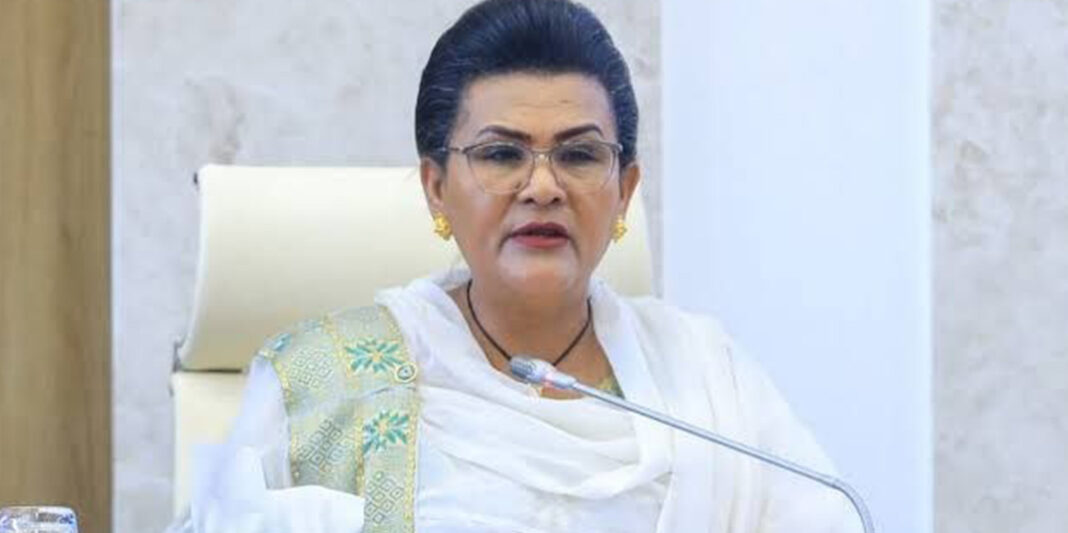
Explaining the situation to the House, Auditor General Meseret Damtie said public infrastructure projects continue to suffer from severe delays and weak contract enforcement. Advance payments of 571.1 million birr granted to contractors remain unrecovered, unsupported by active bank guarantees or unrenewed, with Mekelle and Wollega universities facing high exposure in this regard.
“Worse still, 23 major construction projects valued at a total of 1.41 billion birr at Gambella, Salale and Bule Hora universities have ground to a complete halt due to severe breaches of contract,” she said. She pointed out that operating outside standard procurement procedures and directives has severely drained the government’s budget. The audit report noted that more than 1.25 billion birr was used in direct violation of the Procurement Proclamation. This includes 441 million birr in direct procurements that should have been handled through open bidding, and 194 million birr in procurements executed by bypassing the mandatory electronic Government Procurement (e-GP) system.
According to the report, although Ethiopia aimed to reduce the under-five mortality rate to 25 per 1,000 live births by 2030, recent survey data from 2024/25 shows that it has instead risen to 51. At Mugher Cement Factory, vital legal protections were bypassed, with performance guarantees not secured for 28 of 34 machinery procurement projects. All projects reportedly experienced delays of up to four years.
Furthermore, the factory failed to provide any utilization records showing the whereabouts of more than 21,000 tons of cement produced between 2016 and 2017 E.C., and it has yet to collect 84.3 million birr in credit sales dating back to 2010.
When presenting the report to the House regarding the Authority for Civil Society Organizations, the Auditor General said the regulatory body has failed to track the physical addresses of registered NGOs. Out of 5,000 active organizations, only 12 percent have registered their assets, and the tracking system relies entirely on manual paperwork rather than a digital database.
As a major example, it was stated that a prominent organization imported duty-free goods worth 403.5 million birr from the Canadian government and then completely diverted the goods from their intended development purpose. In her briefing, Meseret Damtie urged the House of Peoples’ Representatives to ensure strict legal accountability, calling on the relevant standing committees to question and hold failing institutional heads accountable in order to safeguard the nation’s financial integrity.