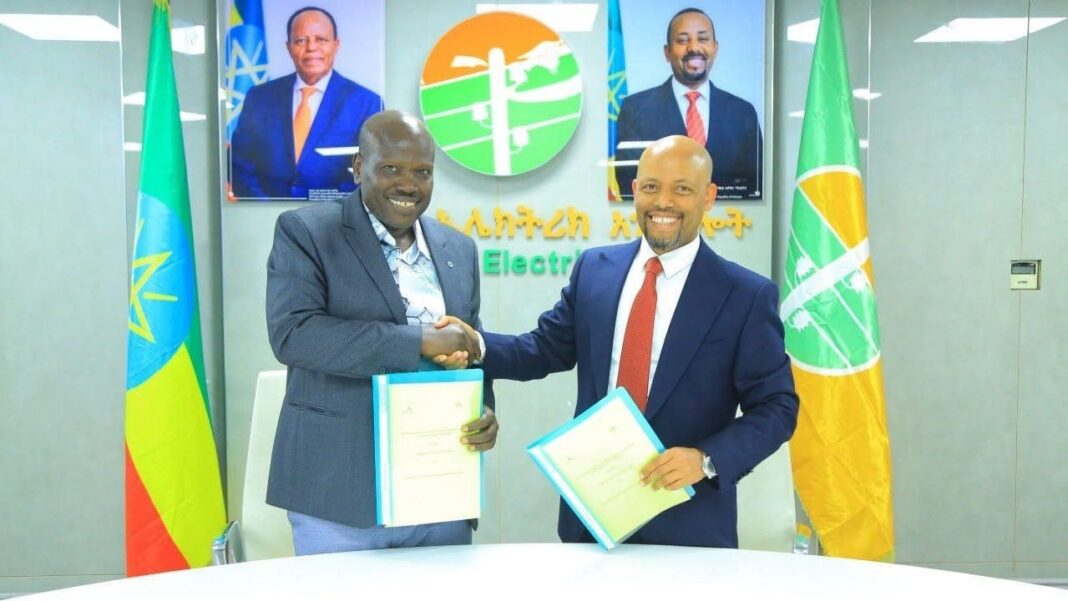
The Ethiopian Electric Utility (EEU) has formalized a landmark power supply agreement with the Kenya Power and Lighting Company (KPLC), marking a significant milestone in cross-border energy trade and regional infrastructure integration.
Under the newly ratified framework, Kenya’s primary electricity distributor will purchase power from Ethiopia at a tariff 15.5 U.S. cents—per kilowatt-hour (kWh).
In addition to the baseline consumption tariff, the financial structure of the agreement mandates a monthly demand charge of approximately $6.52 USD. The strategic partnership is designed to optimize bilateral electricity monetization, guarantee a reliable power supply for border populations, and advance the broader geopolitical objective of an interconnected East African energy grid.
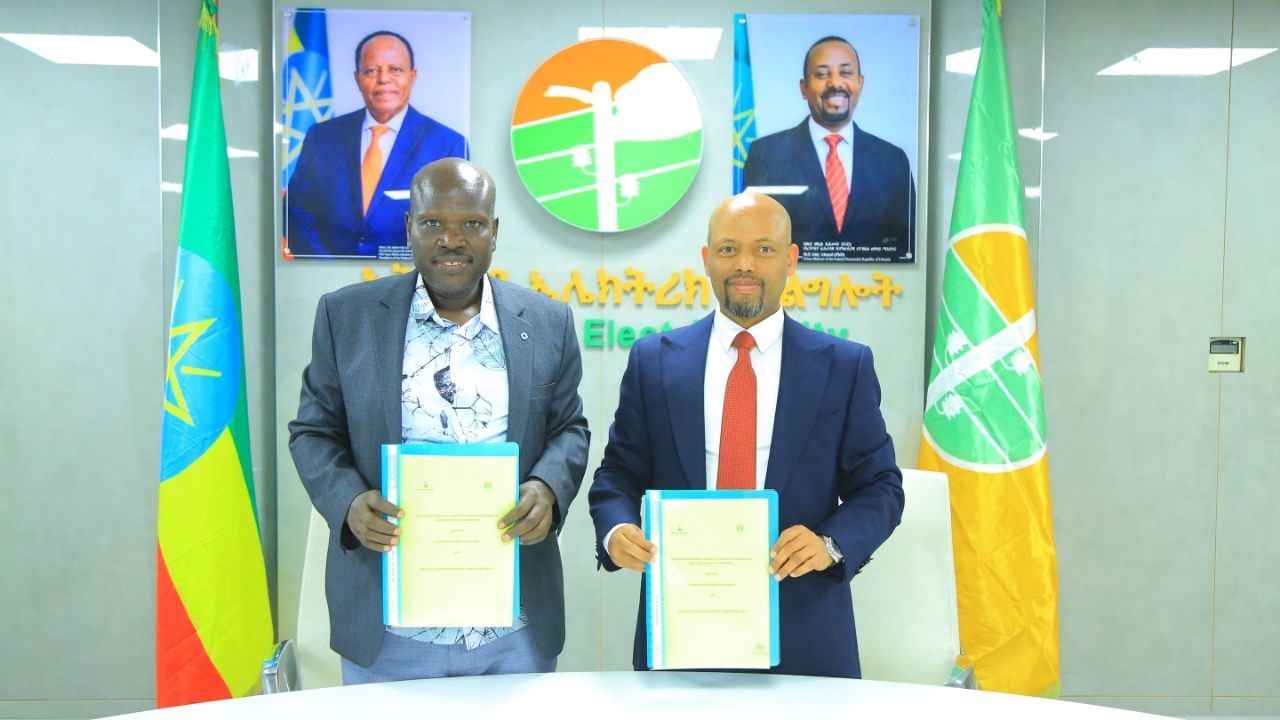
The power purchase agreement (PPA) was signed by EEU Chief Executive Officer Getu Geremew and KPLC Managing Director and CEO Joseph Siror during a bilateral ceremony.
Speaking at the event, Geremew underscored the agreement as a prime model of regional synergy, demonstrating the economic outcomes achievable when East African nations align their utility frameworks. He noted that the initiative materializes the long-standing vision of a “Connected East Africa,” framing infrastructure development not merely as a commodity exchange, but as a critical macroeconomic catalyst for sustainable regional growth.
Echoing these remarks, Siror emphasized that the strategic impact of the pact extends far beyond cross-border transmission infrastructure. He stated that the contract serves as a foundational pillar for long-term peace and economic diplomacy between Nairobi and Addis Ababa. Crucially, Siror highlighted that communities situated along the shared corridor will gain direct access to stabilized grid electricity, strengthening economic and social ties between the two nations.
Data from Kenya’s Energy and Petroleum Regulatory Authority (EPRA) underscores the urgency of the deal. With Kenya’s domestic generation capacity struggling to keep pace with skyrocketing demand, Nairobi has become increasingly reliant on imported power to mitigate systemic rationing and blackouts. In the fiscal year ending June 2025, electricity imports accounted for over 10% of Kenya’s total supply grid, with Ethiopia supplying an overwhelming 83% of those imports.
Furthermore, during the first half of the 2024–2025 financial year, Kenya’s power imports from Ethiopia surged by 79% year-on-year. This spike firmly positioned Ethiopian Electric Power (EEP) as the second-largest supplier to the Kenyan grid, surpassed only by Kenya’s state-owned generator, KenGen.
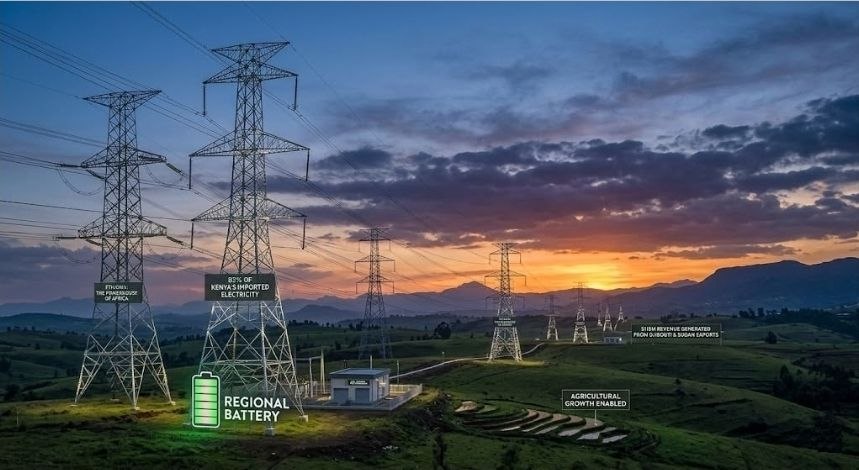
This compounding dependence stems largely from a regulatory bottleneck in Nairobi, where a moratorium on new PPAs with Independent Power Producers (IPPs) has severely restricted local generation capacity expansion. Originally instituted in 2018 and renewed in 2023, the ban has forced Kenya to seek external remedies, positioning Ethiopian hydropower as a vital, cost-effective safety valve.
While the new tariff of 15.5 U.S. cents per kWh marks a steep incline from the 6.5 cents initially cited in early 2022, energy experts emphasize that the figure must be viewed against Kenya’s domestic cost realities. Currently, Kenyan households face steep retail tariffs ranging between 28 and 32 Shillings (approximately 22 to 25 U.S. cents) per unit once base rates, fuel cost adjustments, and foreign exchange fluctuations are factored in. Given that domestic thermal power from IPPs can run as high as 23 cents per kWh, the Ethiopian import remains a highly competitive alternative, projected to save Kenya nearly $10 million USD annually.