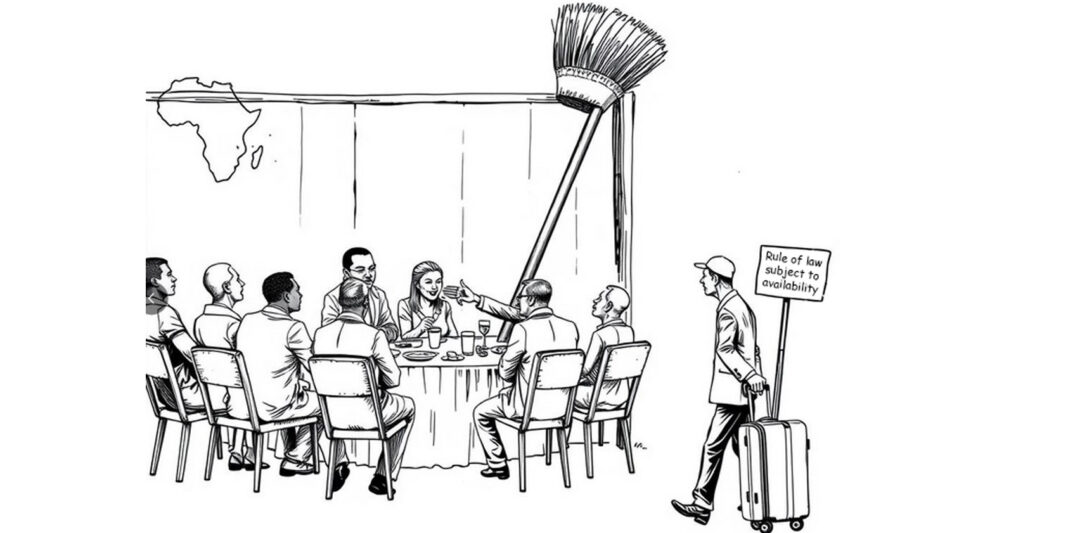
South Africa’s recurring attacks on foreign nationals are no longer just a domestic embarrassment; they are a continental wound. Each new wave of violence deepens mistrust across Africa, damages South Africa’s standing as a regional power and leaves many Africans feeling hurt, angry and betrayed.
For years, South Africa has benefited from Africa’s solidarity, labour, trade and political support. Migrants from across the continent have helped build businesses, filled labour gaps and strengthened informal economies in South African cities and townships. So when they are attacked, chased away from clinics, harassed in markets or targeted by vigilantes, the pain is felt far beyond South Africa’s borders.
That is why many Africans are distancing themselves from the violence. They are not rejecting South Africans as people; they are rejecting the idea that a country born from the struggle against oppression can repeatedly turn its anger on other Africans. The contrast is painful. A nation that once inspired the continent is now too often associated with exclusion, abuse and silence.
The most troubling part is the state’s response. South Africa’s government often speaks the language of sovereignty, law and order, but too often allows anti-immigrant gangs and vigilante groups to set the tone on the ground. That is not governance. It is complicity by neglect.
When public officials meet these groups, allow them access to national platforms or fail to enforce court orders against unlawful conduct, they help legitimise them. That gives vigilantes the confidence to continue. It also tells victims that the state is hesitant to defend them. In that vacuum, violence becomes a political tool.
The crisis is not simply about border control or undocumented migration. It is about power, accountability and the rule of law. Xenophobia thrives when leaders find it useful, when local actors profit from exclusion and when police enforcement is selective. In South Africa, migrants are often used as scapegoats for unemployment, crime and service failures that are far more complex than hostile slogans suggest.
This is why the violence keeps returning. It is not random. It is organised, repeated and politically profitable. Some groups gain votes, some gain influence, others gain access to resources and protection. Meanwhile, ordinary migrants lose livelihoods, dignity and sometimes their lives.
For the rest of Africa, the lesson is sobering. Continental unity cannot survive if African states tolerate attacks on Africans inside their own borders. The promises of integration, free movement and shared prosperity lose credibility when people are assaulted for looking foreign. Trade and diplomacy also suffer, because trust is the hidden currency of regional cooperation.
South Africa must do more than condemn xenophobia in speeches. It needs to prosecute perpetrators, dismantle the networks that organise exclusion and ensure that police protect everyone, not only citizens. It must stop rewarding groups that traffic in hate and enforce the law consistently, even when politically inconvenient.
It must also confront the deeper social problem: the willingness of some politicians and activists to turn desperation into hostility. That requires leadership, not slogans. It requires the state to defend constitutional democracy against those who want to replace it with mob justice.
Africans across the continent are watching closely. They are hurt because they know South Africa’s violence is not only against migrants; it is against the idea of Africa itself. If the country wants to remain a respected regional power, it must prove that its laws are stronger than its mobs and that its democracy can still protect the vulnerable.
Without that, the crisis will keep spreading, and the damage will not stop at South Africa’s borders.