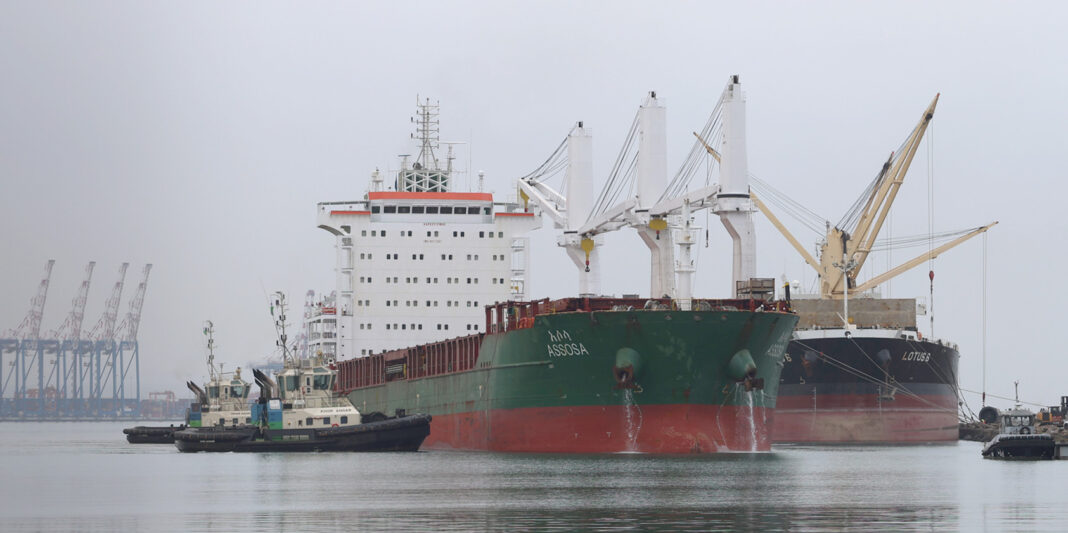
Ethiopian Shipping and Logistics (ESL) has taken another significant step in its fleet expansion program, with a high-level technical delegation traveling to China to conduct preliminary negotiations with potential suppliers as the state-owned logistics company moves forward with a major vessel acquisition plan.
The visit follows government approval of ESL’s revised procurement strategy, which is intended to strengthen the national carrier’s maritime capacity and expand its presence in international shipping. Sources at the Ministry of Finance told Capital that the ministry has authorized the procurement of the vessels, recognizing the strategic importance of enhancing Ethiopia’s maritime transport capacity. They added that the China mission forms part of the approval granted for the acquisition process.
The delegation is led by ESL Chief Executive Officer Abdulber Shemsu and is expected to hold discussions with industry stakeholders while assessing the availability and suitability of second-hand vessels that meet the company’s revised operational requirements.
ESL recently overhauled its vessel acquisition strategy after encountering delays in securing medium-sized ships, including container vessels. Under the revised framework, the company will procure second-hand vessels through internationally recognized shipbrokers, while new vessels will be sourced directly from shipyards through a separate competitive tender process. Earlier this year, the company issued an international Expression of Interest inviting qualified shipbrokers to identify suitable second-hand vessels for acquisition.
“We have floated a bid to secure brokerage services,” Abdulber Shemsu previously told Capital. “The board recognizes that second-hand vessel procurement is best handled through professional shipbrokers, so we have invited qualified brokers to identify suitable ships. For brand-new vessels, we will proceed through a distinct tender process directly with shipbuilders.”
The procurement process was launched after receiving approval from the company’s Board of Directors, chaired by Birhanu Tsegaye, State Minister at the Ministry of Finance.
Alongside the revised procurement approach, ESL has also adjusted its financing strategy. The company has been in discussions with the state-owned Commercial Bank of Ethiopia to finance approximately half of the total acquisition cost, with the remaining balance expected to be covered through the company’s internal resources. Previously, ESL planned to finance only 30 percent of the procurement cost through bank borrowing. Industry observers say the revised financing structure reflects a broader effort to accelerate fleet expansion while maintaining financial flexibility.
ESL currently operates ten international vessels, including the recently acquired Ultramax bulk carrier Abay II. Under its five-year strategic plan, the company aims to expand its fleet to sixteen vessels. The acquisition package includes two brand-new heavy-lift Ultramax multipurpose vessels, one medium-sized second-hand container vessel, and three second-hand Ultramax bulk carriers.
According to the Expression of Interest issued for brokerage services, the container vessel must have a capacity of between 3,000 and 5,000 TEUs and be no more than ten years old. The company also revised its earlier plan to purchase two container ships, opting instead to increase the number of second-hand Ultramax bulk carriers to three. The targeted bulk carriers are required to have a deadweight tonnage of between 60,000 and 65,000 metric tons and be no older than eight years.
For the construction of the two new heavy-lift Ultramax multipurpose vessels, each with a carrying capacity of between 60,000 and 65,000 metric tons, ESL has introduced a two-stage procurement process. Shipbuilders will first submit detailed technical proposals and vessel specifications before shortlisted companies proceed to the final stage of the tender. Construction of the new vessels is expected to take at least two years following contract award.
In contrast, the delivery of the four second-hand vessels is expected in the near term once shipbrokers identify vessels that meet the company’s technical and operational requirements. Payment arrangements will also differ, with new vessels financed through milestone-based installment payments during construction, while second-hand vessels will be paid for upon completion of each purchase.
Sources familiar with the procurement process said the current visit to China is primarily focused on evaluating the second-hand vessel market and holding discussions with potential suppliers and other industry stakeholders. China remains one of the world’s leading shipbuilding and ship trading hubs, making it a strategic destination for sourcing both new and pre-owned commercial vessels.
Maritime experts say recent regional and global developments have further highlighted the strategic importance of maintaining a stronger national fleet.
They point to the recent voyage of MV Assosa, which transported medical equipment and other commercial cargo from Port Khor Fakkan in the United Arab Emirates, near the Strait of Hormuz.
“By late May, Assosa was calling at Port Khor Fakkan when no other operator was willing to take the risk of sailing to that highly challenging destination,” an industry expert who was based in Dubai at the time told Capital. “Its successful voyages later encouraged other operators to berth at the port and begin serving the route.”
According to the experts, the operation demonstrated the critical role Ethiopian-flagged vessels play in ensuring the uninterrupted movement of strategic cargo during periods of regional uncertainty.
“Ethiopia’s recent experience has reinforced the need for a stronger and more capable national shipping fleet,” one industry source told Capital. “For a landlocked country with a rapidly growing economy, expanding the national carrier is not only a commercial necessity but also a strategic investment in logistics security and resilience.”
ESL has increasingly shifted its focus toward acquiring larger and more efficient Ultramax vessels to replace its aging fleet of smaller Handysize ships. The company’s recent acquisition of the Ultramax bulk carrier Abay II reflects that long-term strategy.
Efforts by Capital to obtain additional comments from CEO Abdulber Shemsu regarding the China mission were unsuccessful.