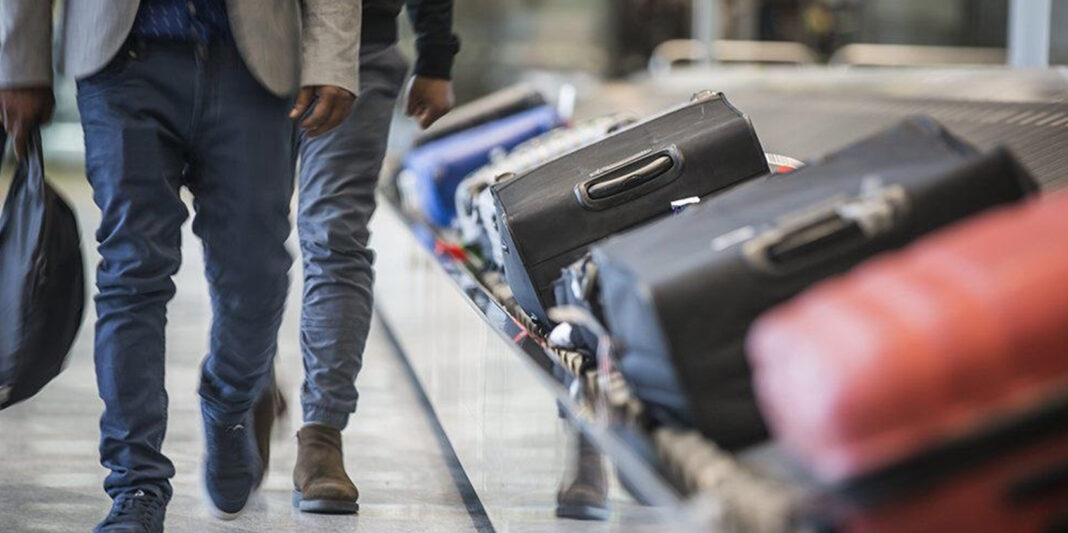
Africa’s aviation sector is lagging behind global improvements in baggage handling, recording the highest mishandling rate of any region at 12.1 bags per 1,000 passengers, according to the 2026 SITA Baggage IT Insights Report.
The findings come at a time when the global aviation industry is showing strong recovery and operational progress. In 2025, airlines carried 5 billion passengers worldwide, up from 4.8 billion in 2024, while mishandled baggage rates dropped significantly by 23 percent to 4.9 per 1,000 passengers. Total mishandled bags also fell 19 percent to 24 million, both metrics now below pre-pandemic levels.
Yet Africa stands out as a region where structural and operational constraints continue to undermine performance. Capacity pressures, ageing airport infrastructure, and complex international travel routes—often involving multiple airlines and baggage handlers—are driving higher rates of disruption across the continent.
Industry analysts say Africa’s challenge is not only about infrastructure deficits but also system fragmentation. International journeys involving transfers remain the single largest cause of mishandling globally, accounting for 39 percent of cases in 2025, a factor particularly relevant for African routes that depend heavily on multi-leg travel.
Despite these setbacks, the report identifies Africa as a region with significant potential for rapid improvement. Greater adoption of end-to-end baggage tracking, enhanced data sharing between airlines and airports, and the deployment of biometric systems and artificial intelligence could sharply reduce mishandling rates.
Globally, the industry is moving in that direction. Baggage tracking compliance under IATA Resolution 753 has surpassed 50 percent, with full implementation targeted by 2027. Airlines are increasingly investing in predictive technologies, with three in four planning AI deployments within the next two years and half aiming to provide real-time baggage updates to passengers.
The financial stakes are high. Mishandled baggage cost the airline industry $6.3 billion in 2025—about 15 percent of total sector profits. The average cost per mishandled bag has risen to $260, significantly higher than the long-standing estimate of $150. With airline profit margins averaging just $8 per passenger, even a small number of lost or delayed bags can erase the profitability of an entire flight.
“Baggage is shifting from a logistical problem to a digital service,” said Nicole Hogg, Portfolio Director for Baggage at SITA. “The next phase is about connecting every step of the journey and delivering full visibility to passengers.”
Technological integration is already yielding results elsewhere. Apple’s integration with SITA’s WorldTracer system reduced permanently lost luggage by 90 percent and cut recovery times for delayed bags by 26 percent in its first year. Similar innovations, including AI-driven rerouting systems, are enabling airlines to process disrupted baggage in seconds rather than minutes.
For Africa, the path forward appears clear but requires coordinated investment. As passenger numbers continue to rise faster than airport expansion, experts argue that digital transformation—not physical infrastructure alone—will determine whether the continent can close the performance gap.
With delayed baggage accounting for roughly 70 percent of total mishandling costs, much of it tied to recovery and delivery logistics, targeted improvements in tracking and coordination could deliver outsized gains.
As global aviation edges closer to seamless, data-driven operations, Africa’s opportunity lies in leapfrogging legacy systems and embracing integrated digital solutions—turning one of its weakest operational areas into a potential driver of efficiency and passenger trust.