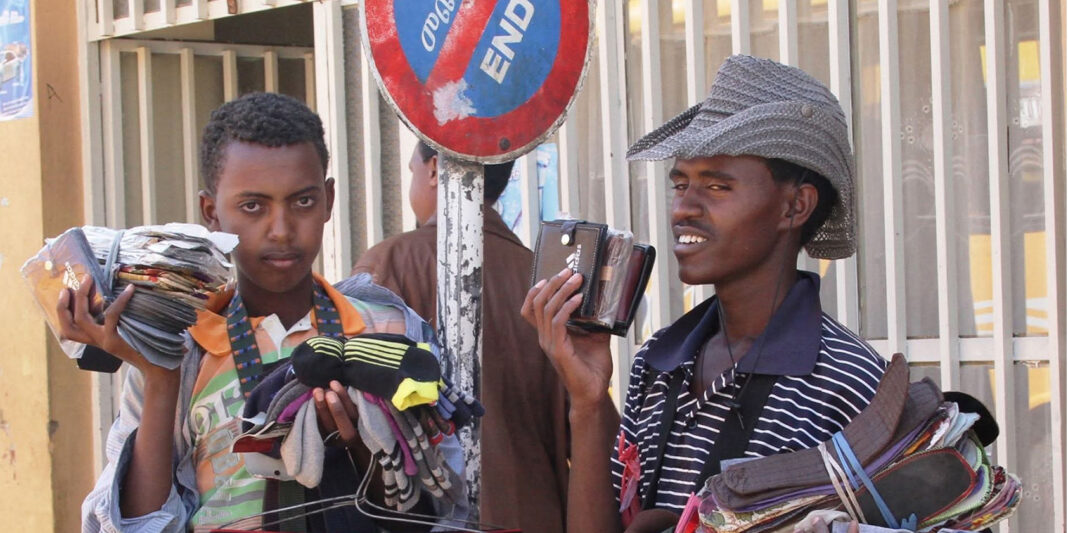
Ethiopia’s agricultural sector receives less than 10 percent of the country’s total financing despite contributing about one-third of gross domestic product, raising concerns over limited access to credit for smallholder farmers and agribusinesses, particularly in the oilseeds and pulses value chains.
The financing gap is constraining agricultural productivity, investment and export competitiveness, according to experts and industry representatives who called for more flexible lending arrangements, innovative financial products and stronger collaboration between banks, development partners and private businesses.
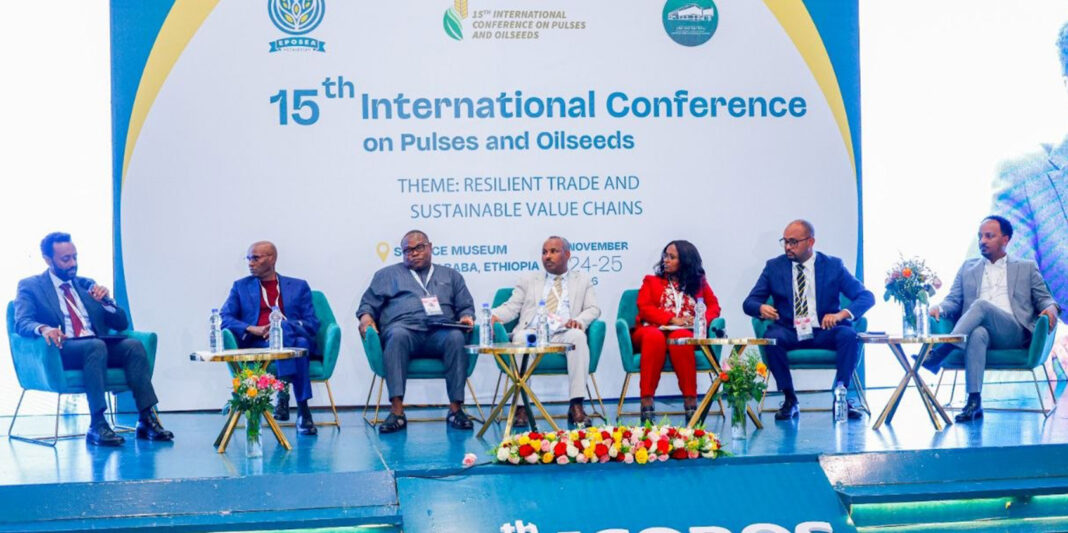
The concerns were raised during a panel discussion on access to finance for Ethiopia’s oilseeds and pulses sector at the 15th International Pulses and Oilseeds Conference, held this week in Addis Ababa.
Professor Mengistu Ketama, chief executive officer of the Ethiopian Economics Association, said the limited financing available to the agricultural sector largely goes to large borrowers, leaving smallholder farmers underserved.
He noted that smallholder farmers generate between 75 and 80 percent of Ethiopia’s oilseed export earnings, estimated at around 600 million dollars, despite receiving very limited financial support.
“These are almost not supported by finance,” he said, arguing that neglecting smallholder farmers means overlooking the foundation of the country’s agricultural value chains.
According to Professor Mengistu, limited access to credit has contributed to a low-input production system, with farmers unable to afford the agricultural inputs needed to improve productivity.
He identified stringent collateral requirements and limited awareness of alternative financing mechanisms as major obstacles preventing farmers from accessing loans.
He also highlighted the potential of warehouse receipts and land-use rights as alternative forms of collateral, although their implementation by financial institutions remains limited.
Bulbula Ture, chief executive officer of SORET International Trading, said access to finance remains a major challenge for Ethiopian businesses, particularly small and medium-sized enterprises.
Although Ethiopia’s banking industry has expanded to around 30 banks, businesses continue to face difficulties securing adequate financing at the right time and at affordable interest rates, he said.
Bulbula noted that commercial borrowing rates generally range between 20 and 22 percent, while lending remains heavily dependent on fixed-asset collateral.
He said smaller agricultural producers, particularly farmers engaged in producing beans, soybeans and other oilseeds, face even greater difficulties accessing credit.
Beyond high borrowing costs, he identified lengthy paperwork, inflexible repayment arrangements and delays in loan approvals as additional barriers.
He said businesses often fail to obtain financing when they need it most, particularly during agricultural purchasing and production seasons.
Meanwhile, the National Bank of Ethiopia said it is undertaking financial sector reforms aimed at expanding access to finance and improving the availability of innovative financial products.
Getnet Adane, financial institution market development director at the National Bank of Ethiopia, highlighted the National Agricultural Finance Roadmap, developed in collaboration with the Ministry of Agriculture, as one of the initiatives intended to address financing constraints in the agricultural sector.
The roadmap focuses on mobilising additional loanable funds for agriculture, digitising farmers and strengthening the capacities of financial institutions and agricultural businesses.
He said the initiative also includes plans to digitise smallholder farmers and introduce farmer credit cards within the coming year to improve their access to financial services.
The National Bank is also promoting movable asset-based financing to reduce the banking industry’s dependence on conventional fixed-asset collateral.
According to Getnet, the legal framework and collateral registration system for movable assets are already operational, creating opportunities for financial institutions to introduce alternative lending products.
He added that ongoing financial sector reforms, including opening the banking industry to foreign investors and expanding interest-free banking services, are expected to improve competition and financial inclusion.
Andrews Ahiku, head of inclusive finance at the Alliance for a Green Revolution in Africa, acknowledged that agricultural lending carries higher risks than financing other sectors but argued that appropriate financial arrangements could make the sector more attractive to banks.
Citing a study conducted across Kenya, Rwanda, Tanzania, Uganda and Zambia involving 14,000 loans worth approximately four billion dollars, he said agricultural lending was found to be twice as risky as lending to other sectors, based on non-performing loan rates.
However, he argued that some of the risks stem from how financial institutions structure and manage agricultural loans.
Ahiku called on development partners to help banks develop appropriate financing mechanisms, improve their capacity to assess agricultural businesses and strengthen the bankability of farmers and SMEs.
He also urged policymakers to examine banking regulations governing loan restructuring, collateral, guarantees and loan classification, arguing that some prudential requirements discourage banks from financing agriculture.