

By Abraham Nega
Education is the cornerstone of national development, social transformation, and economic prosperity. The quality of a country’s education system determines the competence of its workforce, the strength of its institutions, and the opportunities available to future generations.
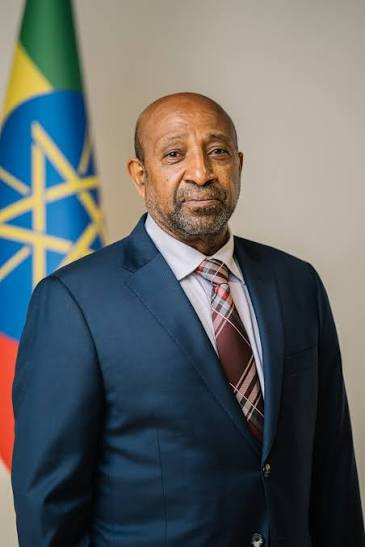
Since assuming the position of Ethiopia’s Minister of Education, Professor Birhanu Nega has led several significant reforms aimed at improving the quality, accountability, and relevance of education across the country. His leadership has focused on raising academic standards, strengthening educational governance, modernizing the curriculum, and restoring public confidence in the education system.
One of Professor Birhanu Nega’s most notable contributions has been his emphasis on improving educational quality rather than focusing solely on increasing student enrollment. Recognizing that access alone does not guarantee meaningful learning, he has consistently advocated for higher academic standards and improved learning outcomes. Under his leadership, the Ministry of Education has promoted reforms intended to ensure that students develop the knowledge, skills, and competencies required for higher education, employment, and national development.
A major initiative associated with his tenure has been the strengthening of national assessment and examination systems. Measures have been introduced to improve the integrity, credibility, and security of national examinations. These efforts have sought to reduce examination malpractice and promote fairness, ensuring that examination results more accurately reflect students’ academic performance. Strengthening public trust in the examination system has been viewed as an important step toward improving educational standards throughout the country.
Professor Birhanu has also supported curriculum reforms designed to better align education with Ethiopia’s economic and social development priorities. The revised curricula place greater emphasis on critical thinking, problem-solving, scientific inquiry, digital literacy, and practical skills. These changes aim to prepare students not only for academic success but also for productive participation in a rapidly changing global economy.
Teacher quality has remained another important area of attention during his leadership.
Recognizing that effective teachers are central to quality education, the Ministry has promoted professional development opportunities, teacher training, and efforts to strengthen instructional practices. Improving teachers’ professional competence contributes directly to better classroom learning and improved student achievement.
In higher education, Professor Birhanu Nega has encouraged universities to improve academic quality, strengthen research activities, and enhance institutional accountability. Efforts have focused on improving governance, promoting merit-based academic standards, and encouraging universities to contribute more effectively to national development through research, innovation, and community engagement. These initiatives seek to position Ethiopian universities as institutions capable of producing highly qualified graduates and valuable research outputs.
The expansion of digital technology within education has also become an important component of recent educational reforms. The Ministry has promoted the integration of digital learning resources, educational technology, and modern teaching methods to improve learning opportunities.
Although implementation continues to face challenges related to infrastructure and connectivity, these initiatives represent important steps toward modernizing Ethiopia’s education system.
Professor Birhanu’s leadership has also emphasized accountability within educational institutions. Schools, colleges, and universities have been encouraged to strengthen institutional management, improve transparency, and focus on measurable educational outcomes. Such reforms aim to ensure that public resources are utilized efficiently while maintaining high educational standards.
Another significant contribution has been encouraging stronger collaboration among government institutions, educators, universities, development partners, and local communities. Improving education requires the combined efforts of multiple stakeholders, and policies that encourage cooperation can contribute to more sustainable and inclusive educational development.
Despite these achievements, Ethiopia’s education sector continues to face substantial challenges, including resource limitations, regional disparities, infrastructure shortages, the effects of conflict in some areas, and unequal access to quality education. Addressing these issues requires sustained commitment, adequate investment, and continued collaboration among all stakeholders. Many reforms also require time before their full impact on student learning and institutional performance can be comprehensively evaluated.
In conclusion, Professor Birhanu Nega’s tenure as Ethiopia’s Minister of Education has been characterized by a strong emphasis on educational quality, academic integrity, curriculum modernization, institutional accountability, teacher development, and higher education reform.
His leadership has sought to strengthen the foundations of Ethiopia’s education system while preparing students for the demands of the twenty-first century. Although important challenges remain, the reforms introduced during his administration represent significant efforts to improve the quality, credibility, and effectiveness of Ethiopian education. Continued implementation, evaluation, and refinement of these initiatives will play an important role in shaping the future of education and national development in Ethiopia.



