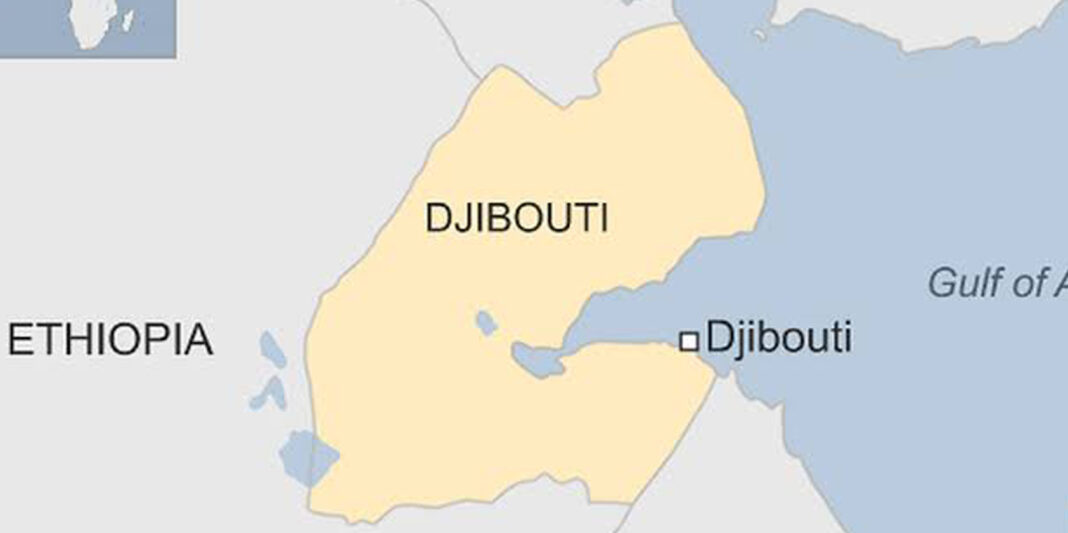
A new economic assessment recommends that Djibouti implement tighter debt controls, strengthen state-owned enterprises (SOEs), and improve domestic revenue collection to sustain its infrastructure-led growth.
The Investment Bank of Africa (IBA) describes Djibouti as a strategically vital gateway for Red Sea trade and commerce linked to Ethiopia. However, the bank warns that years of significant infrastructure investment have increased the nation’s debt exposure and reduced the government’s fiscal flexibility.
Public debt reached approximately 64 percent of GDP in 2025, according to the assessment. Citing IMF projections, the report indicates that the debt ratio is expected to decrease from 67.2 percent in 2025 to 62.3 percent in 2026, and further to 38.5 percent by 2030.
Despite this projected improvement, debt sustainability remains a primary concern. The report notes that both the IMF and the African Development Bank have called for ongoing debt reduction, SOE reform, and engagement with creditors.
IBA suggests broadening Djibouti’s domestic revenue base by standardizing tax exemptions and enhancing VAT collection. It also recommends allocating additional revenues towards debt servicing and essential social infrastructure.
State-owned enterprises are another significant concern. The report advises implementing enforceable dividend policies, strengthening financial disclosure, and setting debt ceilings for profitable strategic SOEs. Weaker enterprises, conversely, should undergo balance-sheet restructuring.
The government is also urged to align fiscal consolidation efforts with initiatives to rebuild foreign-exchange reserves and limit quasi-fiscal liabilities.
Reducing electricity costs is identified as another priority. The assessment recommends increased reliance on renewable-energy independent power producers, reduced system losses, and stronger payment discipline from public institutions.
The report also cautions Djibouti against pursuing infrastructure projects without clear economic and financial returns. It advocates for greater use of public-private partnerships, blended finance, development-finance guarantees, and project-based financing, particularly for water, renewable energy, logistics, and digital infrastructure.
Potential investment needs are estimated at approximately $2.5 billion for logistics corridors, $1.8 billion for renewable energy, and $1.2 billion for water infrastructure. However, the report emphasizes that these are preliminary estimates requiring detailed project-level due diligence.
Despite the debt risks, the assessment assigns Djibouti a BBB investment rating with a positive outlook, citing its strategic location and role in regional trade as key advantages.
It recommends focusing future investment on transport and logistics, renewable energy, water resilience, digital infrastructure, and structured trade finance.
The central challenge for Djibouti, the report suggests, is no longer merely attracting more capital, but ensuring that new investment does not replicate the debt pressures generated by previous infrastructure expansion.
The assessment calls for stronger debt-sustainability safeguards, tighter SOE discipline, adequate foreign-exchange reserves, environmental and social safeguards, and contingency plans for maritime disruptions.