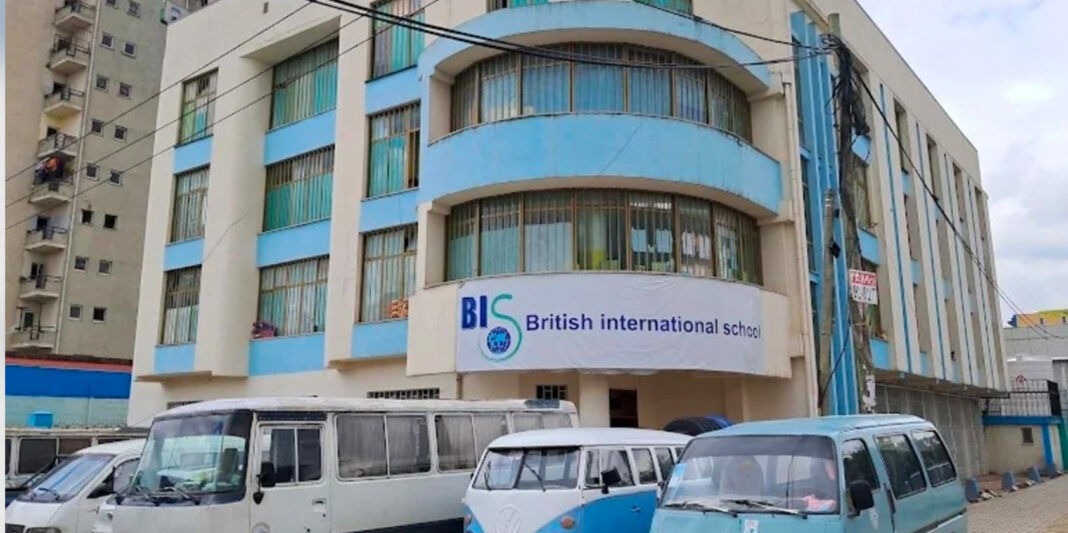
Parents at the British International School (BIS) in Addis Ababa have taken the institution to court, challenging tuition fee increases they say were introduced without adequate consultation and have placed an unsustainable burden on families.
The dispute has brought renewed attention to the cost of private and international education in Ethiopia, where inflation, currency depreciation and rising living expenses are putting pressure on household finances.
Parents allege that BIS increased tuition fees by as much as 36 percent for the 2026/27 academic year. They argue that the increases were implemented without sufficient advance notice or meaningful consultation with parent representatives, as required under education regulations and guidelines.
The case is now before the Federal First Instance Court, Bole Bench.
Rising costs
BIS was established in Addis Ababa in 2005 and provides full-time education from kindergarten through Sixth Form. The school initially operated as a study centre offering language and professional development courses before expanding into formal education in response to demand from parents seeking international curricula.
According to the school’s official profile, BIS provides a British-style education and prepares students for International General Certificate of Secondary Education examinations and A-Levels. Its campus, qualified teaching staff and emphasis on academic and personal development have made it a popular choice among expatriate and Ethiopian families.
However, parents say the school’s reputation comes with increasingly unaffordable costs.
One parent told Capital that annual tuition for a child rose from approximately 26,000 birr during the 2025/26 academic year to more than 60,000 birr for 2026/27. The parent described the increase as exceeding 100 percent over two years and said it had disrupted the family’s financial planning.
Another parent with three children at the school said the increases varied according to grade level. The parent cited a 36 percent increase for Early Years through Grade 2, increases ranging from 30 to 34 percent for middle grades, and a 25 percent increase for Grade 9.
According to the parent, the changes resulted in an additional quarterly payment of between 11,000 and 12,000 birr per child.
Parents said many families had made significant financial sacrifices to provide their children with an internationally recognized education. They argue that sudden increases make it difficult for middle- and fixed-income households to plan for tuition, transportation, meals, uniforms and other school-related expenses.
Consultation dispute
Under education regulations and draft guidelines governing private and international schools, institutions are expected to consult parent associations before revising tuition fees. The guidelines also call for schools to provide advance notice, reportedly three months before the end of the academic year, before implementing new charges.
The guidelines further require schools to disclose tuition and registration fees publicly through notice boards and websites.
Schools that fail to display fees clearly may face fines of up to 500,000 birr, while institutions that raise fees without consulting parents may be subject to penalties of up to 200,000 birr, according to the regulations cited by the parents.
Parents at BIS claim that the school did not follow these procedures. They say the administration failed to provide adequate notice before the end of the previous academic year and did not engage in meaningful negotiations before applying the new fees.
After discussions failed to resolve the matter, parents turned to the courts.
Following an order from the Federal First Instance Court, the school administration held negotiations with a 15-member parents’ committee representing families from eight branches.
The talks ended without an agreement. Parents said the school maintained that the revised fees were necessary to cover rising operational costs and preserve educational quality. They also said the administration refused to offer discounts or reconsider the increases.
Parents propose phased increases
One member of the parents’ negotiating team told Capital that parents presented two alternatives.
Under the first proposal, the total increase would be limited to 20 percent and introduced over two academic years—10 percent during the current 2026/27 academic year and another 10 percent in 2027/28.
The second proposal involved a total cash-payment increase of 15 percent, also spread over two years.
Parents said the phased approach would give families time to adjust their finances while still allowing the school to respond to rising costs.
The school administration rejected both proposals, according to the negotiating parent.
“Because the school administration maintained a firm stance in rejecting these two proposed options and completely halted negotiation efforts, we are moving forward with the next legal process,” the parent said.
The court is expected to issue a decision following the conclusion of the proceedings.
Quality versus affordability
The dispute reflects a wider tension affecting private education in Ethiopia. Schools say they face rising expenses related to salaries, imported educational materials, utilities, maintenance, technology and other operating costs.
Parents, however, argue that increased fees should be accompanied by clear evidence of improved services and educational quality.
They say annual price increases should not be treated as automatic adjustments without transparent explanations. For many parents, the central question is whether the money is being used primarily to improve learning or whether tuition increases are driven mainly by institutional profitability.
The dispute also raises broader questions about the regulation of international schools. While parents accept that schools need to remain financially viable, they want greater transparency and predictability in how tuition fees are set.
They also argue that families should have a meaningful role in decisions that directly affect their children’s education and household finances.
Broader sector concerns
Parents involved in the case say the dispute at BIS is part of a wider problem in Ethiopia’s education sector. Private schools across the country are facing increased costs as inflation and currency pressures raise the price of imported materials, equipment and services.
At the same time, many families are experiencing declining purchasing power and rising costs for food, housing, transportation and healthcare.
International schools are particularly affected because they often rely on foreign curricula, imported textbooks, international examinations and highly qualified teachers. These costs can be reflected in tuition fees, but parents say schools should still provide clear documentation and proper consultation before making changes.
The conflict has also exposed a gap between regulation and enforcement. Although guidelines outline consultation and disclosure requirements, parents say they are uncertain about how consistently these rules are implemented and enforced.
Capital made repeated attempts to obtain comment from officials at the Ministry of Education but received no response.
The British International School administration was also contacted for comment, but had not responded by the time of publication.
The Education and Training Authority told Capital that it had responded to the matter in writing and advised that the school and parents should reach a consensus regarding the dispute.
A test for private education
The BIS case is now being closely watched by parents, schools and education-sector observers. Its outcome could influence how private and international schools handle future tuition increases and how parents challenge decisions they believe were made without adequate consultation.
For parents, the issue is not simply the size of the increase. It is also about process, transparency and trust.
They say families should not be presented with major financial changes after decisions have already been made. Schools, they argue, should explain the reasons for increases, disclose relevant fees, consult parents in advance and consider phased options where sudden increases would cause serious hardship.
For schools, the challenge is how to maintain quality in an increasingly expensive operating environment without pricing families out of the education they have chosen.
The court’s decision may therefore have implications beyond BIS. It could help clarify the responsibilities of private schools, the rights of parents and the role of education authorities in regulating fees.
Until then, the dispute remains a visible example of the growing pressure on Ethiopia’s private education sector, where the pursuit of international standards is colliding with the financial realities facing families.