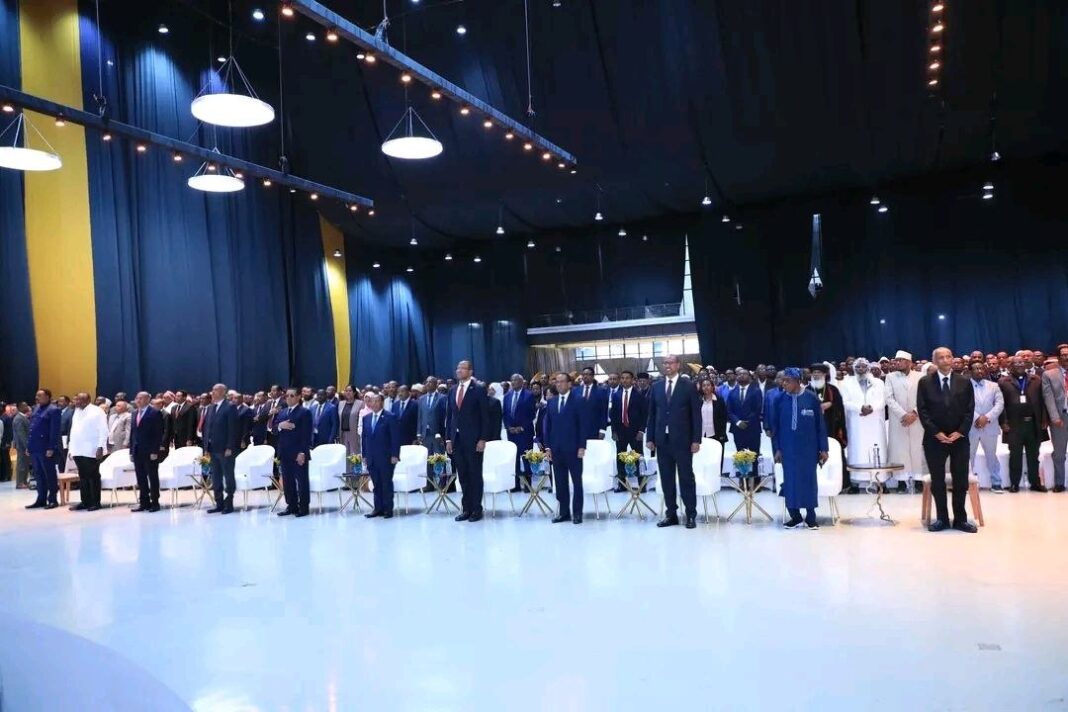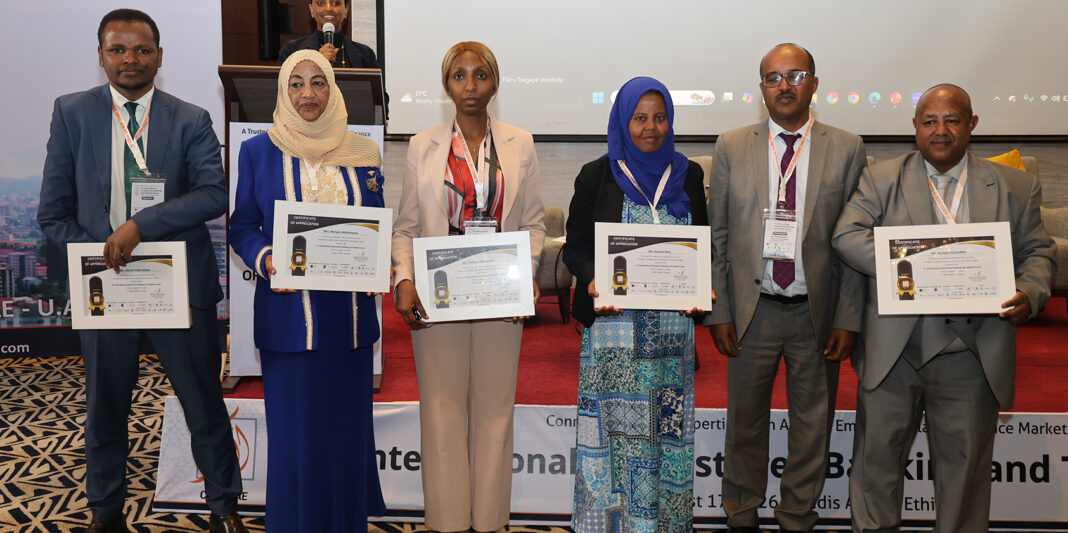
Ethiopia’s growing interest-free banking and Takaful industries took centre stage on Aug. 17 as regulators, financial-sector executives, Shariah experts, fintech professionals and investors gathered in Addis Ababa for the 6th International Interest-Free Banking and Takaful Forum.
The forum, organised by AlHuda Centre of Islamic Banking and Economics (AlHuda CIBE) at the Hyatt Regency Addis Ababa, was held under the theme, “Connecting Global Expertise with Africa’s Emerging Islamic Finance Markets.”
Participants from 20 countries attended the event, reflecting growing international interest in Ethiopia and Africa’s emerging markets for interest-free banking, Shariah-compliant insurance and other Islamic-finance products. The meeting brought together policymakers, central bankers, insurance executives, academics, consultants, investors and professionals from across the financial-services industry.
The forum came as Ethiopia continues to expand interest-free financial services, which are designed to provide banking and insurance products that comply with Shariah principles. These include profit-and-loss-sharing arrangements, asset-backed finance and Takaful, an insurance model based on mutual support and shared risk.
Muhammad Zubair, Chief Executive Officer of AlHuda CIBE, said Ethiopia had made encouraging progress in developing its interest-free banking and finance industry, but would need to address human-resource and professional-capacity gaps to sustain that expansion.
He said the growing involvement of financial institutions, improving regulatory conditions, rising customer awareness and increased demand for interest-free services had created a stronger foundation for the sector.
“The future growth of interest-free banking and finance in Ethiopia will depend not only on expanding institutions and products, but also on developing a strong pool of qualified professionals,” Zubair said.
He noted that AlHuda CIBE’s online professional-development programme had attracted around 800 registered participants, which he said demonstrated increasing demand for specialist knowledge in interest-free finance.
Zubair said the organisation had maintained a long-standing role in Ethiopia’s interest-free finance sector through professional training, institutional capacity building, technical assistance and international exposure programmes for Ethiopian professionals.
He also said AlHuda CIBE had supported the launch of the country’s first three Takaful window operations, helping insurers develop Shariah-compliant products aimed at customers seeking alternatives to conventional insurance.
Takaful is based on contributions by participants into a collective fund that is used to support members who suffer insured losses. Unlike conventional insurance, which is generally structured around risk transfer from a customer to an insurer, Takaful is intended to operate through risk-sharing and mutual assistance.
Solomon Desta, Vice Governor for Financial Stability at the National Bank of Ethiopia, said the central bank remained committed to strengthening the country’s interest-free finance ecosystem.
“The National Bank of Ethiopia appreciates the role of AlHuda CIBE since it entered the Ethiopian market,” Solomon said. “Their contributions have been instrumental in building the foundation for our interest-free finance sector.”
He said the central bank was continuing work on regulatory frameworks for interest-free banking and Takaful, while recognising their role in expanding financial inclusion alongside tools such as micro-Takaful.
Micro-Takaful refers to low-cost, Shariah-compliant insurance products intended for low-income households, small businesses and individuals who may otherwise lack financial protection against health emergencies, crop losses, accidents and other risks.
Solomon said the NBE’s institutional transformation agenda included several tools related to interest-free banking and Takaful. He added that the development of Ethiopia’s capital market and the Ethiopian Securities Exchange could create further opportunities for financial inclusion and product innovation.
“The future is focused on more inclusion,” he said, adding that platforms such as the forum could encourage further sector development.
The event also featured regional participation. Abdirahman Omar Ibrahim, Director of Public Debt Management at the Central Bank of Somaliland, said the forum offered Somaliland an opportunity to exchange experience and learn from international participants.
“Somaliland is doing its best in interest-free banking and Takaful,” he said. “This forum provides a valuable opportunity to share our experience and learn from the global expertise gathered here.”
Yared Mola, President of the Association of Ethiopian Insurers, said Takaful was becoming increasingly relevant within Ethiopia’s evolving insurance market.
“Since the introduction of Takaful by AlHuda CIBE in Ethiopia, we have witnessed increasing growth in the sector,” Yared said. He added that capacity building, regulatory reform and public awareness were essential to sustaining that growth.
He said the industry would need stronger cooperation between insurers, regulators and other stakeholders, as well as more product innovation and consumer education.
The forum featured technical discussions on interest-free banking in Africa, including regulatory frameworks, community banking, financing for micro, small and medium-sized enterprises, retail finance, Shariah governance and institutional sustainability.
A separate panel on Takaful, re-Takaful and TakaTech explored the development of Shariah-compliant insurance, technology-driven Takaful business models and the role of insurance in expanding financial protection.
Re-Takaful is the Islamic-finance equivalent of reinsurance, through which Takaful operators manage part of their risk exposure by sharing it with another specialised provider.
The forum also resulted in institutional cooperation agreements between AlHuda CIBE and Digaf Microfinance Institution, as well as Capital Financial Excellence Center S.C. The agreements are expected to support professional training and wider industry development.