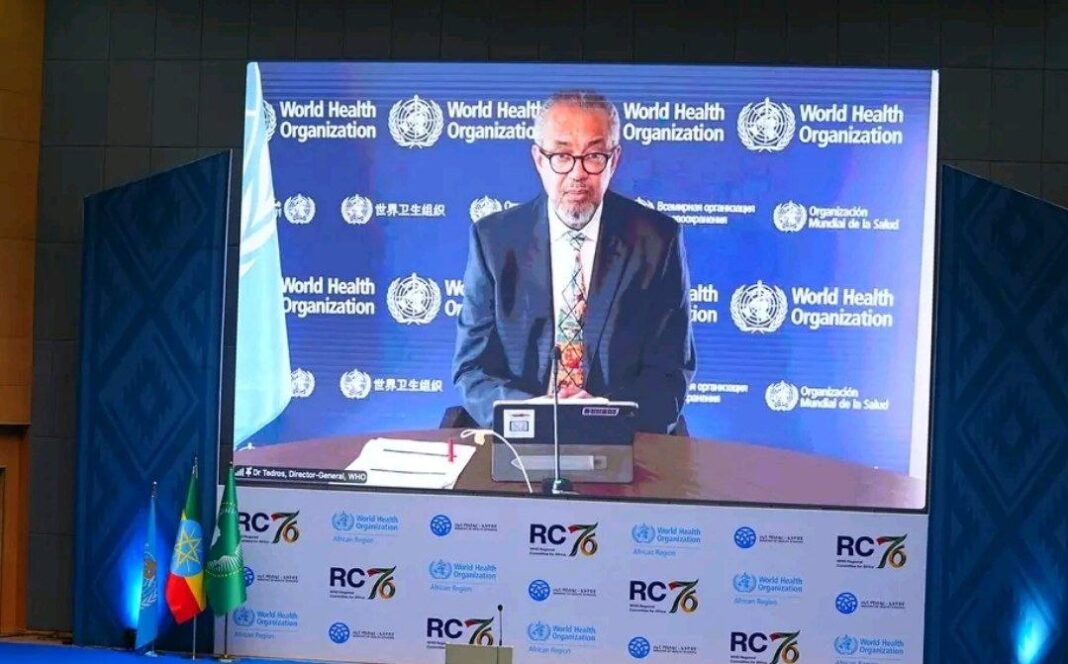
World Health Organization (WHO) Director-General Dr. Tedros Adhanom has issued a stark warning that Africa loses an estimated USD 90 billion annually to illicit financial flows, severely undermining the continent’s public health financing.
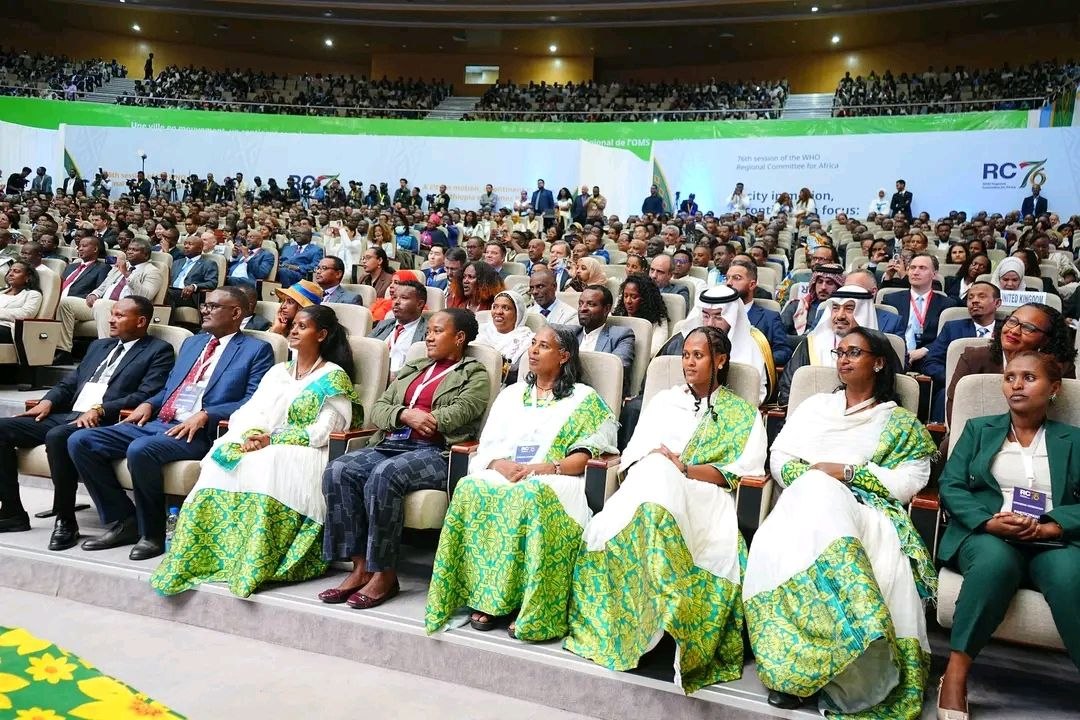
Delivering a virtual opening address at the 76th session of the WHO Regional Committee for Africa in Addis Ababa, Tedros emphasized that this massive systematic drain far outstrips the USD 74 billion in official development assistance received by the continent in 2023.
Highlighting the mounting fiscal pressures facing African nations, the Director-General noted that governments spent USD 163 billion on external debt servicing last year alone. He explained that more than half of East and West African countries currently allocate more financial resources to debt interest payments than to public healthcare.
”Stopping illicit financial flows, ensuring fair debt restructuring agreements, and fully leveraging health taxes alongside other domestic reforms would provide Africa with ample resources to care for its own people,” Dr. Tedros stated. He described the current international financial squeeze not merely as a crisis, but as a long-overdue opportunity for the continent to shed its reliance on foreign aid and build genuine health sovereignty and self-reliance.
The high-level summit has brought together regional leaders to address severe funding cuts, recurrent disease outbreaks, and post-pandemic economic recovery challenges. Reflecting on his journey since his first address in Zimbabwe in 2017—with his current term concluding in August 2027—Tedros recalled the significant strides made in African public health over the past nine years.
Recalling that African leaders must take full ownership of their health agendas, he noted that the principle of Africa financing, managing, and delivering its own healthcare is steadily taking root.
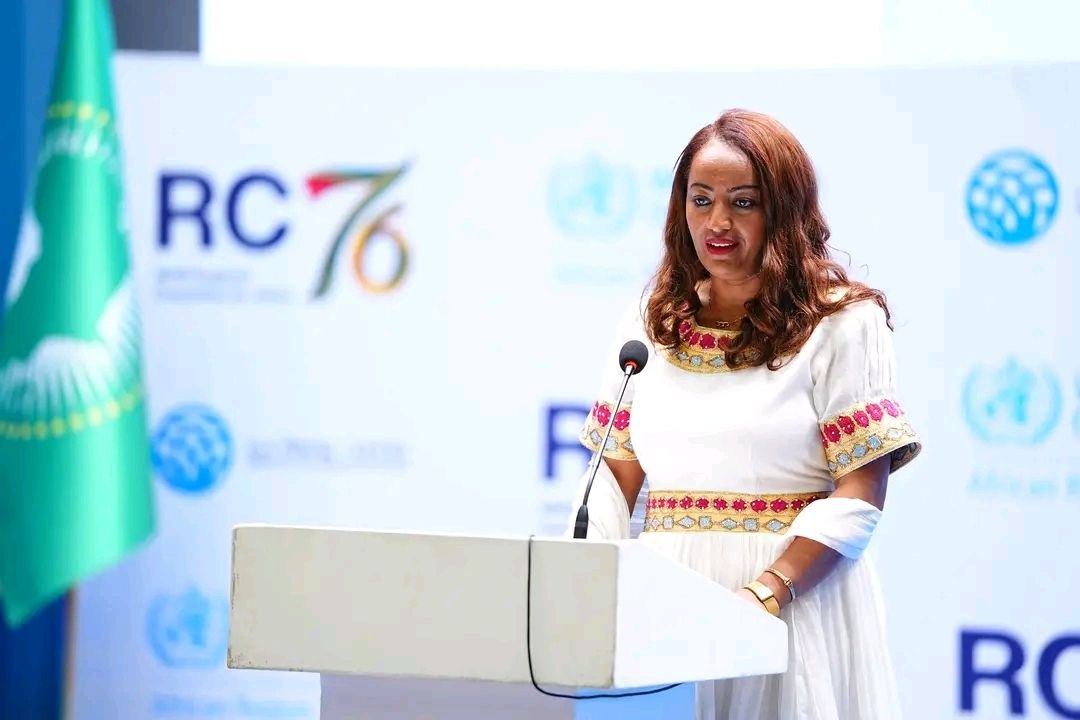
In her remarks, Ethiopia’s Minister of Health, Dr. Mekdes Daba, underscored that Africa must systematically build and expand its internal capacity to meet the health needs of its population.
The Minister highlighted that the market share of locally manufactured pharmaceutical products has surged from 8 percent to 44 percent, emphasizing that scaling up domestic medicine production is a vital step toward reducing foreign dependency and safeguarding health security.
According to data presented by the United Nations Economic Commission for Africa (ECA), out-of-pocket health spending across the continent averages 30 percent—well above the organization’s 20 percent threshold—pushing approximately 150 million Africans into poverty every year.
Dr. Tedros outlined five key priorities for the upcoming term, which include finalizing global pandemic agreements, securing sustainable financing, and optimizing health systems.
The ongoing conference in Addis Ababa is being attended by health ministers and representatives from over 40 African nations, alongside officials from the WHO and other international institutions, researchers, and key stakeholders.