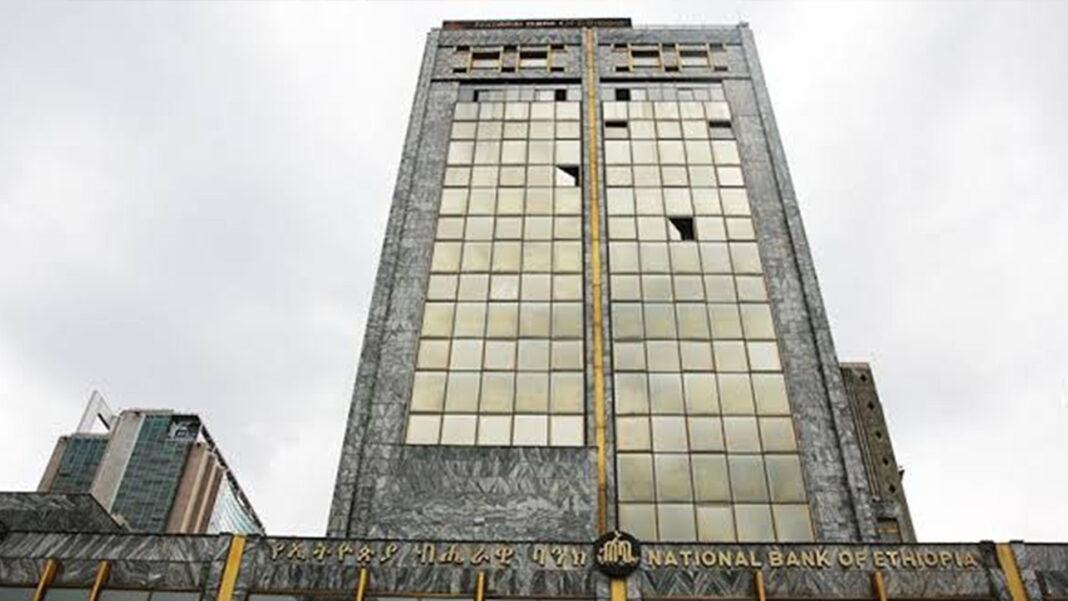
Financial experts are urging the National Bank of Ethiopia (NBE) to expand its supervisory capacity and enforce stricter regulatory safeguards as the country’s financial sector grows rapidly. Although the industry has recorded strong growth in recent years, analysts warn that aggressive interest-rate competition, structural vulnerabilities and high-risk lending practices could undermine long-term stability.
The calls follow a regulatory directive issued by NBE Vice Governor Solomon Desta. Under Directive No. FS/SD/442/2026, the central bank prohibited commercial banks from calculating, compounding or paying interest on savings accounts before the maturity of the deposit term. The directive effectively closes a loophole that had been widely used during a period of intense competition among banks.
The policy prohibits banks from adding unearned interest to a depositor’s principal balance or making advance interest payments through digital or conventional channels. Such practices had become increasingly common as banks sought to attract deposits, particularly from large corporate clients.
Worku Lemma, a veteran financial expert and former senior banking executive, told Capital that the NBE’s intervention was timely and necessary. However, he said banning advance interest payments should be only the first step.
According to Lemma, aggressive liquidity-generation strategies adopted over the past five to six years have evolved into complex arrangements that can artificially strengthen banks’ balance sheets.
“When you pay interest upfront, you are essentially generating artificial liquidity,” Lemma said. “If a customer deposits ETB 500 million for a five-year term and collects the interest immediately, the cumulative payout can easily exceed the principal deposit. This creates phantom liquidity on paper that is backed by no real cash reserves.”
To capture liquidity, some institutions raised long-term deposit rates to between 24% and 26%, with certain contracts reportedly reaching as high as 30%. These arrangements gave corporate customers with substantial bargaining power the opportunity to negotiate unusually favourable terms.
Beyond securing high rates, some corporate depositors were able to negotiate full interest payments in advance. Analysts argue that, rather than supporting productive investment, part of this liquidity may have been channelled into speculative activities, including land acquisition.
Advance interest payments can also distort a bank’s financial position. Recognising multi-year interest expenses immediately may weaken the matching of income and expenses, strain liquidity planning and obscure the institution’s true funding cost over time. Experts say this makes effective asset-liability management, liquidity monitoring and transparent disclosure more important.
The NBE’s latest Financial Stability Report shows a mixed picture of sector resilience. The banking industry’s aggregate liquidity ratio stood at 30.4%, more than twice the minimum regulatory threshold and the strongest position recorded over the preceding five fiscal years.
However, the sector-wide figure masks serious weaknesses at individual banks. A liquidity stress test found that 16 commercial banks failed the regulator’s liquidity sensitivity assessment for the financial year ending June 2025, although this was an improvement from 20 banks in the previous year. The affected banks have been instructed to submit recovery plans and strengthen their internal liquidity and contingency-management tools.
The report indicates that the sector as a whole remained above the 15% minimum liquidity threshold after the simulated shock, with the post-shock liquid-assets-to-deposits ratio improving to 17.3%. Nevertheless, the differing capacity of banks to withstand large withdrawals remains a key supervisory concern.
Market concentration also remains pronounced. The Commercial Bank of Ethiopia, the country’s sole systemically important bank, accounts for roughly half of sector assets. While the NBE says CBE passed the major stress tests conducted at the end of June 2025, the concentration of assets in one institution requires continued monitoring.
Yisehak Teka Nibere, a former NBE regulator and commercial-bank risk and compliance manager, said the central concern is not an absolute shortage of cash but weaknesses in asset-liability management and credit governance.
“Banks must move away from destructive, volume-driven price wars and reorient their credit portfolios toward high-quality, productive sectors that drive real economic expansion,” Yisehak told Capital.
The crackdown on advance interest payments comes as the NBE transitions from direct administrative controls to an interest-rate-based monetary-policy framework.
In July, the central bank fully removed the long-standing annual private-sector credit-growth cap, which had most recently stood at 24%. The decision marked a shift away from direct lending controls toward indirect, price-based instruments. At the same time, the NBE raised its policy rate by one percentage point, from 15% to 16%, saying the rate increase was needed to prevent the removal of the credit cap from easing overall financial conditions.
The NBE also introduced a targeted additional reserve requirement for banks whose loan-to-deposit ratios are assessed to be contributing to inflationary pressure. The central bank has described the measures as a change in policy instruments rather than a loosening of its monetary stance.
The transition gives commercial banks greater room to negotiate deposit terms with customers. But analysts say liberalisation also creates a stronger need for vigilant supervision, particularly when banks compete aggressively for deposits.
Rather than encouraging healthy competition, some analysts argue that the removal of restrictions helped fuel a rate war as private banks sought to secure liquidity and attract major depositors. Larger institutions may be better placed to absorb the cost of high deposit rates, while smaller banks with thinner margins could be more exposed to sudden liquidity shocks.
Domestic competition is being compounded by wider macroeconomic change, including Ethiopia’s transition to a market-determined foreign-exchange regime. The depreciation of the birr has raised import costs and increased pressure on bank customers with foreign-currency needs or import-dependent operations.
The NBE has reduced the foreign-exchange transaction commission cap to 1.5% and lowered the mandatory exporter foreign-exchange surrender requirement from 50% to 30%. However, foreign-exchange shortages and structural trade deficits continue to affect the wider economy.
Analysts say well-capitalised corporate entities may continue to view high-yield deposits and speculative investments as ways to hedge against inflation and currency depreciation. This creates incentives for the type of deposit practices the NBE is now seeking to restrain.