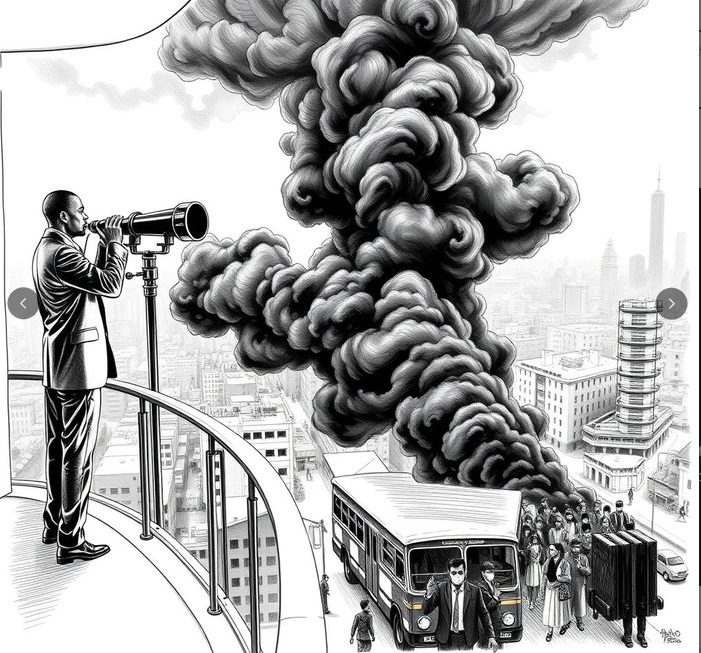
In global climate discourse, carbon dioxide (CO2) commands almost every headline, summit agenda, and policy white paper. International climate diplomacy consistently frames environmental virtue through the lens of long-term decarbonization. Yet for cities like Addis Ababa, this singular focus on CO2 obscures a far more immediate, domestic public health emergency unfolding at street level: the silent crisis of black carbon.
Recent research conducted in collaboration with NASA’s Multi-Angle Imager for Aerosols (MAIA) mission provides an empirical wake-up call. Ground-monitoring data collected across Addis Ababa reveals that local concentrations of fine particulate matter (PM 2.5) average 30 micrograms per cubic meter—triple the annual health-based threshold set by international environmental benchmarks. More alarming still, average black carbon levels in the capital are four to nine times higher than those measured in major U.S. metropolitan centers such as Los Angeles, Atlanta, and Boston.
Black carbon is not an abstract climate metric to be addressed in decades-long cycles; it is toxic, inhalable soot born from incomplete combustion. Medical science is unequivocal about its physiological toll. When inhaled, these microscopic particles penetrate deep into the lungs and enter the bloodstream, triggering acute respiratory illnesses, cardiovascular disease, impaired cognitive development in children, and elevated risks of premature mortality. As environmental health researchers aptly observe, the continuous inhalation of this urban haze carries a physiological burden akin to chronic exposure to secondhand tobacco smoke.
Why must our policy orientation change? The distinction between carbon dioxide and black carbon is fundamental to crafting effective national policy. Ethiopia contributes less than a fraction of one percent to global CO2 emissions. While national afforestation and renewable energy initiatives remain admirable contributions to global stewardship, cutting domestic CO2 will not cleanse the air inhaled daily by millions of residents across our urban centers. Carbon dioxide lingers in the global atmosphere for centuries, meaning its climate benefits are diffuse and slow to materialize.
Black carbon, by contrast, possesses an atmospheric lifespan of merely one to two weeks. This brief duration represents a tremendous policy opportunity: aggressive, targeted local interventions can yield dramatic, measurable improvements in urban air quality almost immediately. The health dividends of reducing soot are entirely captured by the local population that enacts the reforms.
To seize this opportunity, municipal authorities and federal regulators must direct their regulatory firepower at the primary domestic culprits identified by ground-level sensors: aging diesel transport and household biomass combustion.
The MAIA ground network confirms that vehicular traffic generates severe pollution spikes during morning and evening rush hours, with diesel engines alone accounting for nearly 30 percent of urban PM 2.5. While the federal government took a forward-looking step by restricting the importation of internal combustion engine passenger vehicles, the commercial backbone of urban transit—heavy diesel trucks, construction machinery, and aging public minibuses—continues to operate with minimal emissions oversight. Stricter tailpipe emission standards, mandatory vehicle inspection regimes, and incentives for fleet renewal must be enforced without compromise.
Equally urgent is the domestic energy equation. Data shows that even after daytime traffic subsides, particulate pollution remains persistently high well into the evening. This secondary surge is driven by widespread household reliance on charcoal, wood, and other solid fuels for daily cooking. Traditional biomass combustion is both an indoor health hazard and a major outdoor pollutant. Municipal environmental strategies cannot succeed without accelerated investments in clean cooking technologies, including subsidized electric induction stoves, expanded urban power distribution, and accessible modern cooking alternatives.
Cultural celebrations and seasonal activities also produce intense particulate spikes. Ground monitors recorded black carbon concentrations during holiday bonfires that exceeded World Health Organization guidelines by more than eight times. While cultural traditions remain vital to national identity, public health authorities can introduce awareness campaigns and cleaner combustion practices to minimize toxic smoke exposure in dense residential areas.
Treating air quality solely as a climate change portfolio managed through global pledges misses the mark. Clean air is essential public infrastructure, as critical to economic productivity and social well-being as clean water, reliable electricity, or paved roads. Respiratory illnesses place an immense, preventable burden on healthcare facilities and erode national labor productivity.
As Ethiopia prepares for major international climate milestones, policymakers must distinguish between global climate diplomacy and urban environmental survival. Decarbonization is a global imperative, but eliminating black carbon is our domestic responsibility. By shifting focus from global CO2 abstractions to practical, localized interventions targeting diesel exhaust and household biomass, municipal leaders can deliver what citizens need most: breathable, healthy urban air.