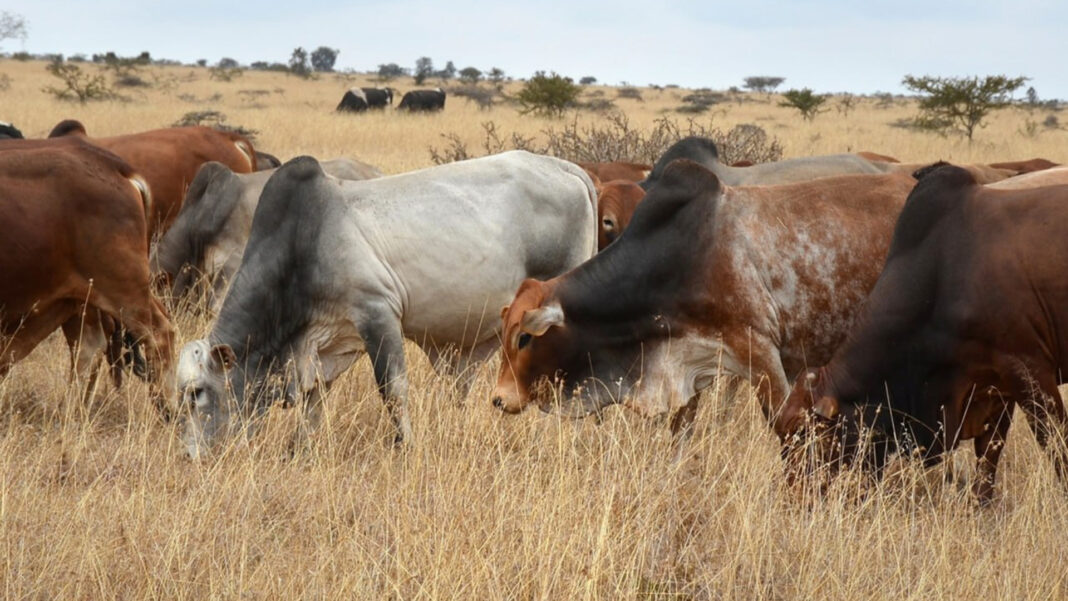
A new digital livestock genetics service has been launched in Ethiopia to help African countries make better breeding decisions and improve the productivity, resilience and sustainability of their livestock sectors.
The African Genetic Evaluation Service (AGENES) was launched on October 7 at the International Livestock Research Institute (ILRI) campus in Addis Ababa.
Developed through a partnership between the Centre for Tropical Livestock Genetics and Health (CTLGH) and Scotland’s Rural College (SRUC), the service uses livestock performance data to generate estimated breeding values (EBVs), helping identify animals with desirable genetic characteristics.
Professor Mizech Chagunda, Director of CTLGH, said AGENES is designed to help address this gap by using individual animal performance data to determine an animal’s true breeding value and support the selection of better breeding animals.
“The real true good animal is in the genes. And obviously we don’t see the genes. So, this package helps us to see what’s happening in the genetics of that animal.”
He added that, farmers in many African countries often select animals based on appearance or other observable characteristics without knowing their actual genetic potential.
The AGENES platform converts livestock performance and other data into estimated breeding values, allowing farmers, breeders and national breeding programmes to make more informed decisions about which animals should produce the next generation.
Chagunda said improved genetic selection could increase milk, meat and egg production, ultimately raising farmers’ incomes and strengthening food security.
“We have a large population, a lot of numbers, but they are only producing very little. So, if we unlock that potential, then we will actually be earning a lot more from our livestock as Africa,” he said.
The initiative is also intended to support the conservation of indigenous livestock breeds. Chagunda said countries have their own policies for protecting indigenous animals and stressed that genetic improvement should not come at the expense of valuable local genetic resources.
“In all countries, indigenous animals should be protected. We lose a lot of genetic material because of indiscriminate breeding.”
AGENES is initially being implemented in collaboration with countries including Ethiopia, Kenya, Nigeria, Tanzania, Malawi, Zimbabwe and Botswana, with the initiative aiming to expand its reach across Africa.
Tsigereda Fekadu, Advisor to the State Minister and Lead Executive for Livestock and Fishery Resources Development at Ethiopia’s Ministry of Agriculture, said livestock is central to the livelihoods and economies of communities across Africa.
She said the sector contributes about 35 percent of agricultural GDP in sub-Saharan Africa and supports the livelihoods of roughly 70 percent of rural residents, providing food, income and financial security while also playing an important social and cultural role.
In Ethiopia, Fekadu said, livestock contributes about 4 percent of national GDP and nearly half of the country’s agricultural economy. Despite its importance and potential, however, productivity remains below the level needed to provide greater benefits to farmers and contribute more strongly to economic development.
She identified several challenges facing livestock improvement in Ethiopia, including the absence of clearly defined breeding strategies, limited recording of pedigree and animal-performance data, gaps in technical and human capacity, and inadequate livestock-management practices.
The launch brought together researchers, breeding specialists, government representatives and other stakeholders to explore how genetic evaluation and genomic technologies can be integrated into national livestock programmes.
The service is particularly aimed at supporting smallholder farmers through governments, breed societies and other organisations involved in livestock breeding and data collection.