Instant payment systems across Africa processed 71.4 billion transactions worth $1.8 trillion in 2025—nearly tripling the volume recorded in 2021—as digital financial infrastructure expands rapidly.
Yet persistent trust deficits, transaction failures, and an enduring reliance on physical currency continue to hold back broader everyday adoption, according to a new industry report.
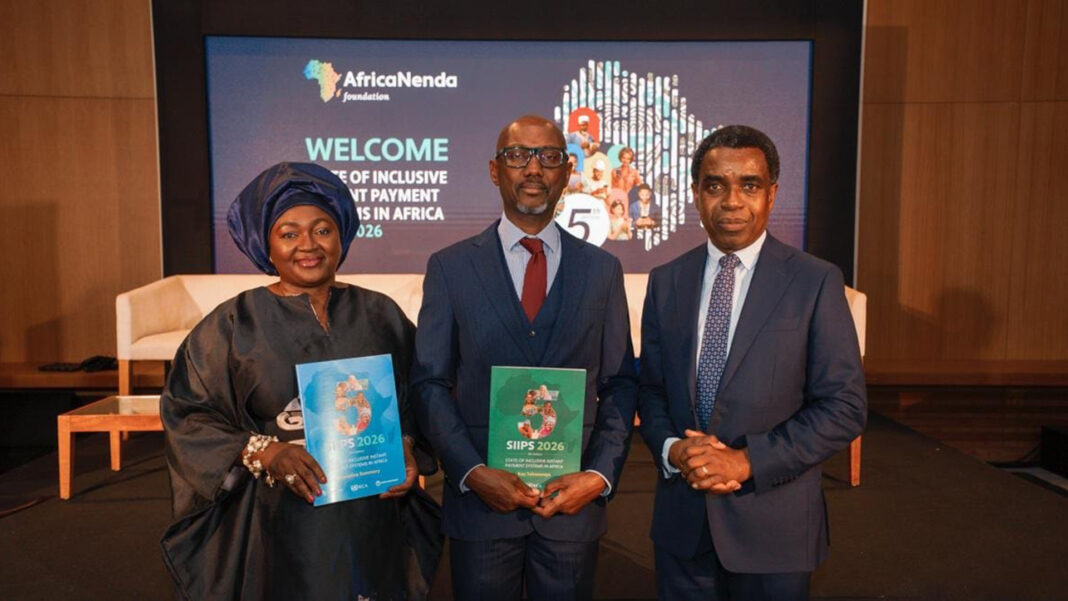
Released by the AfricaNenda Foundation alongside the United Nations Economic Commission for Africa (UNECA) and the World Bank Group, the fifth edition of the State of Inclusive Instant Payment Systems in Africa (SIIPS) 2026 report details major gains in digital payment availability. However, its authors warn that technical infrastructure alone will not convince consumers and small businesses to leave cash behind.
Although 89 percent of African adults live in countries with access to instant payments—and roughly half reside in markets served by inclusive instant payment systems (IIPS)—physical cash remains deeply embedded in daily life. In a survey of 1,403 digital payment users across 15 African countries, 55 percent of respondents reported still using cash for about half of their routine transactions.
This attachment to cash stems largely from reliability concerns and poor user experiences. Over half of those surveyed encountered problems on digital platforms, such as delayed transactions and transfers sent to the wrong recipient. Crucially, one in three affected users never reported the errors, mostly because they did not know how or where to reach customer support.
Sabine F. Mensah, Deputy CEO of the AfricaNenda Foundation and the report’s lead author, said the continent has moved past the hurdle of basic access and now faces the challenge of earning enough public trust for people to rely on digital platforms for their livelihoods.
“Five years ago, our first report mapped 29 instant payment systems; today there are 39, and one in two African adults lives in a country served by an inclusive instant payment system,” Mensah said.
Securing lasting user confidence, she explained, demands stronger built-in protections—including mandatory recipient name checks before money is sent, instant transaction confirmations, and straightforward procedures for resolving disputes and recovering lost funds.
Despite these hurdles, digital finance in Africa remains on a steep upward trajectory. Since 2021, instant payment volumes have climbed at an average annual rate of 28 percent. Over the same period, the average transaction size dropped from 45 to 26, indicating a clear shift away from infrequent, large transfers toward smaller, everyday retail and peer-to-peer purchases. Mobile money continues to anchor the ecosystem, driving 73 percent of total transaction volume.