Philistinism, Political Fear, and the Slow Erosion of a Nation’s Mind
Ethiopia: The Silence Beneath the Noise
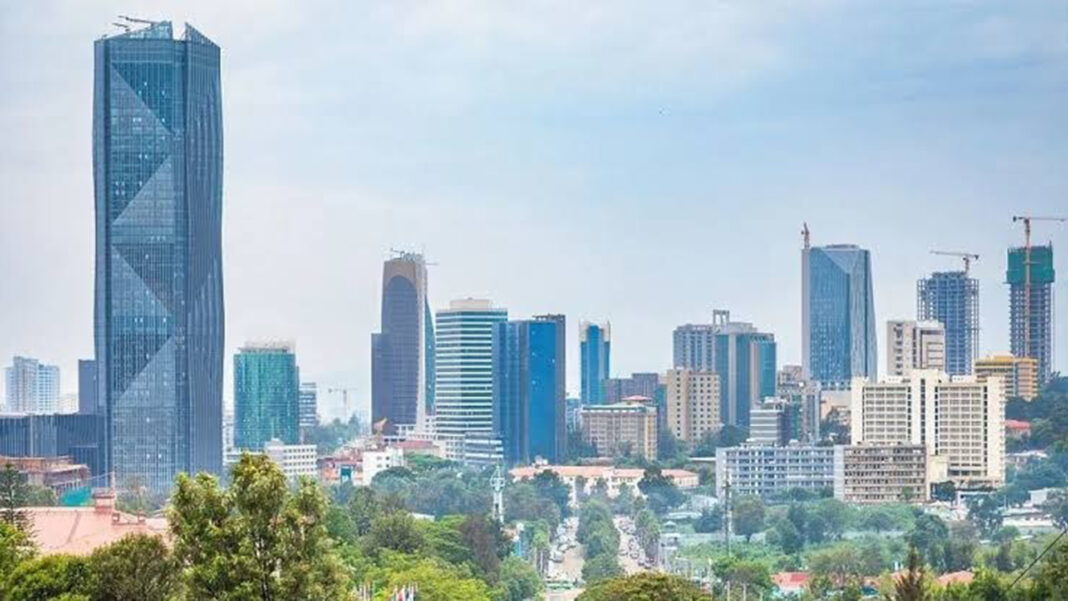
Ethiopia is living through a strange moment. A moment where the country feels louder than ever, yet its intellectual life is quieter than at any point in recent memory. After eight months in Addis Ababa and now stepping outside for a few weeks, the contrast is jarring. Addis dazzles with its glittering skyline, its glass towers, its new roads and cafés. But beneath the shine, there are cracks -deep ones. The most troubling of all is the disappearance of Ethiopia’s intellectual backbone.
The answer lies not only in economics or institutions, but in the shrinking of political space itself. As pressure from government intensifies, apathy has set in. Fear and fatigue have narrowed the room for debate. In this climate, a cultural disposition has emerged that treats intellectual curiosity, scholarship, artistic depth, and the pursuit of truth as irrelevant, elitist, or even suspicious. This is what Frank Furedi calls philistinism.
Philistinism: The Cultural War Against Thinking
Philistinism is not mere anti‑intellectualism. It is deeper, more corrosive. It is a worldview that sees intellectual labour as “bizarre, self‑indulgent, and disconnected from real life.” In Ethiopia today, this attitude is not marginal – it is pervasive. It thrives in the narrowing of political space, in the exhaustion of citizens, and in the suspicion of ideas.
Universities illustrate this vividly. Once engines of national debate, they now appear subdued. Lecturers avoid controversy, students retreat into silence, and research is often reduced to technical exercises stripped of critical engagement. Some may think intellectual life continues, but what emerges instead is a lack of intellectual fortitude and courage. Without courage, no amount of thinking amounts to much. Ideas remain inert, unable to challenge power or inspire change. In their place, opportunists flourish — individuals who adapt to the prevailing winds, perpetuating the status quo rather than questioning it.
This is the cost of philistinism: a society where intellectual energy is drained, where courage is replaced by caution, and where opportunism masquerades as wisdom.
Philistinism Is No Longer External – It Is Institutionalized
Philistine attitudes toward education, art, and culture are not new. Nineteenth‑century thinkers like Nietzsche, Goethe, and Marx warned that the impersonal force of the market could distort cultural development. But history shows us that philistinism can move beyond external pressures and become embedded in the very institutions meant to protect intellectual life.
Apartheid South Africa offers one stark example. Universities were deliberately constrained, curricula censored, and intellectuals who challenged the system were silenced, exiled, or co‑opted. Philistinism here was not simply a cultural mood; it was institutionalised through policy, turning higher education into a mechanism for reproducing conformity rather than cultivating critical thought.
Mobutu’s Zaire provides another. Under his “Authenticité” campaign, intellectual and cultural life was hollowed out, reduced to state propaganda. Independent thinkers were absorbed into the machinery of the regime or marginalised entirely. Universities became places where opportunists thrived, rewarded for loyalty rather than insight, while genuine scholarship was treated as dangerous.
Ethiopia today risks a similar trajectory, though in a different form. The narrowing of political space, the suspicion of dissent, and the pressure exerted on universities have created conditions where philistinism is no longer just an attitude from outside — it is becoming institutionalised at the highest levels of policy‑making. Universities, once engines of national debate, now appear subdued. Intellectual fortitude is scarce, and without it, thinking itself becomes inert. In this vacuum, opportunists flourish, perpetuating the status quo rather than challenging it.
A Historical Tradition Interrupted
Ethiopia once had a proud intellectual tradition. From Zera Yacob’s philosophical writings to the fiery debates of the 1960s student movement, intellectuals shaped national consciousness. They debated land reform, governance, identity, justice, and culture. They challenged power. They expanded the national imagination.
But over time, political sabotage, repression, and narrowing of political space eroded this tradition. Intellectuals were imprisoned, exiled, co‑opted, or silenced. Universities became battlegrounds rather than laboratories of ideas. The public sphere shrank. And the nation became poorer not only economically, but intellectually.
The Cost of Losing Intellectual Courage
A society without intellectual rigour becomes vulnerable to shallow thinking, emotional politics, and reactive governance. Without open discourse, national problems are misdiagnosed. Without critical debate, policy becomes improvisation. Without intellectual courage, society loses its ability to imagine alternatives.
Ethiopia today is paying this price. The absence of intellectual leadership has contributed to polarisation, institutional fragility, and a public sphere dominated by noise rather than insight. The country is full of educated people but starved of intellectual engagement.
The Emotional Climate: Apathy and Fear
The disappearance of intellectual life is happening alongside another troubling trend: a national emotional shutdown. Apathy has become Ethiopia’s default setting (read my article published on 27 September dedicated to this). People are tired, cautious, and withdrawn. The bureaucracy is defensive. Public services are transactional. Conversations are shallow. The emotional bandwidth of the nation feels depleted.
This emotional climate is not conducive to intellectual courage. Apathy suffocates curiosity. Fear silences dissent. Exhaustion kills imagination.
Why This Matters Now
Ethiopia is at a crossroads. Economic pressures, political fragmentation, cultural fatigue, and social apathy are converging. At such a moment, intellectual leadership is not a luxury but a necessity.
A nation cannot solve complex problems with simplistic thinking. It cannot build strong institutions without critical debate. It cannot heal without truth. It cannot innovate without imagination.
An African Example: Ghana’s Intellectual Reawakening
If Ethiopia feels stuck, consider Ghana. After periods of authoritarian rule and political instability, Ghana invested deliberately in academic freedom, media independence, and civic education. Universities became spaces for debate again. Journalists regained autonomy. Civil society organisations flourished. Today, Ghana’s public discourse is vibrant, and its intellectuals play an active role in shaping national policy.
This did not happen by accident. It happened because policymakers recognised that intellectual life is essential for democratic resilience. Ethiopia can do the same but only if it chooses to.
A Call to Action: Rebuild the Nation’s Mind
Ethiopia needs its intellectuals back not in hiding, not in exile, and not in silence. The country’s future depends on restoring the courage to think, to question, and to imagine alternatives. Policymakers must recognise that intellectual freedom is the foundation of stability, for fear of ideas signals weakness, not strength. Universities must reclaim their role as spaces of debate and dissent, restoring academic dignity. Civic society must champion critical thought and create platforms for dialogue, while religious leaders must defend truth, promote moral courage, and resist political co‑option. Journalists must prioritise analysis over propaganda and dare to ask harder questions. Citizens, too, carry responsibility: to demand depth rather than distraction, and to value truth over convenience. Above all, Ethiopia must cultivate a national consciousness that sees intellectual courage not as a luxury, but as a patriotic act which I believe is the backbone of a society determined to move forward with clarity, resilience, and hope.
It is time to walk together, to climb the hill collectively for a different vantage point — one that allows us to scrutinise, to question, to debate, and to imagine alternatives. Only by rebuilding the intellectual backbone of the nation; we can move beyond fear and apathy. Without courage, Ethiopia cannot advance; but with it, the country can rediscover the possibility of renewal. A society where truth is valued, imagination is alive, and intellectual life once again shapes the destiny of the nation.