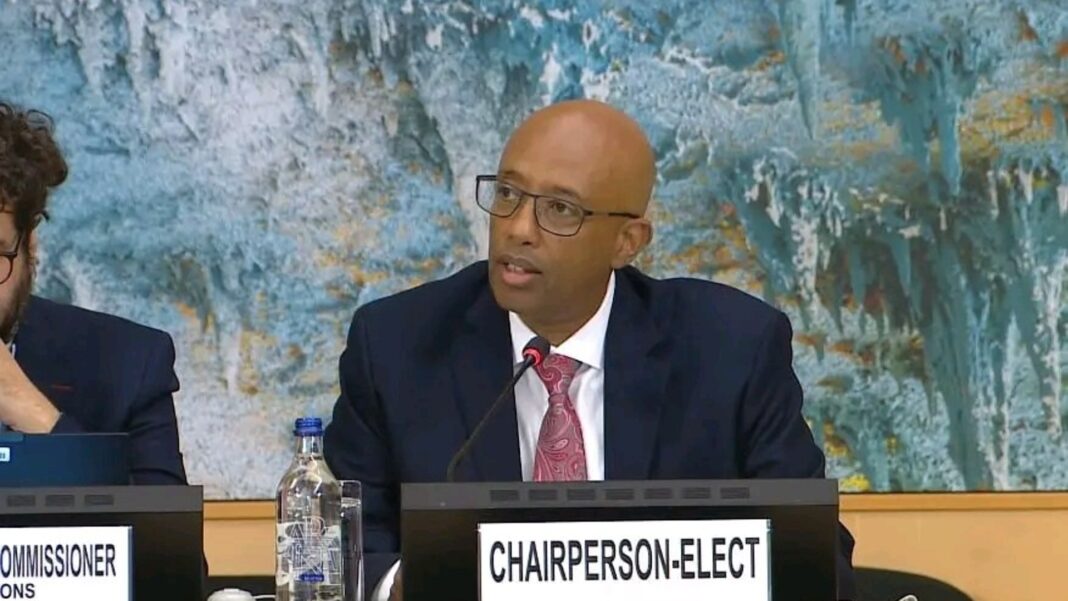
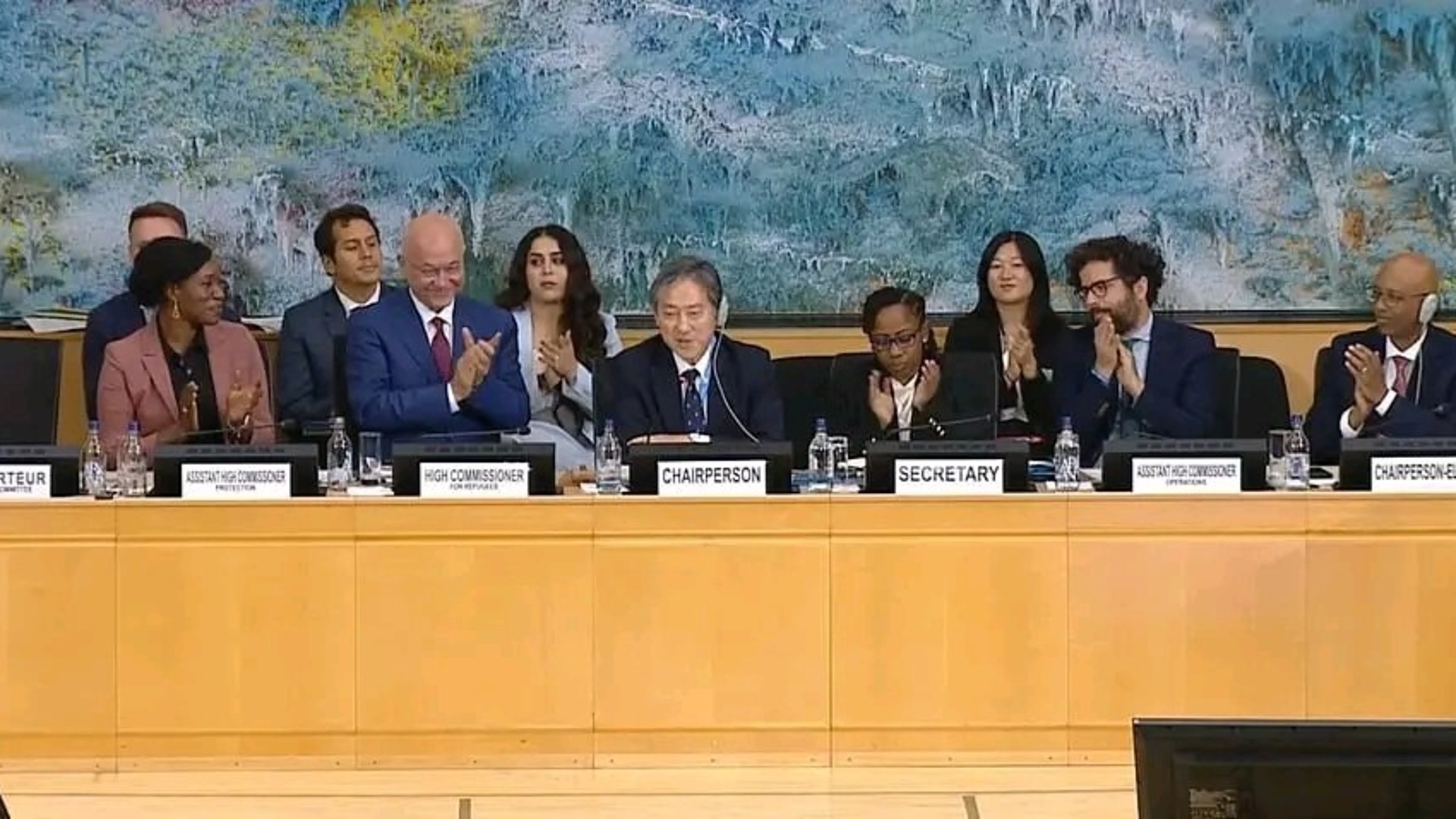
Ethiopia has been elected to chair the 78th session of the Executive Committee (ExCom) of the United Nations High Commissioner for Refugees (UNHCR), strengthening its role in international efforts to protect refugees and promote shared responsibility for displaced populations.
Following the election, Ambassador Tsegab Kebebew Daka, Ethiopia’s Permanent Representative to the United Nations Office at Geneva, expressed gratitude to the African Group and other supporting countries for their confidence in Ethiopia’s leadership.
In his address to member states, Ambassador Tsegab highlighted Ethiopia’s longstanding tradition of providing refuge to people fleeing persecution. He cited the seventh-century Kingdom of Aksum’s protection of early Muslims who sought sanctuary from persecution in Mecca, describing the episode as an early historical example of the principle of non-refoulement, which prohibits returning refugees to places where their lives or freedom would be threatened.
“Refugee protection is a shared international responsibility,” Ambassador Tsegab said, calling for more equitable responsibility-sharing, stronger international cooperation and sustained financial support for refugees and the communities hosting them.
Ethiopia currently hosts more than 1.2 million refugees and asylum seekers, making it one of Africa’s largest refugee-hosting countries. The country has also undertaken commitments through the Global Refugee Forum and introduced initiatives, including the Makatet Roadmap, aimed at strengthening refugee self-reliance, expanding access to services and promoting inclusion alongside host communities.
Ambassador Tsegab emphasized that such initiatives require predictable, long-term international funding and effective partnerships to ensure their sustainability, particularly as humanitarian needs grow and resources become increasingly constrained.
Drawing on Ethiopia’s two years of service within the Executive Committee’s Bureau, he outlined a vision for an inclusive, transparent and action-oriented committee. He pledged to promote constructive dialogue between member states and UNHCR leadership, build consensus among countries with differing perspectives and advance collective efforts to address the challenges facing refugees worldwide.
Ethiopia’s election comes amid rising global displacement and mounting pressure on humanitarian funding, raising concerns about the ability of international agencies and refugee-hosting countries to meet growing needs.
Against this backdrop, Ambassador Tsegab stressed that efforts to improve operational efficiency and reform humanitarian programmes must reinforce, rather than weaken, UNHCR’s core mandate to protect refugees and other displaced people in vulnerable situations.