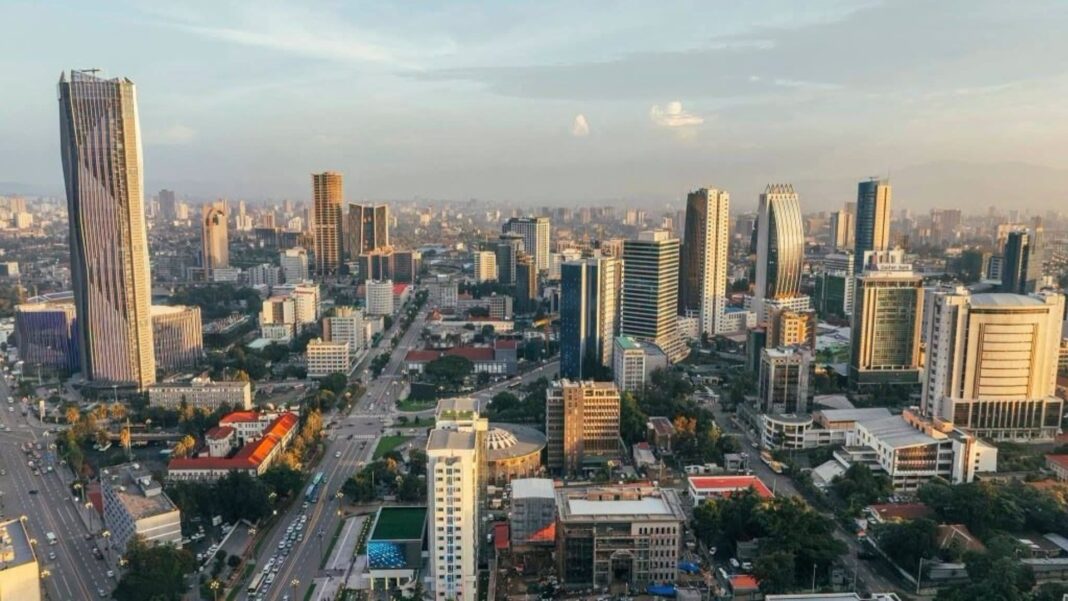
Ethiopia is projected to post one of Africa’s strongest growth rates this year, but a new business report warns that inflation, foreign-exchange access, logistics and uneven security conditions could still determine whether investors convert opportunity into profit.
The African Business Chamber (AfBC) Ethiopia Economic Outlook for the third quarter of 2026 projects real GDP growth of 9.2 percent in 2026, supported by agriculture, mining and electricity generation. However, it also forecasts average consumer inflation of 11.8 percent, cautioning that headline growth will not automatically improve household purchasing power or business profitability.
The report, covering July to September 2026, says Ethiopia’s Homegrown Economic Reform Agenda is reshaping the business environment through foreign-exchange and monetary reforms, fiscal measures, financial-sector liberalisation and efforts to improve external debt sustainability. It credits the reforms with progress, but says imported fuel and fertiliser costs, debt-service obligations and security risks remain material uncertainties.
Ethiopia’s external trade remains heavily skewed. World Trade Organization data cited in the report put merchandise imports at about 16.77 billion US dollars in 2024, against exports of 3.65 billion dollars. Coffee alone accounted for roughly 48 percent of reported merchandise exports by value, underlining the country’s continued dependence on a narrow export base.
AfBC says this creates both vulnerability and opportunity. While coffee, oilseeds, pulses, horticulture and livestock remain central to export earnings, it identifies processing, packaging, quality assurance, storage, traceability and export logistics as areas where Ethiopian producers could capture more value.
The report also notes that China supplied about 32.6 percent of Ethiopia’s merchandise imports in 2024, while the European Union was the largest destination grouping for Ethiopian exports, taking about 28 percent.
Foreign direct investment inflows rose from 3.3 billion dollars in 2023 to 4.0 billion dollars in 2024, according to UNCTAD’s COMESA Investment Report 2025. But AfBC warns that the value of announced greenfield projects fell sharply, from three billion dollars to 801 million dollars, while the number of projects declined from 12 to seven.
The report says the figures show that investors should distinguish between investment inflows, new project announcements and completed productive capacity. It recommends validating demand, financing, counterparties and foreign-currency arrangements before committing capital.
The United Kingdom remains an established commercial partner. UK-Ethiopia trade in goods and services reached 808 million pounds in the four quarters to the second quarter of 2025, with UK exports accounting for 497 million pounds and imports from Ethiopia 311 million pounds, according to the UK Department for Business and Trade.
Ethiopia’s eligibility for the UK’s Developing Countries Trading Scheme may offer tariff advantages for qualifying exports, although AfBC stresses that benefits depend on product-specific rules of origin, certification, labelling and customs requirements.
AfBC identifies agribusiness and food processing, renewable energy, industrial machinery and maintenance, cold-chain and logistics, healthcare supplies, digital and financial technology, and selected mining-related services as priority areas for commercial investigation.
It says opportunities are strongest where companies can solve specific problems, such as reducing post-harvest losses, improving power reliability, cutting equipment downtime or strengthening export quality. The report advises foreign firms to begin with pilots, verified buyers and staged payment structures rather than large upfront investments.
Looking to 2026-2029, AfBC’s base case expects continued strong growth if reforms proceed and agricultural and electricity output remain supportive. The upside case depends on stronger exports, improved foreign-exchange functioning and better investment execution, while the downside case includes renewed inflation, security disruption, external shocks or reform delays.
“Ethiopia offers meaningful long-term potential through its scale, agricultural resources, energy development, industrial ambitions and regional significance,” the report concludes. “However, high projected growth does not remove the challenges of inflation, foreign-exchange access, logistics, security and regulatory execution.”