

The government has set to suspend the import of edible oil as of the beginning of Ethiopian New Year after local pressers are at a final stage to commence massive production.
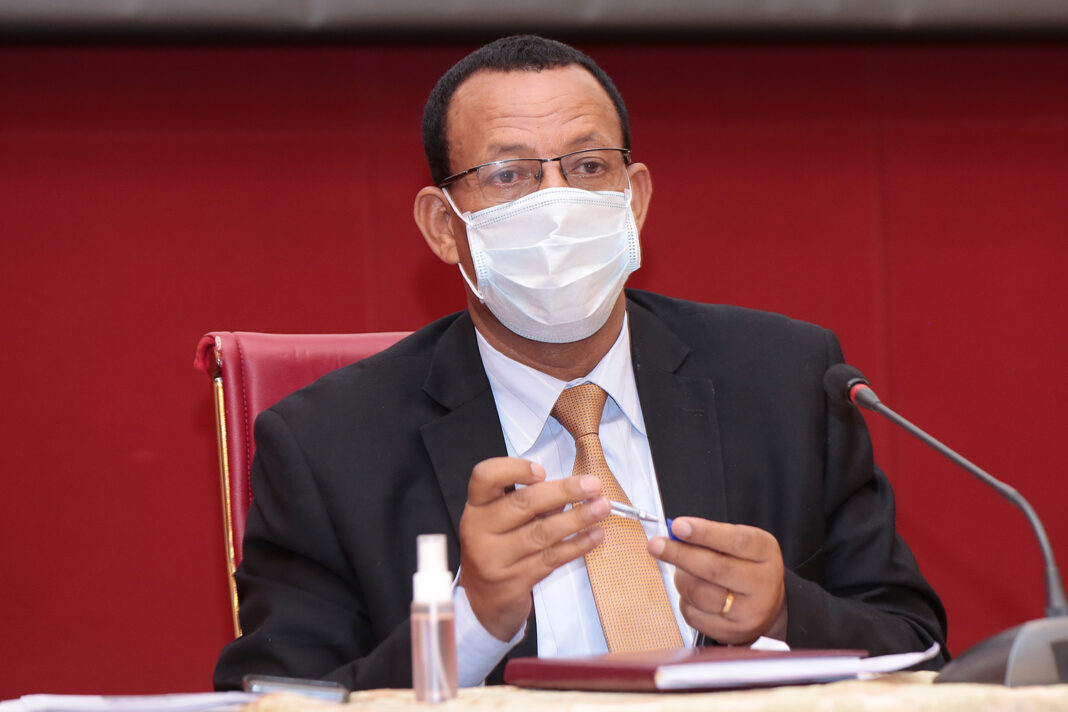
Eshete Assfaw, State Minister of Ministry of Trade and Industry (MoTI), told Capital that under the government’s plan as of October 10 the country will fully stop oil import.
“Until the end of September we will continue to import the product, and in this period local pressers will finalize their preparation with the direct support of the government,” he added.
He reminded that the government conducted frequent meetings with potential big producers to commence their operation as soon as possible. “We have conducted several discussions and even directly visited the sites that are located in eastern Ethiopia and Amhara region,” he says “we want to see a crucial shift on the sector.”
Early this week Prime Minister Abiy Ahmed said that the government is working to substitute the import of basic commodities like wheat and edible oil by local production. He said that the wheat production that expanded in these two years will enable the government to stop the import of wheat fully that consume close to a billion dollar every year.
At the same time he said that the local oil producers that are at the final stage of the project will enable the country to replace the import by local production.
Sources told Capital that few weeks ago the government has approved foreign currency for pressers to import crude oil.
“Currently the country imports 40 million liters of edible oil every month, while in our evaluation local producers will commence operation as of August and some of them will commence operation until September,” Eshete said.
Starting from August foreign currency that is now allocated for the import of final product will be shifted to producers, according to the State Minister.
Besides ShemuPLc, which is located in Dire Dawa, industries are being constructed in Bure and Debremarqos by Belayneh Kinde and WorkquAytenew that does have a huge capacity that will use local oilseeds and import crude oil as input. East Africa Holding, Hamaressa Presser, located in Harar is also the other promising industry.
“Because of the current status we are confident that the import of final product will be fully suspended as of October 10,” Eshete underlined.
The country allocates about half a billion dollar for oil import per annum.




