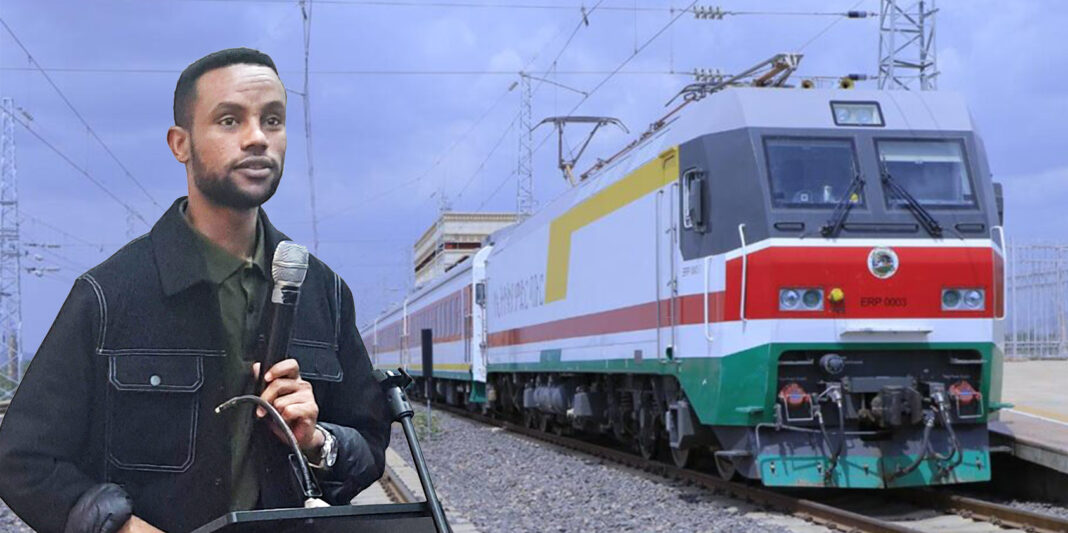
The Ethio-Djibouti Railway Standard Gauge Share Company (EDR) has successfully obtained a Multimodal Transport Operation (MTO) license, marking its official entry into the competitive logistics sector.
This achievement makes EDR the fifth entity to join the multimodal transport industry, previously dominated by the state-run Ethiopian Shipping and Logistics (ESL).
The Ethiopian Maritime Authority (EMA), the regulatory body overseeing this sector, granted the license to EDR after a comprehensive evaluation process.
This development aligns with the government’s strategy to broaden the MTO framework by including more participants, aiming to stimulate competition and promote growth in the logistics sector.
The government had earlier announced plans to issue four additional MTO licenses alongside ESL, with EDR being the most recent recipient.
The selection process, managed by EMA, extended over several years and included multiple local and international companies, all evaluated against strict criteria.
A year prior, EMA issued Non-Vessel Operating Common Carrier (NVOCC) licenses to Panafric Global Plc, Tikur Abay Transport Plc, and Cosmos MTO, all of whom are preparing to enter the market that has been monopolized by ESL for nearly fifteen years.
Fraol Tafa, Deputy Director General at EMA, noted that EDR’s application underwent a thorough assessment, focusing on its infrastructure, operational readiness, workforce, technological capabilities, global trade networks, and industry reputation.
“We have achieved our goal of expanding the multimodal transport sector to include more participants,” Fraol stated to Capital, emphasizing EMA’s commitment to supporting the growth of new entrants in the industry.
EDR, a joint venture between the Ethiopian and Djibouti governments, commenced its commercial activities in 2018 and has since played a crucial role in reducing freight transit times from over three days to under 20 hours.
The railway company manages the transportation of containerized, bulk, and Roll-on/Roll-off (RoRo) cargo, in addition to providing passenger transit services.
Mintesinot Yohannes, Global Logistics Director at EDR, expressed her enthusiasm about this achievement.
“We have been tirelessly working to secure a position as one of the four additional MTO operators,” she told Capital. “We received our license from EMA two weeks ago and are now preparing to begin operations.”
With Djibouti holding a 25% stake in EDR, the company’s entry into the multimodal transport industry is expected to significantly enhance efficiency and competitiveness within the region’s logistics framework.
As an NVOCC operator, EDR will complement ESL, which, despite having its own fleet, also operates as an NVOCC in Djibouti for multimodal transport.
Industry experts have noted that EDR’s market entry has been long anticipated, even as numerous local and international firms sought similar opportunities.
This development marks a major step forward in Ethiopia’s efforts to modernize its logistics industry and foster a more competitive market environment.
In a related achievement, Ethiopian engineers have successfully restored and repaired locomotives and wagons that had been out of service for years.
EDR CEO Takele Uma announced this milestone, emphasizing that it is the first instance of Ethiopian engineers independently managing the maintenance and repair of the company’s fleet.
“Ethiopian railway engineers are truly inspiring; they have made the impossible possible,” Takele stated in a social media post. Over the past four months, the engineers have restored locomotives and wagons that had been dysfunctional for six years, repairing over 16 locomotives and 200 wagons.
This initiative has expanded EDR’s operational fleet, increasing the number of locomotives from 9 to 25 and wagons from 789 to 978.
Previously, a Chinese company managed the repair and maintenance of the electric railway system, while Ethiopian and Djiboutian engineers were trained to eventually take over these responsibilities.
The recent success of Ethiopian engineers illustrates their growing expertise and independence in handling the railway’s technical operations.
Takele underscored the importance of this achievement, stating, “This is a pivotal moment for our railway and marks new trajectories as we unveil fresh opportunities in the logistics sector.”
According to industry experts, this breakthrough not only enhances EDR’s operational capacity but also signifies a new era of self-reliance and innovation in Ethiopia’s railway sector.