The national telecom operator, Ethio Telecom, has acknowledged that its expansion plans are facing significant challenges due to the country’s tight foreign exchange situation.
The company recently announced that critical infrastructure projects worth over 300 million dollars have been delayed or temporarily put on hold. The main reason, it says, is the difficulty in securing the Letters of Credit (LCs) needed to import essential network equipment and software from international partners, as the local banking system struggles to fully meet its large foreign currency requirements.
Despite the government’s ongoing reforms to liberalize the financial sector and improve foreign exchange availability, the company notes that the gap between demand and supply remains wide, especially for large, capital‑intensive sectors like telecommunications.
While Ethio Telecom reports strong domestic revenue in Birr, the challenge of accessing sufficient foreign exchange continues to constrain its ability to modernize and expand digital infrastructure across the country.
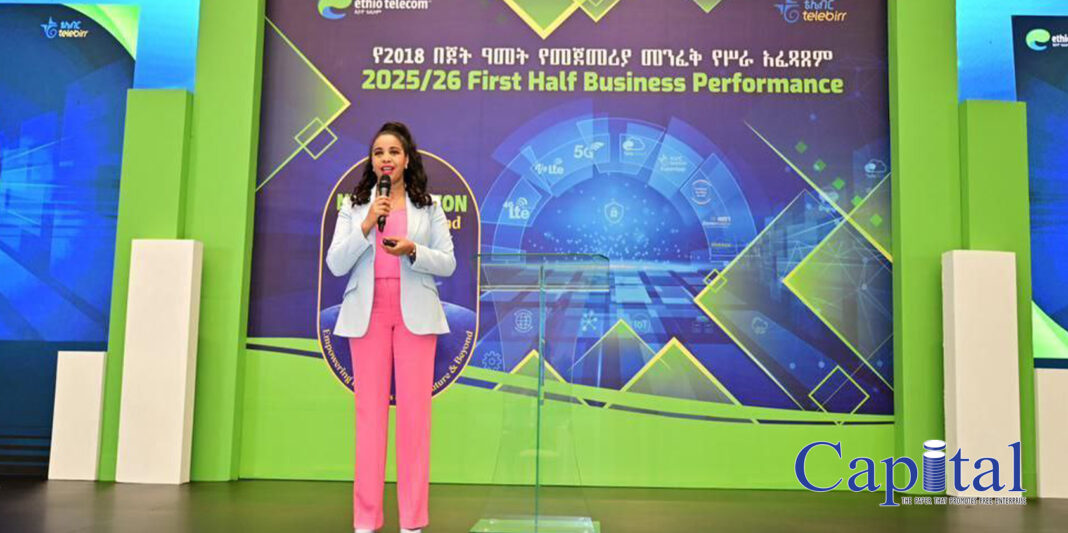
In its 2025/26 budget year, the company’s foreign currency needs exceed one billion dollars, primarily for network upgrades, expansion, and new technology rollouts. CEO Frehiwot Tamru explained that projects valued at over 300 million dollars, already completed up to the procurement stage, are now awaiting the necessary LCs.
“Although we have good relationships with local banks, their capacity to fully meet our large foreign exchange needs is limited,” Frehiwot said.
The situation has been influenced by the exchange rate changes adopted in 2024, which led to a depreciation of the Birr. Since telecom equipment is largely priced in foreign currency, this has increased the cost of imports when calculated in local currency.
The company said it is in ongoing discussions with the National Bank of Ethiopia to address the issue, and is exploring alternative ways to ease the forex pressure on its operations.
Industry observers note that the telecom sector is highly dependent on imported equipment and capital investment, and that prolonged forex constraints could slow down the pace of digital transformation, especially in rural and underserved areas.
To help manage the situation, Ethio Telecom is broadening its revenue streams beyond the domestic market. It is expanding its footprint in neighboring countries and growing its international services, including international voice, data, and telecom‑related offerings.
The company is also in talks with international financial institutions to explore additional credit and financial support options for its expansion plans.
On the recent World Bank assessment of the telecom market, which raised questions about Ethio Telecom’s pricing, CEO Frehiwot offered a clarification. She described the concern about “predatory pricing” as a misunderstanding of the company’s earlier price reductions, which were introduced in 2018, long before the entry of new operators and the market liberalization process.
“These reductions were designed to make services more affordable and to support the vision of Digital Ethiopia,” she said, adding that the company’s low prices today reflect operational efficiency and internal cost‑saving measures, not a below‑cost strategy.
“If the company adjusts prices, the impact on its 87 million customers would be significant, and our intention is to keep that burden as light as possible,” Frehiwot added.
In its half‑year performance for the first six months of 2025/26, Ethio Telecom posted Birr 85.02 billion in revenue, up 37% compared to the same period last year, achieving 81.1% of its target for the period.
The company earned 83 million dollars in foreign exchange (88.19% of plan), with 69 million dollars from international services and 16.02 million from telecommuting services, an increase of 7.2% year‑on‑year.
It saved over 4.15 billion Birr through cost‑efficiency programs (129% of plan) and generated an additional 89.9 million Birr by renting out unused space and properties.
During the period, Ethio Telecom recorded a net profit of Birr 42.36 billion, with a 49.8% profit margin. It has allocated 62.92 billion Birr for recurrent expenditure and 52.92 billion Birr for capital projects, while paying 35.6 billion Birr in taxes to the government.