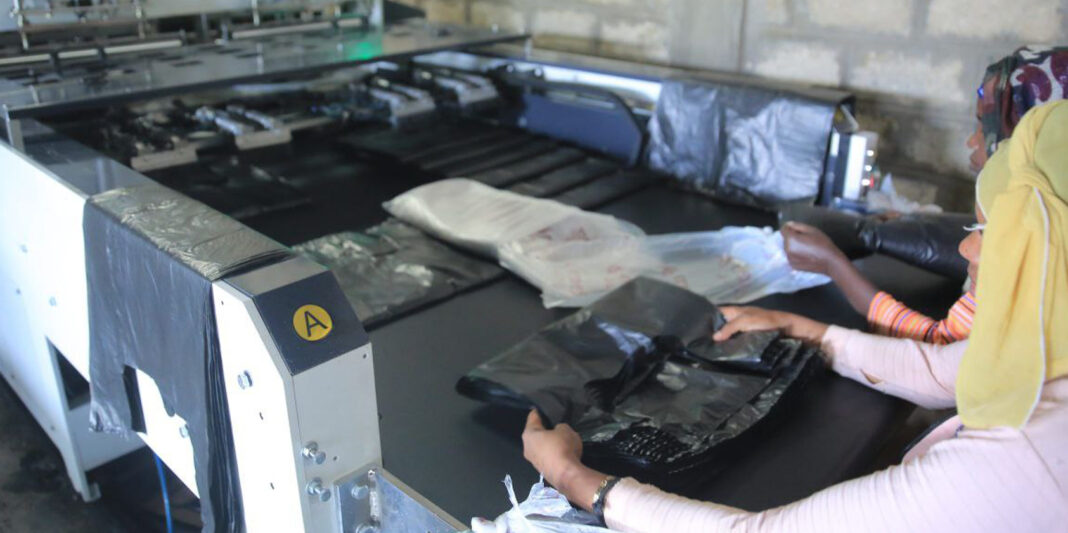
Ethiopia’s plastic manufacturing sector, a cornerstone of industrial growth for three decades that employs hundreds of thousands and recycles over half the nation’s plastic waste, warns it is on the brink of collapse due to what manufacturers call illegal enforcement of new environmental laws and an unrealistic transition timeline.
The Ethiopian Plastic and Rubber Manufacturers Association says factories with more than 58.8 billion birr in registered capital are shutting down, threatening mass layoffs, bank defaults, and a surge in unsafe food packaging practices — all under the banner of the Solid Waste Management and Disposal Proclamation No. 1383/2025, that took effect on January 31, 2026.
Bereket Gebrehiwet, association board member and head of its proclamation response committee, told Capital the rollout has been marred by “illegal actions” that violate the law itself.
“Article 24 of the proclamation clearly states only the Ethiopian Environmental Protection Authority, Addis Ababa Environmental Protection Bureau, or Oromia Environmental Protection Bureau can impose administrative measures,” Bereket said. “Police and code enforcement officers have no such power. This must be understood — the enforcement process itself is becoming illegal.”
He condemned street‑level penalties as lacking transparency and due process, leaving retailers and manufacturers vulnerable to arbitrary fines.
The sector’s 860 registered firms directly employ hundreds of thousands and support millions more indirectly through supply chains. Yet manufacturers say the six‑month transition period to phase out thin plastic bags is “unrealistic,” forcing sudden closures.
“Changing a house takes a year. Transforming an industry that supports millions in six months is inconceivable,” Bereket said, calling for at least three years to study alternatives, import machinery with scarce foreign exchange, and retrain workers.
Investors who borrowed hundreds of millions from banks and microfinance institutions now face asset seizures. The association estimates 12 billion birr in unpaid loans could trigger non‑performing loan (NPL) risks across the financial system.
Over $248 million in foreign currency has been spent on modern machinery now sitting idle, a “huge waste” of national resources, manufacturers lament.
Ethiopia generated 9.4 million tons of solid waste in 2024, with only 40% under formal collection. The plastics sector recycled 56% of it, buying waste at 130 birr per kilogram and injecting 51.6 billion birr annually into the informal recycling economy — a significant GDP contributor now at risk.
Without this system, manufacturers warn of environmental backsliding. Market shelves are filling with unauthorized “non‑woven polyethylene” packaging, which experts say is more environmentally harmful than regulated plastics and unsuitable for wet goods like meat.
Food vendors are resorting to old newspapers — dusty and chemically contaminated — raising food poisoning risks. Previously free plastic packaging has been replaced by chargeable alternatives costing consumers 30–100 birr per transaction, exacerbating cost‑of‑living pressures on low‑income households.
Association leaders say they have “knocked on every office door” for 12 months without resolution. They demand guidelines on recyclable plastic thicknesses, a three‑year transition, and dialogue balancing environmental goals with economic realities.
“The government’s promises and actual results do not align. The industry is collapsing, and people are suffering,” Bereket said. “It is not too late to sit down and talk.”
Environmental authorities promote fiber and natural alternatives, but manufacturers argue these are unavailable at scale or affordable prices.
The crisis pits urgent ecological aims against an industry that has driven jobs and waste management. With factories shuttering weekly, stakeholders await government intervention before economic fallout spreads further.