In a landmark development for Ethiopia’s financial sector, the Ethiopian Capital Market Authority (ECMA) has announced that the first international institution has formally submitted an application for a license to operate in the country’s emerging capital market.
The move marks a significant milestone in Ethiopia’s efforts to liberalize its financial system, attract foreign investment, and modernize capital market infrastructure.
Hana Tehelku, Director General of ECMA, told Capital that although several international firms have expressed interest, one major institution has now completed the preliminary requirements and formally lodged its application.
“We have received the first official application from an international institution and completed the initial documentation process,” Hana said. The name of the company has not yet been disclosed.
She described the development as a strong signal of growing international confidence in Ethiopia’s ongoing economic reforms and in the future of the Ethiopian Securities Exchange (ESX).
For decades, Ethiopia’s financial sector remained one of the most closed in the world, dominated by state-owned institutions and a limited number of domestic private banks. However, under the government’s Homegrown Economic Reform agenda, efforts are underway to open the sector and strengthen market-based financial systems. The establishment of ECMA and the launch of the Ethiopian Securities Exchange are central pillars of this transformation.
The entry of international institutions is expected to bring not only fresh capital but also global expertise, advanced technology, and strengthened compliance standards. Such knowledge transfer is considered critical for a nascent capital market seeking credibility and long-term stability.
ECMA emphasized that licensing is far more than a procedural formality. The process is rigorous and designed to ensure that only competent and transparent institutions enter the market.
“Licensing is not simple. More than 16 supporting documents are required,” Hana explained, adding that the Authority conducts a comprehensive and careful review to ensure the regulatory framework remains robust.
To date, 16 institutions have been licensed across investment banking, advisory, and brokerage services. Most are subsidiaries of local banks, including CBE Capital and Wegagen Capital. The entry of an international institution is expected to introduce new standards of competition and service quality.
One of the key objectives of attracting internationally experienced firms is to unlock Ethiopia’s vast, underutilized economic potential. Currently, much of the economy is composed of private limited companies (PLCs), family-owned businesses, and private investors. For these enterprises to scale and contribute more significantly to national growth, many will need to transition into joint-stock companies and raise capital from the public.
“Thousands of companies have expressed interest in registration,” the Authority noted. “However, converting from a private limited company to a joint-stock company requires significant professional support to meet public fundraising standards.”
Such a transition can take between six and eighteen months, involving financial readiness assessments, corporate governance restructuring, and independent audits.
ECMA dismissed concerns that foreign entrants could crowd out domestic firms. “Our licensing process is non-discriminatory. As long as applicants meet the criteria, they are welcome,” Hana stated. “Foreign firms bring global expertise and technology, while local institutions possess strong knowledge of the domestic market. The two are complementary.”
Interest is also growing across more than 15 licensing categories, particularly among prospective fund managers. ECMA expects demand to accelerate once the Collective Investment Schemes Directive is issued.
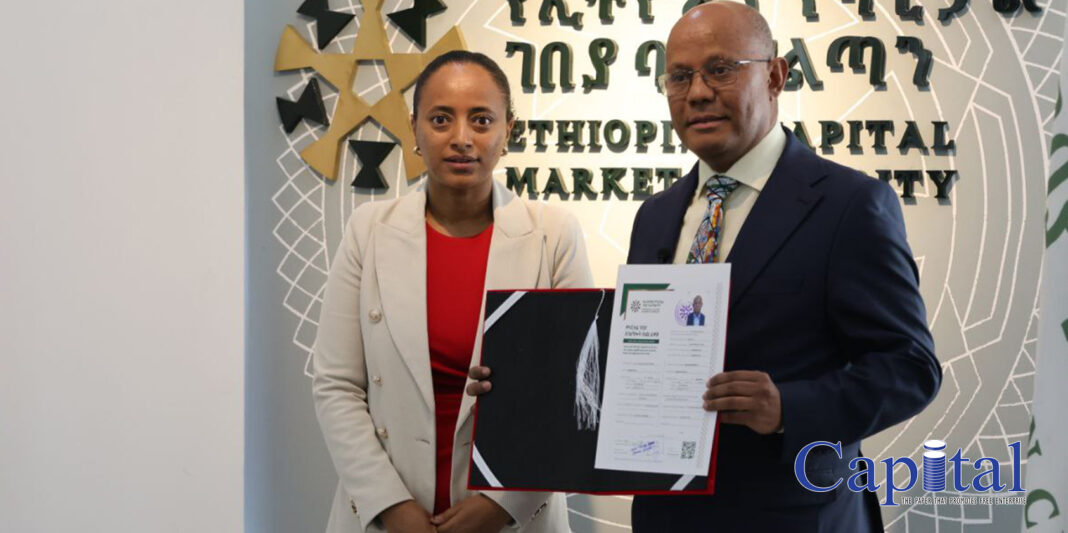
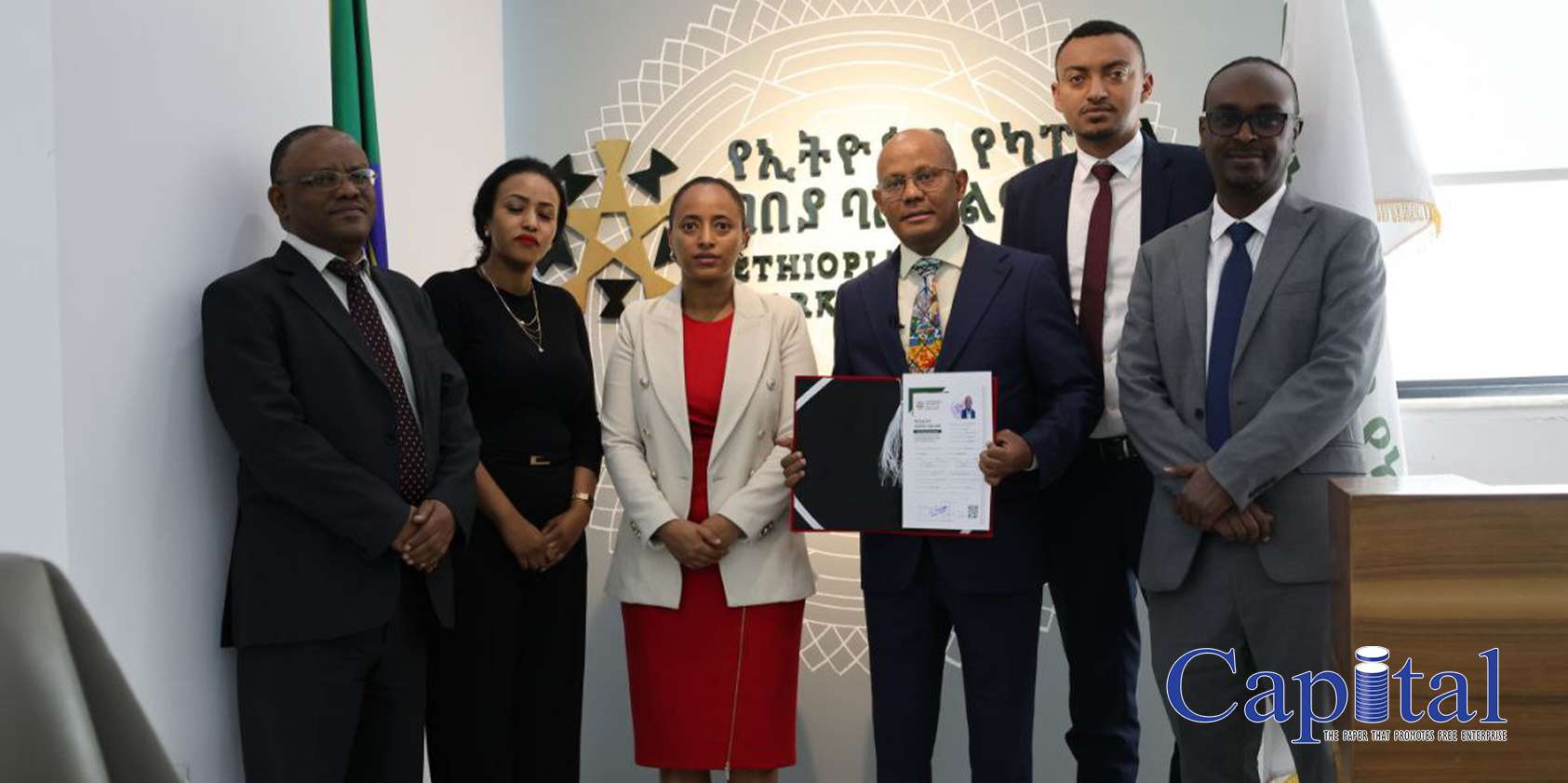
In a related development, the Authority recently granted a corporate investment advisory license to BDO Consulting PLC, bringing the total number of licensed advisory firms to nine.
Million Kibret, Managing Partner of BDO Ethiopia, told Capital that the new license introduces an alternative to the long-standing dependence on bank financing. “Investment securities advisory services allow businesses to raise capital beyond traditional bank loans and expand through capital market instruments,” he said.
With the addition of BDO Consulting, the total number of licensed capital market service providers in Ethiopia now stands at 16 — a figure expected to grow as reforms continue to gain momentum.