Ethiopia’s construction industry is struggling with chronic delays, budget overruns and quality defects because major projects are still awarded largely on the basis of the lowest bid rather than best value, according to the Ethiopian Consulting Engineers and Architects Association.
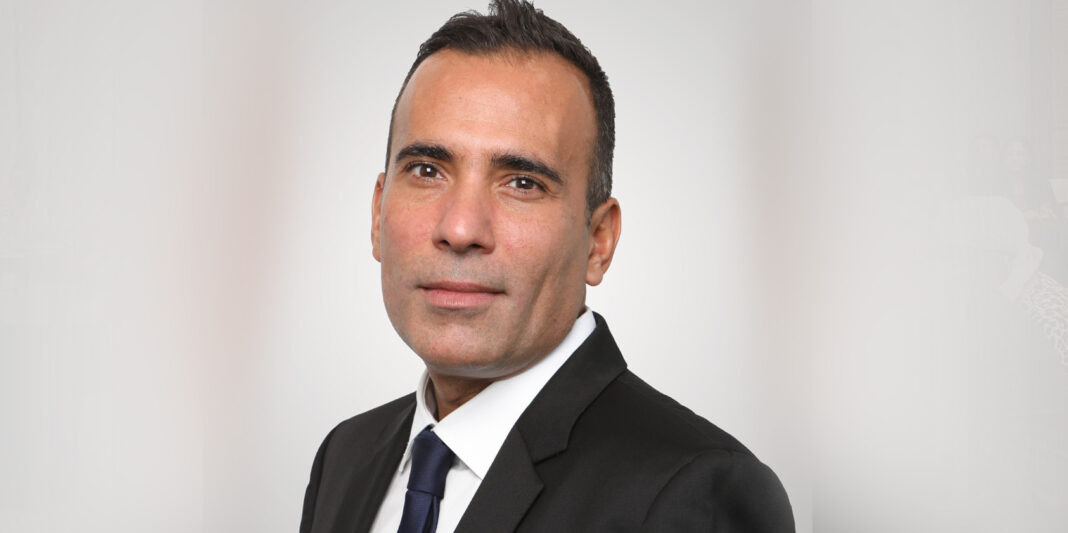
Engineer Dawit Ergicho, president of the association and founder and managing director of ELDA Engineering Consultants, told Capital that the industry’s problems go beyond visible project failures. He said the real weakness begins much earlier, in planning, tendering and procurement, where a system meant to favor quality and cost-based selection often ends up rewarding the cheapest offer.
“The truth in the construction sector is the same as buying cheap shoes that only last six months,” Dawit said, arguing that selecting consultants and contractors mainly on price creates far greater costs later through rework, delays and poor performance.
He said the sector’s persistent problems should not be viewed only as isolated project failures, but as symptoms of a broader structural weakness that affects the entire project life cycle, from design to execution. In his view, the issue is a violation of the international principle of value for money, where low upfront cost is prioritized over long-term efficiency and durability.
The association says a study on developing fee guidelines for construction consultancy services has already been completed and submitted to the Construction Management Institute in December 2025. The study, carried out by independent firm Habcon and reviewed by the Addis Ababa Institute of Technology, is intended to provide a market-based reference for construction consultancy fees and help identify bids that are unusually low or high.
Officials say the guideline is meant to support more rational procurement decisions and reduce the risk that public projects will be awarded to bidders who cannot realistically deliver quality work at the quoted price.
Industry experts also say Ethiopia’s construction sector lacks an independent professional council to regulate engineers and architects in a way that strengthens accountability and competence. They point to models in neighboring countries such as Kenya and South Sudan, where professional councils oversee licensing and enforce continuous professional development.
At present, licensing is handled by a government office, but there are growing calls for an autonomous body that would require ongoing training before license renewal. Dawit said a degree alone does not make someone a professional and argued that the industry needs updated knowledge to keep pace with modern construction standards.
The comments come as Ethiopia seeks to reform one of its most important but troubled sectors. The first Ethiopian Construction Week, held in April 2026, formed part of a broader 25-year Ethiopian Construction Industry Transformation Initiative launched in August 2025. The initiative aims to shift the sector away from blame-shifting and toward collective problem-solving, with quality, efficiency and professionalism at the center.
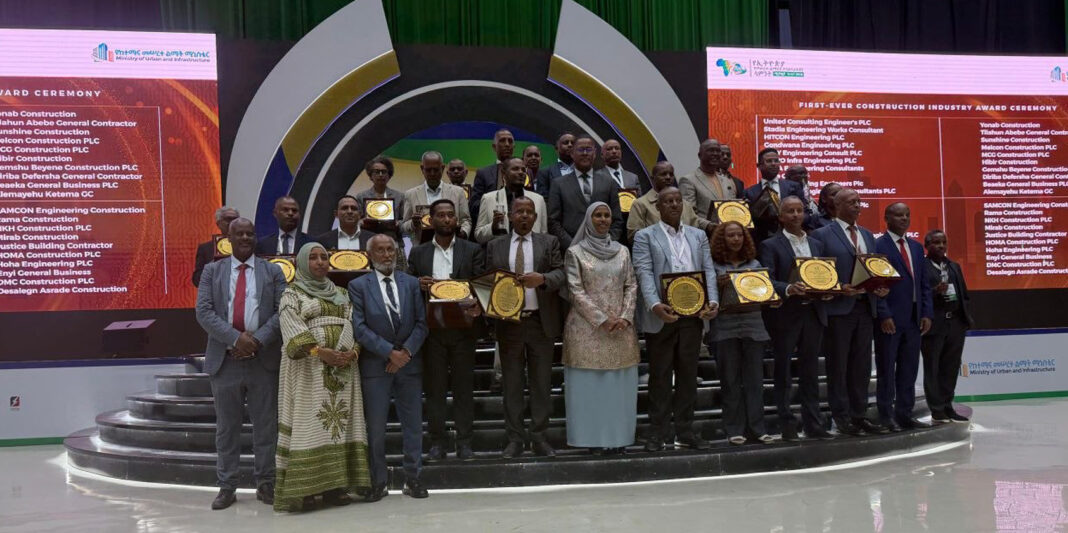
As part of the reform effort, the industry’s strongest performers were ranked and recognized. More than 1,000 Grade 1 contractors and consultants were invited to complete a 17-page assessment covering institutional strength, quality control, performance, customer satisfaction, health and safety, social responsibility and financial and tax compliance. Only 103 responded on time, and 40 firms were ultimately recognized: 20 contractors and 20 consultants.
To avoid conflicts of interest, association leaders who own companies recused themselves from the process. The evaluation was carried out by more than 20 independent experts appointed by the government.
Dawit said the recognized firms now carry the responsibility of serving as benchmarks for the rest of the industry, while others are expected to modernize their practices to remain competitive. He added that the association’s growing membership in the International Federation of Consulting Engineers and FIDIC Africa should help Ethiopian professionals protect their interests and adopt international contract management standards more widely.
The association says the sector’s reform drive is only beginning, but insists that unless procurement changes, the country will continue paying far more than it should for infrastructure that should last longer and perform better.