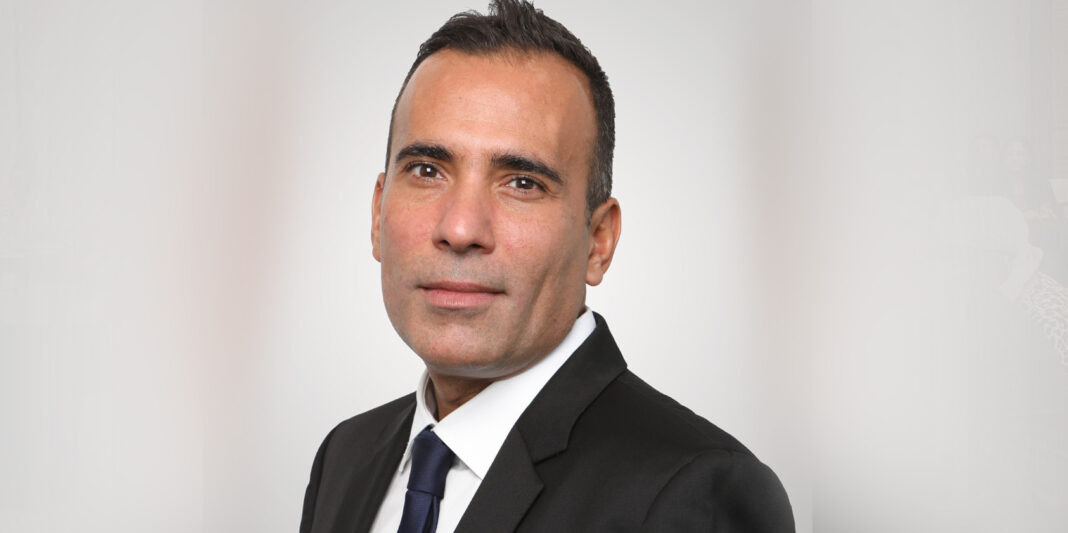
Airlines and airports in Africa and the Middle East are making unprecedented investments in technology, yet they are not fully realizing the benefits of this spending due to poor data integration and inconsistent investment across the aviation ecosystem, according to Selim Bouri, SITA’s president for Africa and the Middle East, in an interview with Capital.
Bouri’s comments follow SITA’s latest Air Transport IT Insights report, which highlights the challenges aviation operators face, including rising jet fuel costs, supply pressures, and the need to keep pace with rapidly increasing traffic. He emphasized that the core issue is no longer merely acquiring more technology, but ensuring effective communication among the systems used by airlines, airports, and border authorities.
This challenge is especially pertinent in Ethiopia, where the aviation sector is expanding due to the growth of Ethiopian Airlines, improvements to regional airports, and the development of the new Bishoftu airport. This comes on the heels of a memorandum of understanding signed in September 2025 between SITA and Ethiopian Airlines aimed at enhancing collaboration on innovation.
Bouri noted that while airlines across Africa and the Middle East are swiftly adopting data-driven operations, airport investments have not kept pace. The report indicates that all surveyed airlines in the region are increasing their investments in real-time data processing, whereas only 43 percent of airports plan similar upgrades. This disparity undermines the value of new systems and complicates disruption management.
He pointed out that fragmented regulations, national concerns, and varying levels of data sensitivity hinder real-time data sharing. In his opinion, the greatest operational cost is not a single figure but the cumulative losses stemming from delays, disruptions, and inefficiencies that arise when systems are not integrated.
Bouri argued that airports require more immediate financing for technology upgrades rather than predominantly focusing on long-term infrastructure expansion. He explained that airlines often have better access to funding, while airports struggle to finance digital systems that enhance passenger processing, baggage handling, and border management.
The SITA executive cautioned that mixing legacy systems with newer technologies can lead to further fragmentation if investments are not standardized and upgradeable. He suggested that Africa has a unique opportunity to adopt modern systems more swiftly than more developed markets, but this can only be achieved if stakeholders coordinate their investments rather than creating isolated silos.