The Mastercard Foundation, a Canadian organization, celebrated its 20th anniversary this week with its partners and young people. Under the Young Africa Works Strategy, the Foundation aims to enable 30 million young people (21 million young women) in Africa to access dignified and fulfilling work opportunities by 2030.
In Ethiopia, the Foundation opened its office in 2019, aiming to enable 10 million young people (7 million young women) to access dignified and fulfilling work opportunities by 2030.
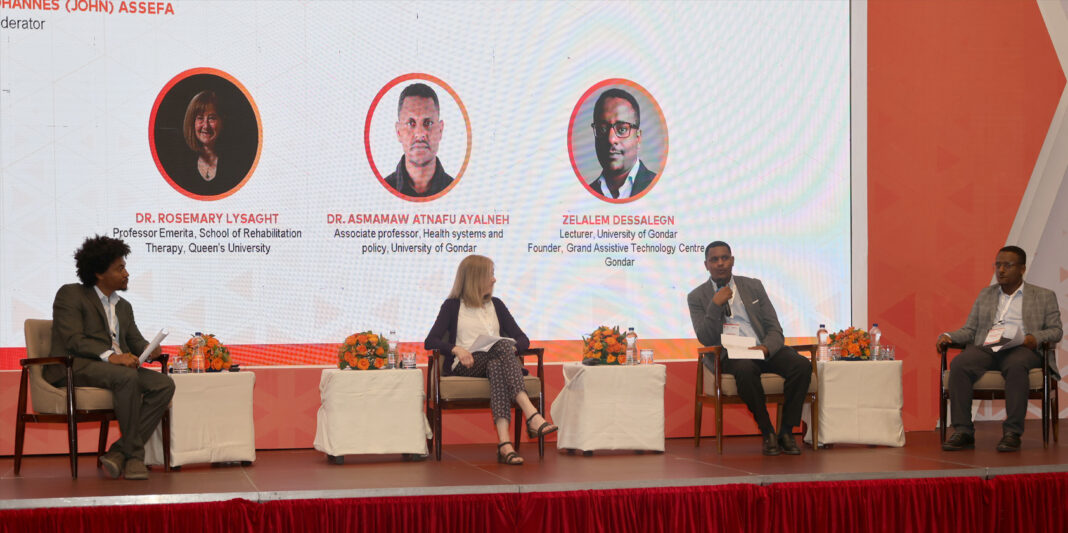
A community week organized by the Foundation took place here in Addis from May 12-13, 2026. It involved partners working with the foundation to share lessons on what’s working well and the challenges they face.
What caught my attention was the important message from the Mastercard Foundation, Ethiopia Office, Country Director, Mefthe Tadesse: in her opening remarks, “Let’s fall in love with the impact we are making, not with the initiative we have started or our organization.”
In the development sector, we often love and value our organizations, the initiatives we’ve created, and the memorandum of understanding we’ve established; however, we seldom discuss the actual impact. All inputs, investments, processes, organizational working methods, funding, and other resources, including government-conducive policy environments, are all means to achieve the desired impact on our programs and initiatives. This has not been a success in its own, if it is not leading in bringing the intended impact in the ground.
Impact is what makes organizations, initiatives, and the numerous inputs they rely on meaningful. That is why she especially stressed the importance of falling in love with our impact.
Measuring the impact of our intervention requires attention to the collection and proper use of data from our programs. This will require adequate investments in monitoring, evaluation, data management, and learning. Programs that have strong data utilization capabilities can better demonstrate their impact with numbers. For example, an organization providing early childhood education will need to determine the cost of providing a one-year education to a child, including all necessary inputs. Conversely, it should also evaluate what $1 can provide to a child who has dropped out of school to help them continue their education.
Not only in education but also in employment programs, we face challenges in quantifying the resources required, say, to create self-employment opportunities for one young person. Measuring data and analyzing will give us an idea, which is also instrumental in defining value for money.
When we reach 70-80% of our project target, we celebrate because it marks a major achievement. We also highlight the challenges and explain why we didn’t reach 100%. Of course, one could argue that the rapidly changing environment we operate in, including factors like the evolving funding landscape, natural and man-made disasters, and government policies, directly affects the success of any intervention. We don’t have to be completely satisfied with this, and we will need to work toward reaching 100%.
The poverty, inequality, and injustice we aim to address require careful planning and risk assessment to ensure they are fully addressed.
What makes impact so critical is that, at our current rate, it will take 123 years to reach global gender equality, according to the World Bank. Based on current projections as of mid-2026, the world is not on track to achieve Sustainable Development Goal 1, which aims to end extreme poverty by 2030.
The numbers are strong indicators of why we must focus on impact now more than ever.