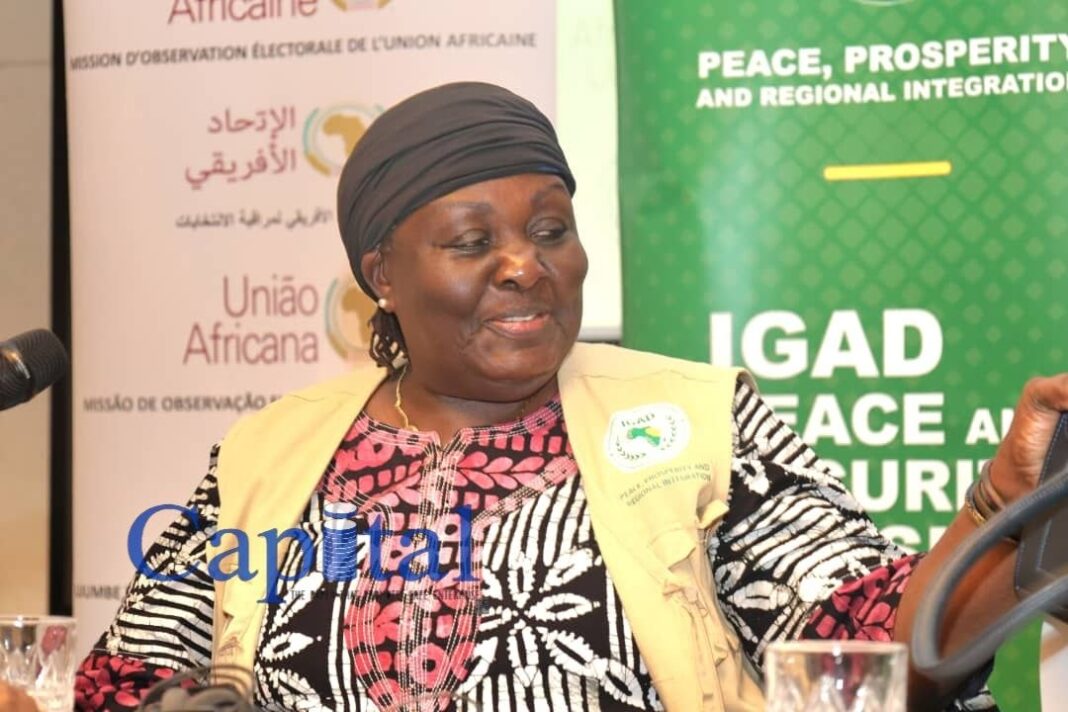
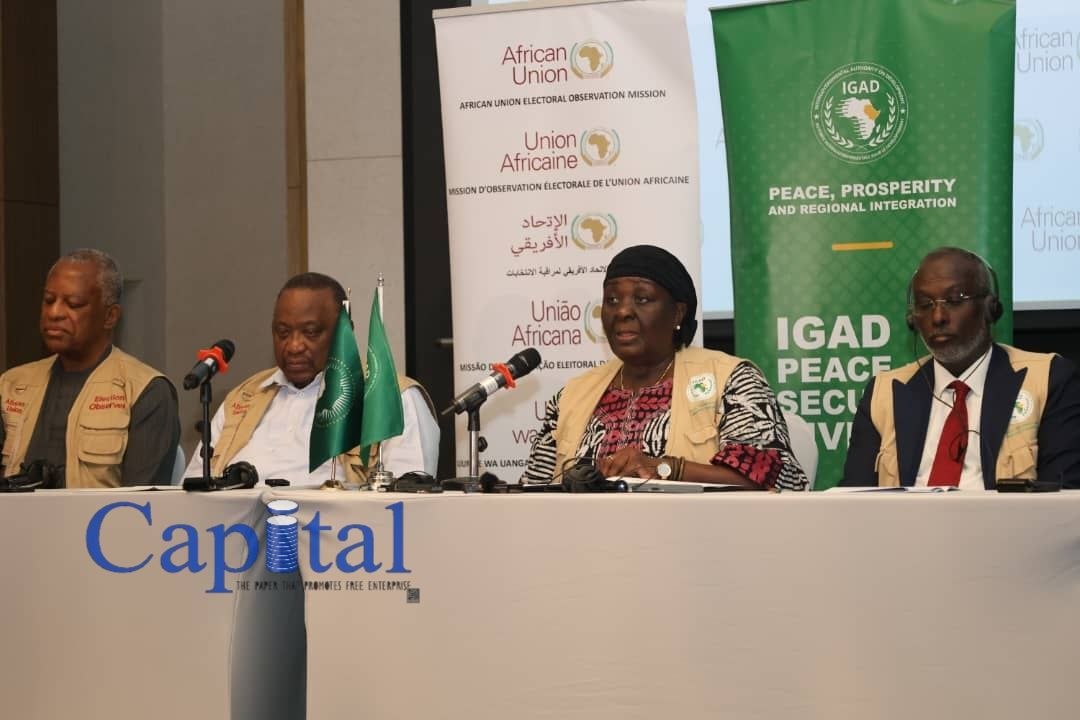
Following the conclusion of Ethiopia’s 7th General Election, the Intergovernmental Authority on Development (IGAD) Election Observation Mission (IGADEOM)
has released its preliminary report. While the report praised the country’s major strides in technology, it conversely called for clear improvements to be made to the physical voting infrastructure.
Chief among the mission’s primary recommendations is a request for the National Election Board of Ethiopia (NEBE) to standardize and simplify the voter identification system, as well as to significantly lower the maximum voter capacity handled per polling station to align with international best practices.
Although this election was widely hailed as an “Election of Many Firsts” due to the use of the locally developed Mirchaye digital registration system and several other sectors, severe crowding was observed in the physical voting process on Election Day (June 1). According to regional observers, the high voter turnout resulted in long and tedious queues, particularly in major urban centers such as Addis Ababa and Dire Dawa.
As congestion worsened into the evening, the Election Board was forced to issue an emergency 6-hour extension, keeping doors open until midnight so that all interested citizens could cast their votes.
The head of the delegation, former Ugandan Vice President Dr. Wandira Speciosa Kazibwe, expressed her appreciation for the immense patience shown by the Ethiopian public who waited in lines until midnight, but pointed out that this time extension exposed a major operational vulnerability.
Under current Ethiopian law, the number of voters accommodated at a single polling station can reach up to 1,500. The IGAD observation team warned in its report that such a high limit naturally creates logistical delays, exhausts local election officials, and reduces the efficiency of the voting process.
To resolve this issue, the IGAD observation team put forward several resolutions for the improvement of future electoral processes.
Consequently, it called upon the Election Board, noting that it is essential to limit the number of voters registered per polling station to a maximum of 1,000 to align with international standards.
On the other hand, IGAD urged that the total number of physical polling stations and centers across the country must be significantly increased to reduce voter volume, and that the voter identification structure should be standardized and simplified to help speed up the queues.
This structural bottleneck was just one of several challenges cited by the observation team. Due to high security risks, the general election could not be conducted uniformly across the entire federation. A total of 46 constituencies were excluded from the democratic process, 8 of which are located in the Amhara region and 38 in the conflict-affected Tigray region.
Additionally, the report pointed out a lack of women’s representation, noting that female participation as candidates was low and that their representation in leadership roles, such as polling station managers, was extremely limited.
Nevertheless, IGAD stated that NEBE’s administrative foundation—which registered more than 54 million voters and coordinated 195,000 election professionals—is a major step forward for democracy in the Horn of Africa’s most populous nation.