Is the National Dialogue bold enough to excavate the truth of the rural land nightmare, or will it settle for the hollow safety of narrow lines?
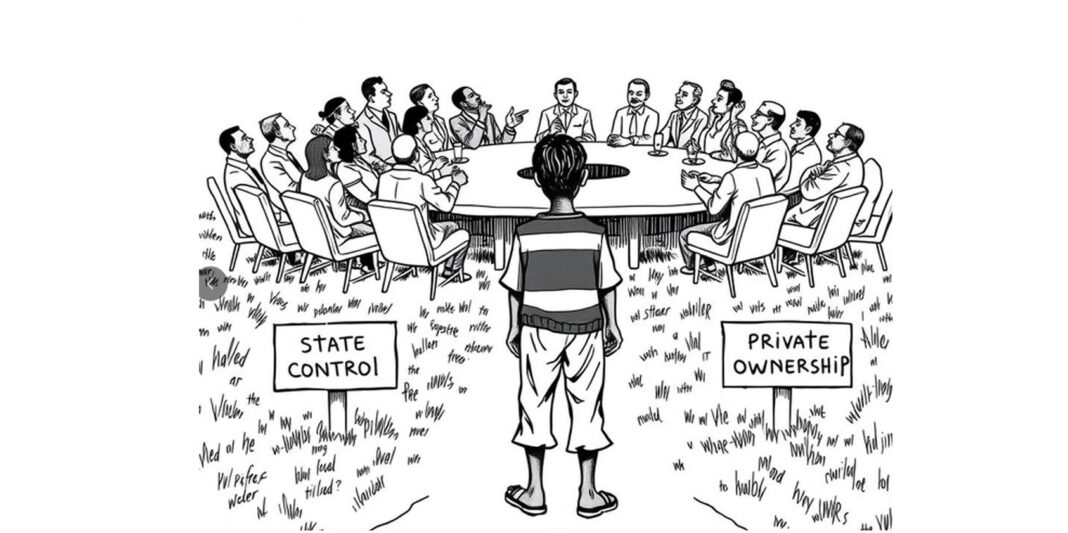
Since the contentious question of whether land should be transferred to private ownership or remain under state control was placed on the Ethiopian National Dialogue Commission’s agenda, it has ignited a wildfire of controversy. As I observe the landscape, society remains deeply concerned, caught in a relentless cycle of suspicion, hope and fear as it debates this issue.
On one hand, advocates of state ownership continue to assert, as they have for decades, that privatizing rural land risks relegating peasants to a form of serfdom reminiscent of the feudal era. They fear that a wealthy elite will aggressively buy and take over peasant landholdings, leaving rural populations destitute and unemployed, and thereby violating the rights of various ethnic groups and social segments. Proponents of this view insist that farmers lack the necessary knowledge of property rights and that, if permitted to sell land, they would blindly squander it and revert to servitude.
However, many scholars now reject this view. They argue that the idea that farmers cannot handle private property is a condescending trap. It wrongly assumes that farmers are not smart enough to manage their own businesses or make good decisions for their families. In reality, these experts point out that when farmers are given the legal freedom to control their own land, they have proven to be excellent managers of their own resources.
Conversely, free-market advocates argue that building a modern agricultural economy requires removing land from rigid state control and allowing it to be bought and sold like any other asset. They say it is highly insincere for the government to aggressively liberalize services, foreign exchange, banking and insurance while simultaneously keeping rural land, the most critical tool of agricultural production, locked away from market mechanisms.
Others interpret this shift as a calculated political move. The Prosperity Party is eager to distance itself from the EPRDF’s rigid dogma, which famously vowed that land would remain under state control at all costs.
Meanwhile, some observers contend that Ethiopia’s agricultural economy is more complex. They argue that the country’s urgent aspiration to join the World Trade Organization, along with pressure from international financial institutions such as the World Bank and the IMF, is a key motivator. This perspective holds that the slow growth of the agricultural economy is often attributed to the lack of rural land as a tradable private asset, which hinders investment and development in the sector.
Yet, from my own experience, this “untouchable” agenda extends far beyond these macroeconomic and political clashes. Having spent many years working on agricultural projects and programs across the Amhara region, I have witnessed firsthand how land issues are deeply intertwined with the fundamental dignity of human beings.
The harsh reality is that for the past 30 years, following the fall of the Derg regime, rural farmers have faced significant barriers to accessing reliable capital, which is essential for modernizing agriculture and procuring necessary farm inputs. Many experts note that the government’s strict rural land policy has effectively prevented farmers from leveraging their most stable asset as collateral for vital loans. This policy, grounded in the principle that land is public property and cannot be sold or traded, has hindered their ability to secure the financial support needed for growth and development.
After the fall of the Derg regime, private financial institutions were finally given the opportunity to venture into rural areas. However, they quickly stepped back, refusing to extend loans because peasant land could not be used as collateral under the law and because there was little clarity about what would happen if a farmer defaulted. At the time, this was a shocking development that caused the government great anxiety.
To plug this financial gap, the government initiated rural credit associations, which later evolved into microfinance institutions such as the Amhara Credit and Saving Cooperative. These associations were capitalized through regional endowment funds derived from annual budget allocations to districts, essentially using public development funds as collateral for lenders.
Inevitably, this fragile process collapsed into a severe crisis as many farmers became unable to repay their loans. The government’s draconian response was to force rural development workers, agricultural staff and local community leaders to coerce farmers into repayment, even by seizing movable assets or, failing that, imprisoning them. It is a dark and disturbing irony that this unusual approach dragged not only development and agricultural workers, but also courts, which were supposed to act independently, into actions they did not want to take.
The bitter truth is this: in any part of the world, property is meant to liberate human labor from the crushing burden of debt. Imprisoning a person for failing to repay a loan is not only unjust but also a disgraceful and undignified practice. International standards, including the International Covenant on Civil and Political Rights, generally prohibit imprisonment for failure to fulfill a contractual debt obligation. When a system does this, it violates human dignity.
As the situation escalated, government-backed lending institutions introduced the group lending model, copied from Bangladesh without carefully examining its social consequences. Global experience, particularly from Bangladesh and elsewhere, clearly warns that such models, when imposed without land security, can trigger catastrophic social outcomes. This model required farmers to form credit groups, with each member serving as a guarantor. If one member defaulted, the others were obligated to cover the debt.
The social consequences were devastating. This burden often forced guarantors to seize the land of the defaulting farmer as compensation, leading to an involuntary and hidden process of land transfer. This exploitative cycle intensified the marginalization of poor peasants. Those who could no longer meet debt obligations were forced into poverty, becoming laborers for wealthier farmers or migrating to urban areas. While initial land distributions averaged 0.5 hectares per household, this systemic failure allowed holdings to expand to 5, 10 or 15 hectares for a few, often those celebrated as “model farmers” but who were, in reality, beneficiaries of the illegal consolidation of poor farmers’ land.
This system has deeply damaged professional integrity, forcing agricultural experts to act as debt collectors and jailers rather than mentors. Very recently, the state has rolled out comprehensive land use and administrative proclamations and land use right certificate schemes. While these are positive steps, the land issue is not merely a dry economic matter; it is a struggle to free farmers from the cruel, regressive practices inherited from an era of debt bondage.
My burning question is this: will the upcoming national dialogue take this systemic nightmare into account and hold a comprehensive discussion, or will it be tragically reduced to a narrow, paralyzing debate about ethnic rights?