Experts say Ethiopia can only solve its cardiac care crisis in the long term by building local medical capacity, as the country continues to face a shortage of specialists and the high cost of treatment.
Dr. Hailu Tamiru Dhufera, regional director of Heart Attack Ethiopia, said advanced cardiac care requires specialized expertise, technology and expensive equipment. He said the organization’s current medical mission alone needs more than 2.9 million US dollars to cover equipment and operating costs.
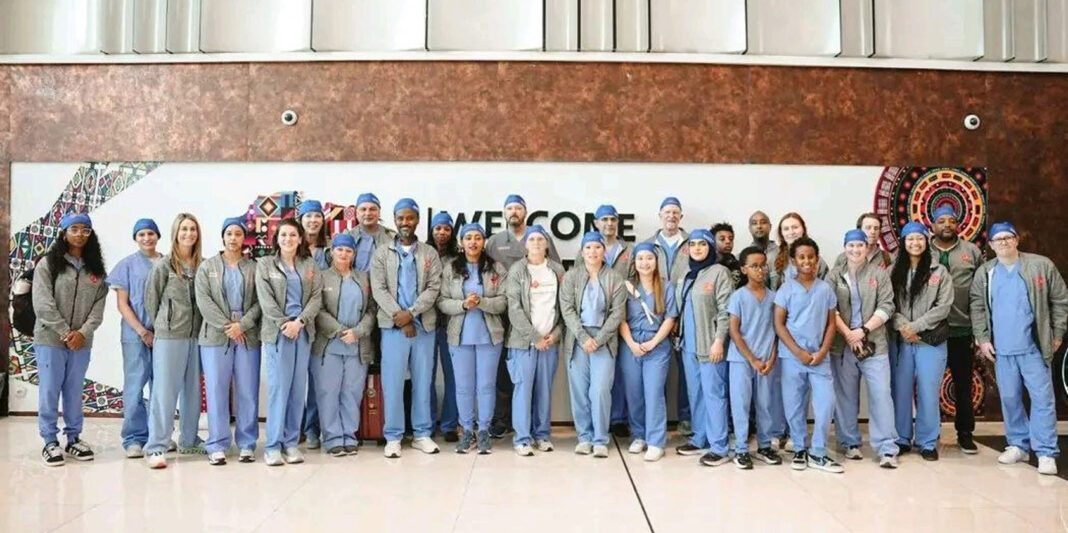
Heart Attack Ethiopia has carried out 481 complex cardiac surgeries and interventions across its first four missions over the past three years. Its fifth mission is underway, with a target of treating more than 200 patients. The campaign has already treated 61 patients in its opening days.
Dr. Hailu said temporary missions cannot meet the scale of Ethiopia’s need. “We do missions to stop missions,” he said, stressing that the country needs permanent local capacity rather than repeated short-term interventions.
The challenge is compounded by a severe shortage of specialists. With a population of more than 130 million, Ethiopia has fewer than 45 cardiologists and only five cardiac surgeons, leaving nearly 15,000 patients on a waiting list for life-saving surgery. Many of the cases are linked to rheumatic heart disease and congenital heart disease.
To bridge the gap, the organization is focusing on training and knowledge transfer. More than 59 international volunteer clinicians from the United Kingdom, Canada, India and the Mayo Clinic are working alongside local teams. Six Ethiopian specialists have also been enrolled in a two- to four-year super-specialty training program in India through a partnership with Amrita University.
A study in The Annals of Thoracic Surgery found that an all-Ethiopian team performed its first 1,000 cardiac surgeries locally between 2017 and 2025, with annual surgeries rising from 31 to 204 and a 30-day mortality rate of 2.9 percent.
The organization is also shifting toward local fundraising, with a gala dinner set for Saturday, July 11, to support its long-term work.