The Ethiopian government is set to cover half of the Ethiopian Sugar Group’s post-restructuring foreign debt through the federal budget as part of a broader rescue plan aimed at improving the troubled state-owned enterprise’s financial health and preparing it for privatization.
The move is intended to give the sugar industry enough breathing room to stabilize operations, improve efficiency and restore a positive earnings profile before private investors are invited back into the process. According to reports cited by Ethiopian Investment Holdings CEO Brook Taye, the sugar sector’s foreign debt burden stands at about 144 billion birr, or roughly 2.1 billion dollars.
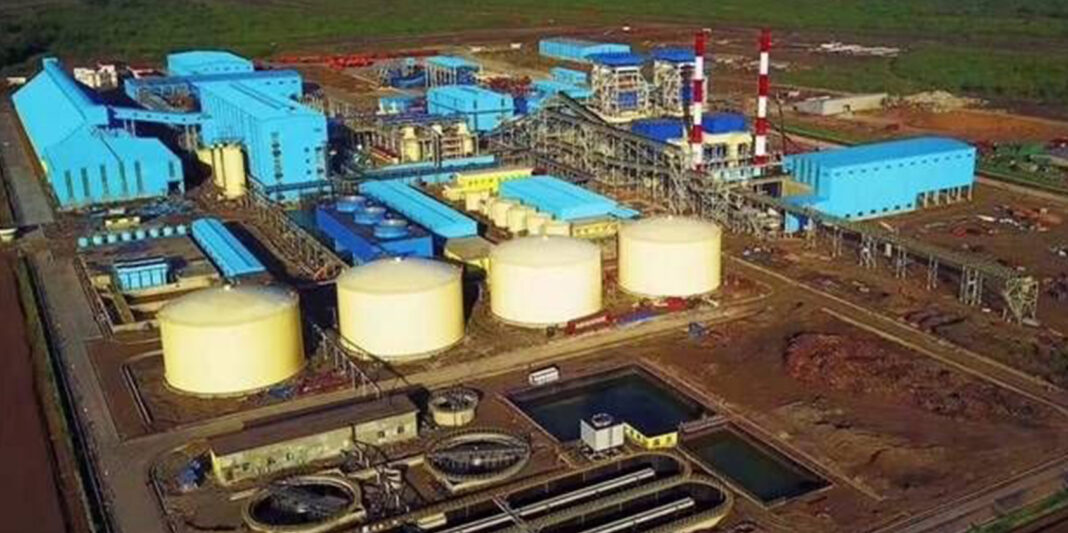
The debt problem has long weighed on Ethiopia’s banking system and broader public finances. Much of the borrowing was tied to unfinished projects, including factories and development sites that absorbed billions of birr without generating returns. The Omo Kuraz Sugar Development Project alone is reported to have consumed about 65 billion birr and remains incomplete.
Officials say the government’s latest intervention is designed to help the group achieve a positive EBITDA, a key milestone that would signal operational recovery. The IMF has said that financial restructuring and rehabilitation efforts are already beginning to yield results, and that the sugar group has recorded a positive EBITDA for the first time under the recovery program.
The IMF also said the privatization process for nine sugar development enterprises has been restarted, although the timeline has shifted several times. Earlier plans called for direct negotiations with investors and asset transfers by the end of 2025, but those talks later stalled after investors submitted offers below reserve prices and after asset valuation rules were found to be outdated.
In November 2025, Ethiopian Investment Holdings told parliament that privatization talks had been halted because of failed bids and legal and technical obstacles. The authority said it was now pursuing direct negotiations with investors able to revive the sector, while also preparing for a fresh asset valuation as required by law.
The sugar industry’s financial restructuring comes after years of repeated setbacks. Following the 2018 political transition, the government tried to sell more than 10 sugar factories through a request for information process, but it produced no concrete result. A second attempt in 2020 was slowed by conflict and operational challenges. In August 2022, authorities issued another request for expressions of interest covering eight facilities, including Arjo Didessa, Kesem, Omo Kuraz I, II, III and V, Tana Beles and Tendaho.
The Ethiopian Sugar Industry Group, established in 2022, manages several factories and development projects and holds ownership stakes in major sugar share companies including Wonji/Shoa, Metehara, Finchaa, Kesem and Tana Beles. It also oversees Omo-Kuraz Sugar Factory II and III, Omo-Kuraz Sugar Development I and V, Arjo Didessa and the Wolkait Sugar Development Project.
Audited results show the scale of the challenge. For the fiscal year ending June 30, 2023, the group posted a net loss of 9.57 billion birr, an improvement from the previous year’s loss of 22.08 billion birr. Revenue reached 7.42 billion birr, while total assets stood at 178.26 billion birr and liabilities fell to 79.11 billion birr.
Despite the losses, officials view the restructuring as a necessary step toward bringing the sugar industry to a point where private participation becomes viable and public debt exposure can gradually be reduced.