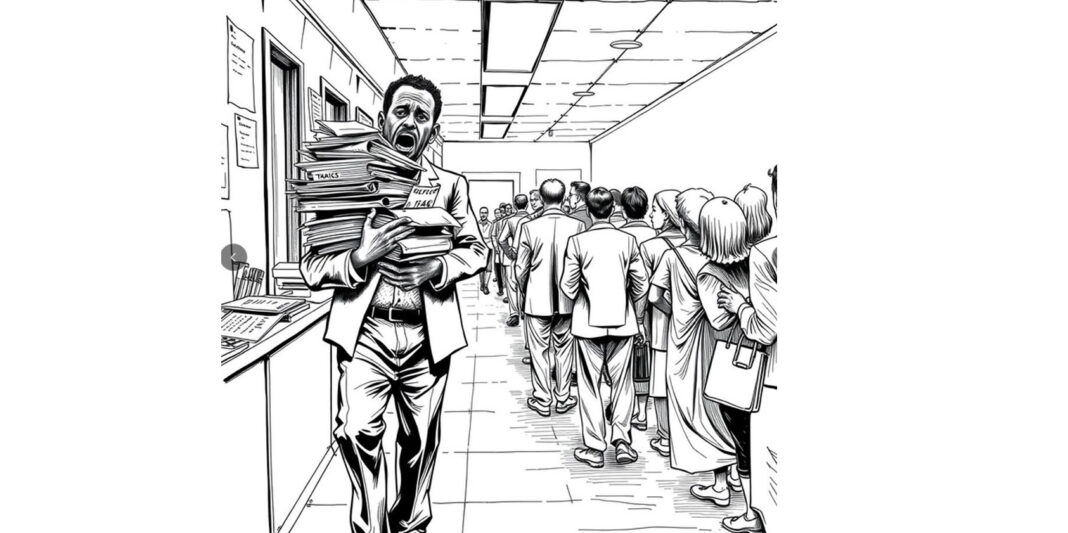
Ethiopia’s fiscal debate has become dangerously familiar: whenever revenue falls short, the easiest answer is to ask the same formal businesses and salaried workers to pay more. That approach may deliver a short-term boost, but it is not a strategy for a growing economy. If Ethiopia wants a fairer and more durable tax system, it must broaden the tax base rather than keep squeezing the few taxpayers already in the system.
The problem is not that Ethiopians do not pay taxes. The problem is that too few people and firms are actually in the net. A small formal sector carries a burden that should be shared more widely across the economy. Registered companies, payroll employees, importers and compliant professionals are relatively easy to monitor, so they become the default source of revenue. Meanwhile, a huge informal economy, under-declared income, weak property taxation and limited enforcement allow large parts of economic activity to remain untaxed or lightly taxed.
That imbalance is not just unfair. It is economically harmful. When the same taxpayers are repeatedly targeted, compliance becomes harder, investment slows and trust in the system erodes. Businesses begin to feel that honesty is punished and informality is rewarded. Over time, the state risks creating a tax culture based on resentment rather than citizenship.
The first step toward reform is to accept a simple truth: revenue growth must come from inclusion, not only from higher rates. Ethiopia has room to bring more people and activities into the tax system. The informal sector is large. Urban property remains under-taxed. Digital commerce is expanding faster than the tax administration can track it. Agriculture, where many households generate income, is still poorly integrated into the tax net. These are not minor gaps; they are the heart of the problem.
Expanding the tax base does not mean punishing the poor or taxing subsistence livelihoods into distress. It means identifying where genuine commercial activity is happening and designing sensible, phased taxation that is practical to collect. Small traders, transport operators, professionals, service providers, landlords, and growing enterprises should gradually be drawn into the formal system through simpler rules, lower entry barriers, and better administration. The goal should be to make tax participation normal, not extraordinary.
One of the most effective ways to broaden the base is through formalization. When businesses register, they become visible. When they use digital payments, they leave a trail. When they access credit, public procurement or licenses, compliance can be linked to those benefits. Ethiopia should use this leverage more intelligently. Rather than relying only on penalties, the government should connect tax registration to concrete advantages: easier access to finance, faster licensing, better legal protection and eligibility for public contracts.
Property taxation is another major opportunity. Cities are growing, land values are rising, and urban expansion is creating wealth that often escapes effective taxation. A serious property tax system would be far more sustainable than repeatedly increasing pressure on the same payroll taxpayers. It would also help local governments fund services more fairly, especially in rapidly urbanizing areas.
The digital economy also needs to be brought into the fold. As more transactions move online, tax authorities should improve data matching and electronic invoicing. This is not about surveillance for its own sake. It is about making tax collection match the way the economy actually works. If businesses can sell digitally, they can report digitally. If payments are traceable, taxes should be too.
At the same time, Ethiopia must simplify its tax system. A complex tax code often helps only the well-resourced, who can hire experts to navigate it, while discouraging small firms from entering the formal economy. A simpler structure with clear thresholds, predictable obligations and fewer loopholes would improve compliance. Tax policy should be understandable to the ordinary entrepreneur, not only to accountants and lawyers.
Equally important is trust. Many citizens and businesses resist taxes not only because of cost, but because they doubt the value they receive in return. If taxpayers see visible improvements in roads, electricity, security, schools and public services, compliance becomes easier to justify. The state must therefore pair tax reform with better service delivery and greater transparency on how revenue is spent.
Enforcement still matters, of course. A broadened tax base cannot rely on goodwill alone. High-earning individuals, large informal businesses and those hiding income should face real consequences. But enforcement should be targeted and intelligent, not blunt and politically easy. It is far more productive to catch big evaders than to keep revisiting the same formal taxpayers with new levies.
Ethiopia’s economic future depends on moving from a narrow tax culture to a broad fiscal compact. That means more taxpayers, not just heavier taxes. It means fairness, not fatigue. It means treating tax reform as a nation-building project rather than an emergency revenue raid.
If the government keeps squeezing the existing base, it will eventually weaken the very sector it depends on for growth. But if it expands the base, formalizes more of the economy and builds trust in the system, it can create a stronger state and a healthier private sector at the same time.
The choice is clear: Ethiopia should tax more people a little, not the same people to death.