Africa remained the leading destination for Chinese Belt and Road Initiative engagement in the first half of 2026, with Chinese investment in the region almost tripling from the same period a year earlier, according to a new report by Christoph Nedopil of the University of Queensland and the Green Finance Development Center.
The report says Chinese BRI engagement across the region reached $33.5 billion in investment announcements in the first half of the year, making Africa the top regional recipient and marking the strongest first-half performance ever recorded for Chinese BRI investment in the continent. It adds that Ethiopia was the largest African recipient of Chinese energy engagement, driven by a major green energy development agreement worth $14.8 billion.
Overall, the report found that total Chinese BRI engagement — combining investments and construction contracts — hit a first-half record of $126.4 billion across about 186 deals, including $49.8 billion in investment and $76.5 billion in construction. It said 2026 H1 was the highest first six months for BRI engagement since the initiative began in 2013.
Energy remained the dominant sector, with China’s energy-related engagement reaching $36.3 billion in the half-year period. More than half of that energy engagement was classified as green, including wind, solar, waste-to-energy and hydropower projects, which the report said was a new record in both absolute and relative terms. The report also noted that more than 20 gigawatts of green electricity projects were confirmed through investment and construction, exceeding the total for all of 2025.
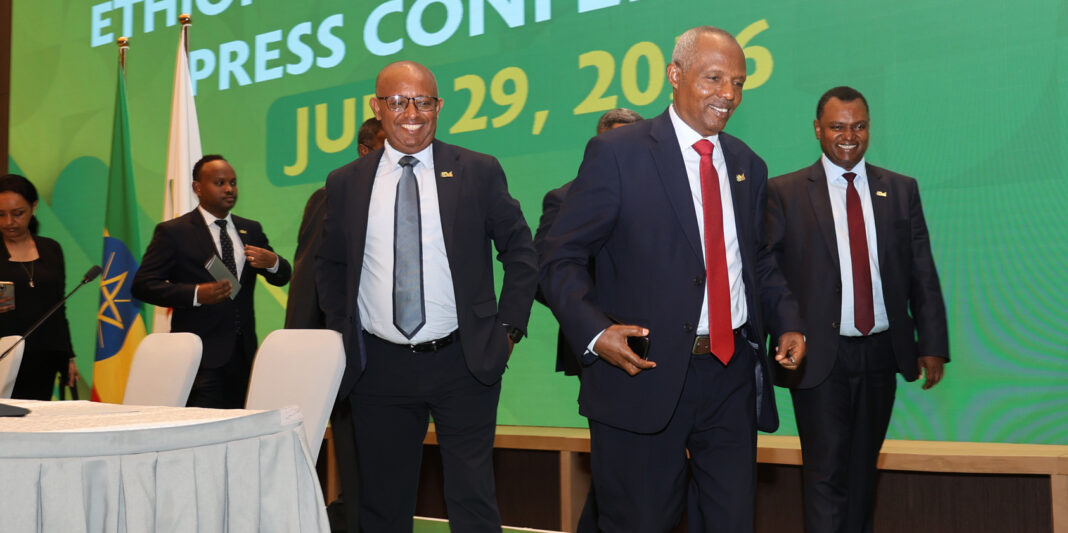
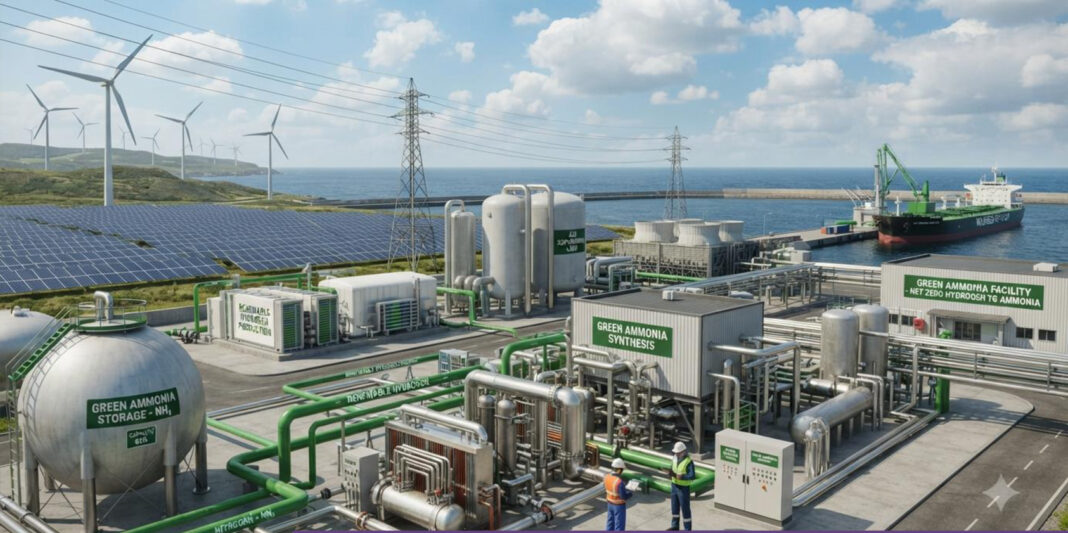
Ethiopia featured prominently in that shift. The report says a green energy agreement between the Ethiopian Investment Commission and Mingyang Smart Energy Group was initially announced at $10 billion and later expanded and licensed in May 2026 to $14.17 billion, including green ammonia production facilities. The first phase alone allocates $7.47 billion to physical generation assets and is one of the largest private foreign direct investments in Ethiopia’s history.
The report also highlights a resurgence in metals and mining, which reached a record $21.8 billion in the first half of 2026. Egypt led that category with a $10 billion steel mill, while Kazakhstan and Indonesia also attracted major Chinese processing investments. The report said the emphasis was increasingly on processing facilities rather than raw mining.
In transport, Chinese engagement rose for the first time since 2020, reaching $18.2 billion, all through construction contracts. Major projects included rail and port infrastructure in the Middle East and Asia, while the report said transportation-related engagement again underscored the BRI’s focus on connectivity and trade routes.
The report also points to a growing role for private Chinese companies, whose share of total BRI engagement climbed from 12.5 percent in 2020 to 47.7 percent in the first half of 2026. While state-owned enterprises still dominate construction, private firms are taking a larger role in investment, especially in technology and energy-related sectors.
Christoph Nedopil said in the report’s outlook that continued global trade frictions and fossil fuel volatility could further push Chinese engagement toward green energy, minerals processing and manufacturing localization in BRI countries. He said Africa’s strong performance may reflect both new industrial opportunities and shifting tariff dynamics in global trade.
For Africa, the findings suggest that Chinese capital remains a major source of investment, especially in energy, mining and infrastructure. Ethiopia’s outsized role in the latest data also shows how the continent is positioning itself at the center of the transition to green industrial projects.