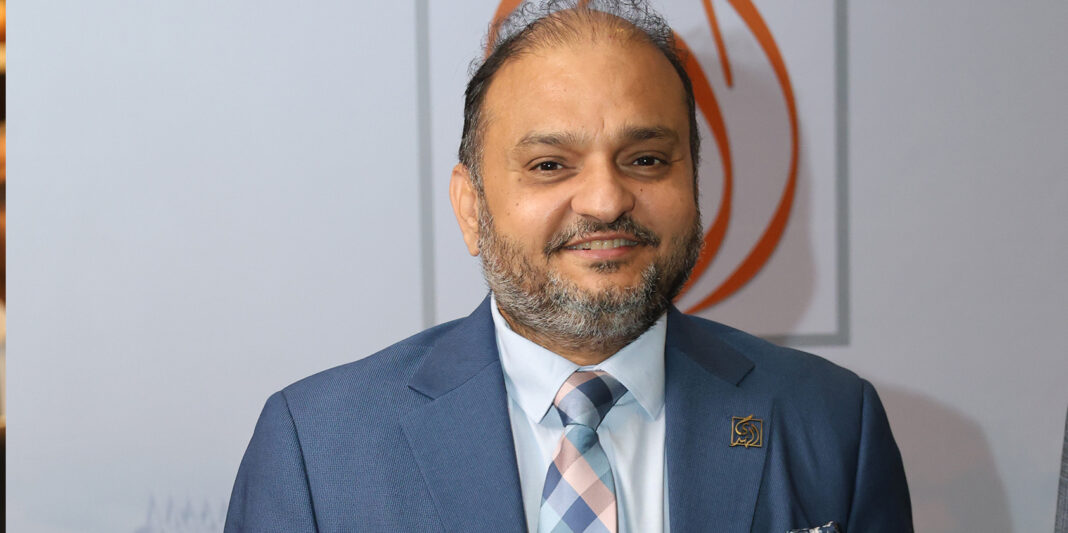
In an exclusive interview with Capital, Muhammad Zubair Mughal, CEO of the AlHuda Center of Islamic Banking and Economics, outlines why East Africa—particularly Ethiopia, Kenya and Tanzania—could become one of the most dynamic regions for interest-free banking over the next decade.
Speaking ahead of growing regulatory and market activity in Ethiopia’s nascent non-interest banking sector, Mughal highlights the region’s combination of large Muslim populations, high mobile-money penetration and untapped demand for Shariah-compliant products. He argues that Islamic finance is not a niche offering for Muslims alone, but a values-based model built on transparency, risk-sharing and asset-backing that can appeal to a broad range of customers and investors.
The conversation covers the role of multilateral institutions such as the IMF and World Bank, the importance of sovereign Sukuk and tax-neutral regulation, and how Ethiopia’s position as host of the African Union could allow it to shape the development of Islamic finance across the Horn of Africa. Mughal also addresses the specific challenges facing Central Africa, the lessons from francophone West Africa’s regional approach, and how building basic Islamic finance infrastructure can unlock foreign direct investment from Gulf and other Islamic markets. Excerpts;
Capital: How do you evaluate the growth and potential of the East African market—specifically countries like Ethiopia, Kenya, and Tanzania—for interest-free banking compared to other global regions?
Muhammad Zubair Mughal: Honestly, I find East Africa incredibly exciting—and perhaps underappreciated by the global Islamic finance community. When I look at Ethiopia, I see a country with tens of millions of Muslims who have never had access to a Shariah-compliant product that they could genuinely trust. That is not a niche—that is a generation of potential customers who have either stayed out of the formal financial system entirely or accepted conventional products with considerable discomfort.
Kenya is more advanced—you already have functioning Islamic banking, some Takaful activity, and a relatively open regulatory posture. Tanzania is moving more slowly but steadily. What makes me optimistic about the whole region is the mobile phone penetration. In East Africa, people leapfrogged traditional banking infrastructure and went straight to mobile money. If we can bring Shariah-compliant products onto those same digital rails, we can reach people at a cost and at a scale that was simply not possible ten years ago.
Is it going to happen overnight? No. There are real challenges around Shariah scholarship, regulatory capacity, and public awareness. But the trajectory is clearly positive, and I think East Africa will surprise people over the next decade.
Capital: In what ways can Islamic finance contribute to broader financial inclusion and socio-economic development within Muslim-majority countries?
Muhammad Zubair Mughal: I always come back to a simple observation: in many Muslim-majority countries, the most financially excluded people are not excluded because they are too poor or too remote—they are excluded because they have made a conscious choice not to participate in an interest-based system. That is a huge distinction. When you offer a genuine, trustworthy Shariah-compliant alternative, you are not just creating a new product—you are opening a door that people have been waiting to walk through.
I have seen this firsthand in markets where Islamic banking was introduced and the uptake was remarkable, not because of aggressive marketing, but because the demand was already there. And then there is the social finance side—Zakat and Waqf. These are not just historical curiosities. If we can modernise and formalise these instruments, channel them through proper institutions with accountability and transparency, the development impact can be transformative. A well-structured Waqf endowment can fund a school or a clinic in perpetuity. That is the kind of long-term thinking that development programmes need to embrace more seriously.
Capital: How would you address the common misconception in emerging markets that Islamic finance is exclusively restricted to Muslim populations?
Muhammad Zubair Mughal: I have heard this so many times, and I understand where it comes from. People see the word “Islamic” and they immediately assume it is only for Muslims—that they need to be a certain religion, or say certain words, or be part of a particular community. And that is simply not true.
The honest reality is that Islamic finance is built on principles—transparency, fairness, asset-backing, avoiding exploitation—that resonate with people of all backgrounds. When I sit with a non-Muslim entrepreneur and explain that I am offering them a financing arrangement where I will share in the profit and the risk rather than charging them a fixed interest rate regardless of how their business performs, the reaction is almost always positive. They do not see a religious product; they see a fair deal.
The challenge is getting past the label to the substance. And I think part of the solution is that practitioners and regulators need to do a better job communicating the universal values that Islamic finance embodies, rather than leading with the religious framing. Let the principles speak for themselves—and they will.
Capital: What role do multilateral organizations, such as the IMF and World Bank, play in the institutional development of Islamic banking and finance?
Muhammad Zubair Mughal: Multilateral organisations can be genuinely transformative in this space—but the key word is “can.” When they engage seriously and with genuine commitment, the impact is significant. The IMF producing thoughtful guidance on how central banks should supervise Islamic banks, or the World Bank facilitating a sovereign Sukuk in a frontier market—these are not small things. They send a signal to the entire financial community that Islamic finance is credible, is mainstream, and is worth taking seriously.
But I will also be honest: multilateral engagement can sometimes be slow, heavily bureaucratic, and insufficiently attuned to local contexts. The guidance that works in Malaysia does not always translate directly to, say, Djibouti or Ethiopia. What I would advocate for is deeper country-level engagement—not just high-level frameworks, but hands-on technical assistance that helps regulators build the specific capacity they need to license, supervise, and develop Islamic financial institutions in their particular market context. When multilaterals do that well, the results are impressive.
Capital: From a regulatory perspective, what are the key components of an ideal ecosystem required to successfully foster an interest-free banking industry?
Muhammad Zubair Mughal: If I had to distil it to the essentials: you need legal clarity, regulatory understanding, and Shariah credibility—and you need all three working together, not just one or two. I have seen markets where the law was clear but the regulators did not really understand what they were supervising, so Islamic banks operated in a perpetual grey zone. I have seen markets where the regulatory capacity was there but the Shariah governance was weak, so public trust never developed. And I have seen markets where excellent intentions were undermined by a lack of capital market infrastructure—Islamic banks could take deposits but had nowhere to invest the liquidity in a Shariah-compliant way, which created enormous operational strain.
The ideal ecosystem addresses all of these dimensions simultaneously. It does not have to be perfect from day one—no ecosystem is—but it has to be coherent, and the regulator has to be genuinely committed to making it work, not just ticking a box.
Capital: How can regulatory authorities, such as capital market authorities and central banks, best support the expansion of non-interest banking products?
Muhammad Zubair Mughal: The single most important thing a central bank can do is issue Sukuk—sovereign, government-backed Sukuk. I cannot overstate how important this is. Islamic banks that accept deposits have a fundamental problem: they cannot put that liquidity into interest-bearing government securities, because that is Riba. If there are no Shariah-compliant alternatives—no sovereign Sukuk, no Islamic money market instruments—those deposits effectively sit idle or are invested in sub-optimal ways. That is a structural constraint that limits the entire sector.
When the government issues Sukuk, it solves that problem. It also sends an incredibly powerful signal to the market: the government is committed to this, it is not just window-dressing, it is real. Beyond Sukuk, I would emphasise regulatory clarity and tax neutrality. Islamic finance transactions are often structurally more complex than conventional equivalents, and if each step in the transaction is taxed as a separate event, the product becomes uncompetitive. Getting those two things right—Sukuk and tax neutrality—would transform the landscape in most emerging markets.
Capital: In what ways does Ethiopia’s unique geographical location position it to become a regional hub for East African Islamic finance?
Muhammad Zubair Mughal: Ethiopia fascinates me. Here you have a country with roughly 50 million Muslims—that is comparable to the entire population of South Africa—and until very recently, there was essentially no formal Shariah-compliant banking option for them. The market was completely unserved. And now the windows are opening, the National Bank has issued guidance, the big banks are setting up interest-free divisions. The momentum is real.
But what I find particularly interesting about Ethiopia’s geography is the connectivity—not just physical, but also in terms of influence. Addis Ababa is where the African Union sits. It is where a lot of the continental policy discussions happen. If Ethiopia gets this right—if it builds a credible, well-regulated Islamic finance sector—it has the platform to share that experience with its neighbours and potentially shape how the whole region approaches interest-free banking. Somalia, Djibouti, South Sudan—they are all watching what happens in Ethiopia very carefully. The opportunity is extraordinary. The question is whether the institutional investment matches the ambition.
Capital: What challenges do central African regions face regarding the development of Islamic banking structures, and how might those gaps be addressed?
Muhammad Zubair Mughal: Central Africa is honestly the most challenging frontier I can think of in this space—not because the demand is absent, but because so many of the enabling conditions are still underdeveloped. You have countries in CEMAC that are legally and monetarily integrated, which is actually a potential advantage if you could get a regional approach to Islamic finance off the ground—but so far that has not happened. The regulatory frameworks were designed entirely around conventional banking, and adapting them takes time and political will.
And then there is the Shariah scholar problem. In Arabic-speaking environments, you have access to a large pool of scholars. In French-speaking Central Africa, finding scholars who can fluently bridge Islamic jurisprudence and modern finance in French is genuinely difficult. You can bring scholars from elsewhere, but local legitimacy matters enormously for public trust. My honest assessment is that Central Africa will need sustained, patient investment—from multilaterals, from the IsDB, from regional governments—over a period of years before you see genuine sector development. The shortcut does not exist. But the potential is there, and the growing interest from Chad and Cameroon in particular is encouraging.
Capital: How can the expansion of interest-free banking infrastructure stimulate foreign direct investment and bring specialised expertise into emerging financial markets?
Muhammad Zubair Mughal: Think about it from the perspective of a GCC investor or an Islamic fund manager. They have a mandate—often legally binding—to invest in Shariah-compliant assets. If they look at an African market and there is no Shariah-compliant investment vehicle, no Islamic bank, no Sukuk—they cannot invest, full stop. It does not matter how attractive the underlying economic fundamentals are. The infrastructure simply is not there.
But the moment you establish that infrastructure—even a basic framework—you open the door. Suddenly that GCC family office or that Islamic pension fund can come to the table. And with them come not just capital but networks, expertise, governance standards. I have seen this happen. A country issues its first sovereign Sukuk, and within months it is fielding calls from investors who had never previously considered it. The infrastructure creates the possibility, and the possibility attracts the capital. That is the dynamic that emerging markets need to understand. Developing Islamic finance infrastructure is not just a domestic social good—it is a foreign investment strategy.
Capital: In terms of operational infrastructure, what lessons can be drawn from the success of francophone West African countries in implementing interest-free banking and finance?
Muhammad Zubair Mughal: What I find most instructive about francophone West Africa is the regional dimension. BCEAO covers eight countries. If you can get BCEAO to issue guidance on Islamic banking—which has been a slow but incremental process—you do not need each individual country to reinvent the wheel. You get regulatory coherence across a region of over 130 million people. That is enormously powerful.
The second thing I take from West Africa is the importance of meeting people where they are. The products that worked were the ones designed around the lives of real farmers, traders, and women entrepreneurs—not the sophisticated products designed for sophisticated investors. Murabaha for working capital, group-based saving and investment schemes, simple Takaful products. The fundamentals, done well, adapted to local context.
And the third lesson, which I think is probably the most important and the most consistently underestimated: education. People need to understand what they are being offered and why it is different. They need to trust it. The markets that invested in that upfront work—building relationships with religious leaders, with community associations, with local media—saw much better adoption than those that just opened branches and waited. Trust is not given; it is earned, and it takes time.