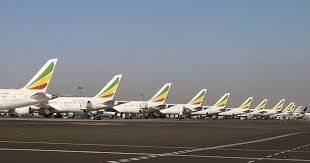
Total scheduled airline capacity across Africa reached 25.8 million seats in September 2026, marking a robust 9.4% growth compared to the same month in 2025. Amidst this broader continental expansion, Ethiopian Airlines has firmly maintained its premier position as the largest carrier in Africa.
According to the latest data released by aviation analytics firm OAG, Ethiopian Airlines operated an impressive 2.1 million seats (specifically 2,087,386 seats) in September 2026. This figure reflects a solid 10.0% year-on-year increase from the 1,897,820 seats recorded in September 2025.
Trailing the leading carrier, Safair secured the second position with 1,076,166 seats ( 7.1% growth), while Egyptair followed closely in third with 890,773 seats ( 6.7% growth). Other prominent operators in the upper tier, such as Royal Air Maroc and Air Algerie, posted notable growth rates of 19.2% and 13.3% respectively.
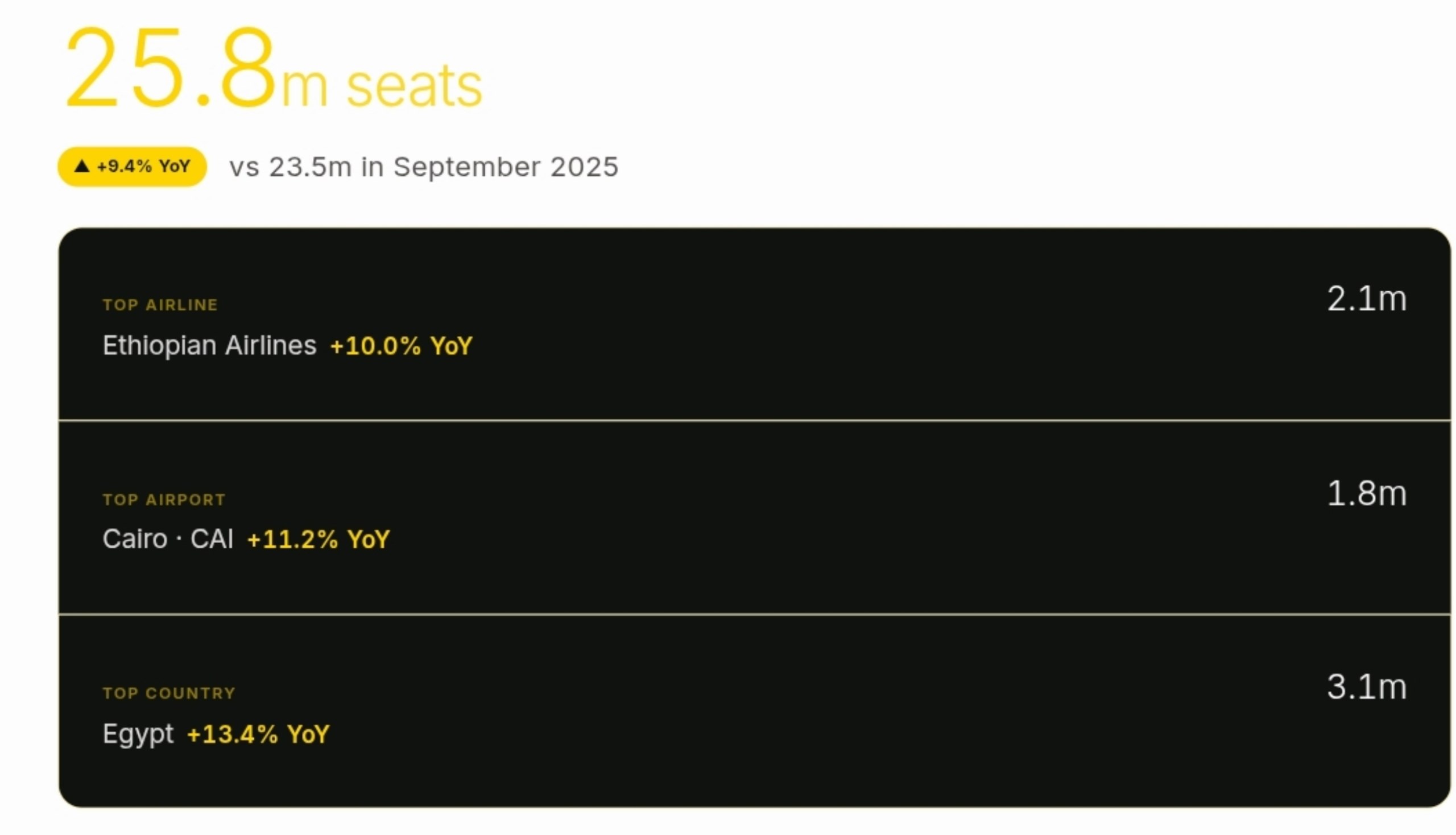
Complementing the airline’s stellar performance, OAG data highlights that Addis Ababa Bole International Airport (ADD) remains a critical and high-traffic transit node on the continent. Handling 1.19 million seats alongside a healthy 6.5% year-on-year growth rate, Addis Ababa has successfully secured its position as the second-busiest airport in Africa, trailing only Cairo International Airport.
On a national level, Ethiopia’s total country capacity market climbed to 1,406,600 seats in September 2026, representing a 6.3% annual increase. While Egypt leads the continent in total market capacity with 3.1 million seats and South Africa follows with 2.43 million seats, Ethiopia’s unique structural strength continues to be anchored by its peerless international and regional network connectivity.
Industry metrics indicate a thriving overall aviation climate across Africa. International capacity grew by 8.9% to reach 20 million seats, while domestic capacity expanded faster by 11.6% to hit 5.72 million seats. Mainline carriers continue to dominate the market landscape, retaining roughly 80% of the total market share.