Ethiopia’s non-bank mobile-money operators and payment-service providers are preparing to integrate with the Pan-African Payment and Settlement System (PAPSS), a development expected to connect domestic digital wallets to a continent-wide cross-border payments network.
The planned integration could give Ethiopian merchants, artisans and small businesses faster access to customers and trading partners across Africa by reducing the cost, time and complexity of sending and receiving payments across borders.
PAPSS was developed by the African Export-Import Bank in collaboration with the African Union and the African Continental Free Trade Area Secretariat. The system was created to address one of Africa’s most persistent trade barriers: cross-border payments within the continent have often been slower, more expensive and more complicated than payments routed through Europe or North America.
For decades, African businesses sending funds from one country to another have had to rely on correspondent banks outside the continent. A payment from one African country to another could pass through financial institutions in Europe or the United States, often requiring conversion into US dollars or euros before being converted again into a local currency.
The process adds transaction fees, foreign-exchange costs and delays that can last for days. It also leaves African trade dependent on foreign financial infrastructure and external regulatory conditions.
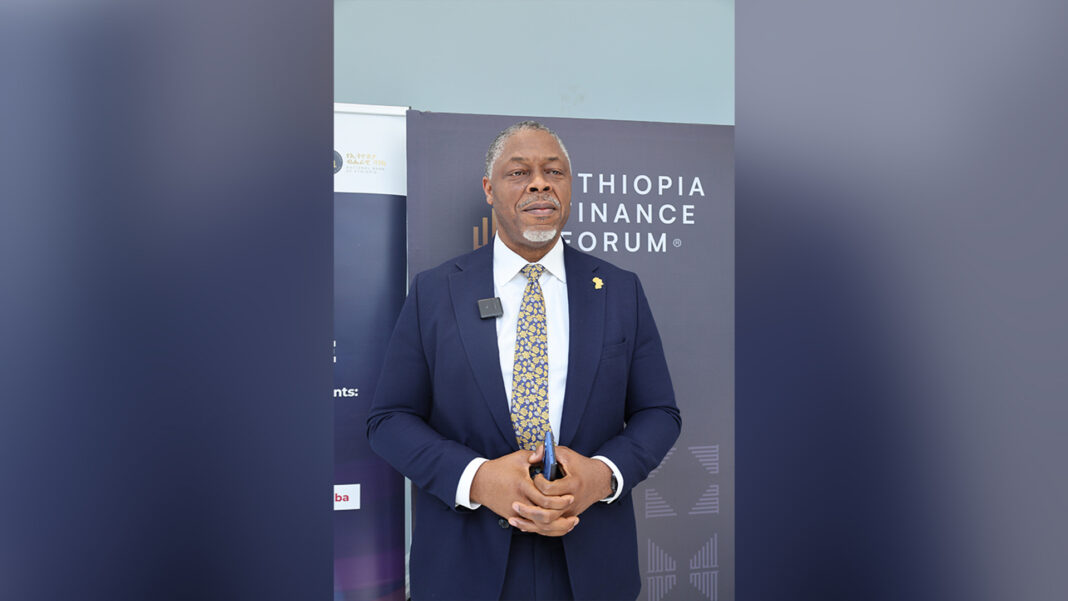
“If a payment touches another country outside this continent, it means that country can control who you pay, who you trade with and how you trade,” PAPSS Chief Executive Mike Ogbalu III told Capital.
PAPSS is designed to bypass those foreign payment corridors. The system allows participating financial institutions to clear and settle cross-border transactions using African currencies, while conducting compliance checks against international sanctions and anti-money-laundering requirements.
Payments are designed to be completed within 120 seconds, with PAPSS stating that its average settlement time is currently around seven seconds. The platform operates continuously, 24 hours a day and 365 days a year.
Ethiopia’s planned participation is significant because its digital-finance ecosystem is increasingly driven by mobile-money platforms rather than conventional bank accounts alone.
Over the past decade, non-bank mobile-wallet services have become a major channel for financial inclusion, enabling millions of people to send money, make purchases, pay bills and receive funds without visiting a bank branch.
Digital transactions in Ethiopia reached an estimated 33 trillion birr during the 2025/26 fiscal year, reflecting the rapid expansion of mobile-money platforms, commercial-bank applications and other digital-payment channels.
Ethio Telecom’s telebirr is the dominant mobile-money operator in the country, with more than 60 million subscribers. Safaricom Ethiopia’s M-Pesa has also expanded rapidly, adding another major competitor to the market.
Both platforms are connected through EthSwitch, Ethiopia’s national payment switch. EthSwitch provides the interoperability infrastructure that links banks, payment-service providers, merchants and other financial institutions across the domestic market.
Its role will be critical if Ethiopian mobile wallets are to connect efficiently with the PAPSS system.
Before integrating with PAPSS, non-bank mobile-wallet providers must receive a formal Letter of No Objection from the National Bank of Ethiopia.
The requirement is intended to ensure that cross-border digital payments comply with national monetary-policy objectives, foreign-exchange regulations, anti-money-laundering standards and financial-stability controls.
The central bank is also working with PAPSS on wider initiatives, including the PAPSS Instant Payment System and the PAPSS African Currency Marketplace. These mechanisms are intended to support faster settlement and currency conversion between participating African markets.
Industry executives told Capital that Ethiopian operators are considering several integration paths. These include direct technical connections with PAPSS, coordination through EthSwitch and partnerships with commercial banks that can provide cross-border clearing and settlement services.
For Ethiopia’s micro, small and medium-sized enterprises, the integration could remove a major obstacle to continental trade.
Many local businesses are effectively restricted to the domestic market because collecting payments from other African countries can be costly and time-consuming. High bank charges, slow settlement, complex foreign-exchange procedures and limited payment links make it difficult for a small exporter or service provider to trade beyond Ethiopia.
Under the proposed arrangement, an artisan in Addis Ababa, a textile producer in Hawassa or a digital-service provider in Dire Dawa could invoice a customer in another African country, accept payment through a participating platform and receive the funds in Ethiopian birr.
“A payment initiated here in Addis Ababa reaches Lagos, Nigeria, in 120 seconds,” Ogbalu said.
PAPSS estimates that its system can reduce transaction costs by between 92% and 95%, cut settlement-processing time by 99.99% and reduce foreign-exchange requirements for commercial banks by as much as 80%.