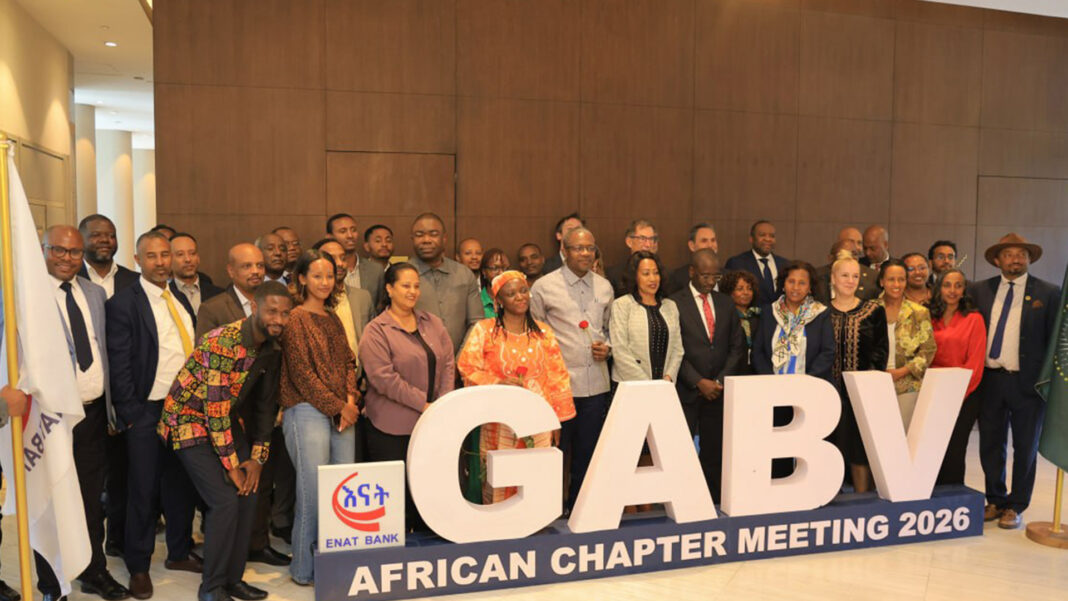
Enat Bank is hosting the 2026 Africa Chapter Meeting of the Global Alliance for Banking on Values (GABV), bringing values-based financial institutions, development partners and regulators to Ethiopia for the first time.
The two-day meeting, held in Addis Ababa from October 1 to 2 under the theme “Transforming Banking: Leveraging ESG and Technology for Financial Impact,” is examining the role of environmental, social and governance standards, digital technology and innovative finance in building more inclusive and resilient African banking systems. The event is being hosted at the Hyatt Regency Hotel.
The gathering comes as Ethiopia undertakes extensive financial-sector reforms aimed at strengthening financial inclusion, accelerating digitalisation, improving corporate governance, deepening financial markets and opening the banking industry to greater international participation and competition.
The GABV is a global network of more than 70 financial institutions operating in 45 countries. Its members seek to combine financial performance with social, environmental and economic objectives, prioritising support for local communities, transparency, long-term sustainability and the real economy.
This year’s Africa Chapter Meeting has brought together leaders of values-based banks across the continent, as well as representatives of development-finance partners, regulators and industry stakeholders. Discussions are expected to focus on cybersecurity, artificial intelligence, sustainability reporting, digital transformation and renewable-energy financing.
Martin Rohner, Executive Director of GABV, said the meeting comes at an important moment for Ethiopia’s banking sector.
“Ethiopia is entering a new chapter in the development of its financial sector,” Rohner said. “As reforms open the market, there is a clear need for banking models that combine innovation, inclusion and long-term value creation.”
The forum is expected to explore how African banks can use technology to expand services while protecting customers and improving risk management. Participants will also discuss how banks can strengthen ESG practices as investors, regulators and customers increasingly assess financial institutions on environmental sustainability, social impact and governance standards.
For Ethiopia, the meeting provides an opportunity to place its banking reforms within wider African discussions on financial inclusion, digital finance and sustainable investment.
Aster Solomon, Board Chairperson of Enat Bank, said the bank was founded to improve access to financial services and create economic opportunities for women and families in Ethiopia.
“Hosting this meeting demonstrates that purpose-driven banking and sustainable business growth can go hand in hand,” she said. “It gives us a platform to share experience and demonstrate that banking can contribute to lasting social transformation.”
Enat Bank began operations on March 5, 2013, after being established by a group of 11 women with a mission to promote women’s economic empowerment through modern financial services.
The bank has since expanded rapidly. Its August 2026 prospectus states that it operates 225 branches and five district offices across Ethiopia, serving more than 1.5 million customer accounts as of June 30, 2026.
Enat Bank also has more than 27,000 shareholders, according to its securities registration information. The Ethiopian Capital Market Authority approved the registration of 6.8 million of the bank’s existing ordinary shares in August, enabling them to be traded over the counter through licensed brokers.
The GABV Africa Chapter comprises nine member institutions, including Enat Bank; BRAC Uganda Bank; Centenary Bank and Opportunity Bank Uganda; Baobab Banque and SIPEM Banque in Madagascar; LAPO Microfinance Bank in Nigeria; FINCA DRC; and Opportunity International Savings and Loans in Ghana.
Together, the chapter’s members manage approximately US$2 billion in assets, employ about 15,000 people and serve an estimated 12 million customers across Africa, according to Enat Bank.
The meeting is expected to strengthen cooperation among African financial institutions that are seeking to combine commercial sustainability with measurable social impact. It also offers a platform for banks to exchange experience on using technology and ESG frameworks to expand credit access, support renewable energy, strengthen customer protection and serve underserved communities.