The contest to choose the next Secretary-General of the United Nations should matter deeply to Africa. Not because Africans need another international official to tell us what our priorities should be. We have already defined them: in our national development plans, Agenda 2063, the Common African Position on Security Council reform and the institutions Africans have spent decades building.
The question we should ask every candidate is more demanding: will the next Secretary-General help Africa deliver the agenda Africans themselves have set?
That is particularly relevant here in Addis Ababa, the diplomatic capital of Africa. The African Union’s Agenda 2063 envisages a continent that is peaceful and secure, increasingly able to finance its own development, and a stronger actor in global affairs. The AU has also maintained an unambiguous position on Security Council reform: Africa’s exclusion from permanent membership is a historical injustice that must be corrected.
Ethiopia has consistently supported that position and the Common African Position of two permanent and five non-permanent African seats in an expanded Council.
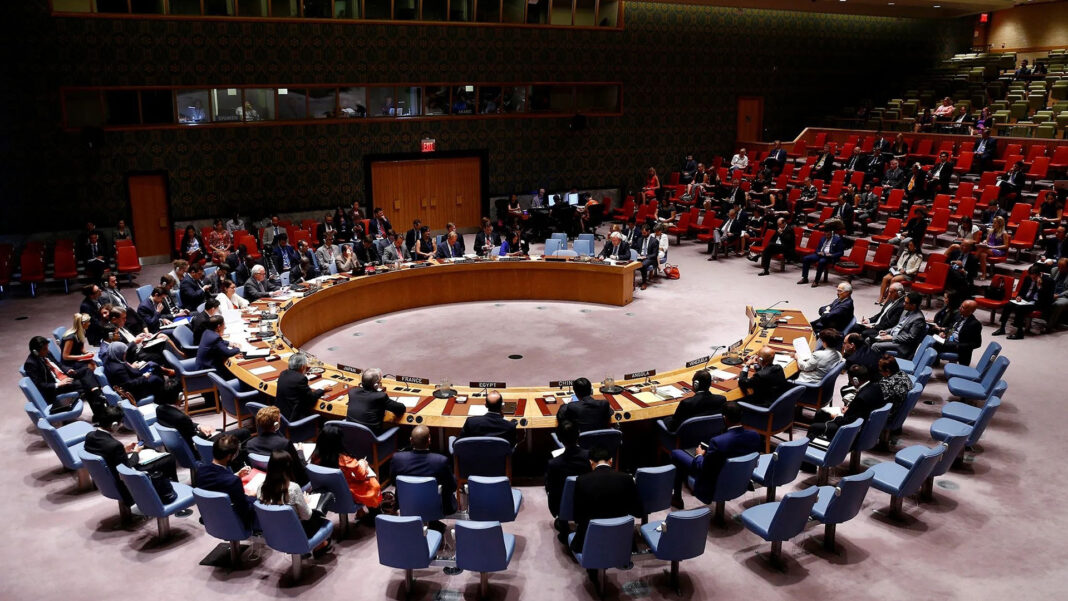
The next Secretary-General cannot deliver that reform alone. Member States must amend the Charter. But the office can create political space, use its convening authority and ensure that African representation is treated as a question of the UN’s legitimacy, rather than a concession to one region.
That is one reason the candidacy of Lana Nusseibeh deserves serious examination.
Nusseibeh knows this debate unusually well. She spent more than a decade representing the United Arab Emirates at the UN and co-chaired the Intergovernmental Negotiations on Security Council reform for three years. Her stated position is that the Council no longer adequately reflects the world it serves and that, while reform belongs to Member States, the Secretary-General should help create space for agreement.
Her campaign has specifically recognised the Common African Position and the commitment to redress Africa’s historical underrepresentation.
But representation should only be the beginning of Africa’s test.
The second question is whether the relationship between the African Union and United Nations can finally mature from one in which Africa is too often the subject of international decisions into one in which African institutions help shape them.
Peace operations provide an obvious test.
African countries and personnel have carried a substantial burden in responding to conflicts on the continent. Security Council Resolution 2719 created a framework through which AU-led peace support operations can, subject to Council authorisation, access UN assessed contributions.
Nusseibeh supported Resolution 2719 while serving on the Security Council. She has argued that its significance goes beyond financing: it offers an opportunity for a deeper partnership combining African leadership and knowledge with the UN’s resources and international legitimacy.
That principle matters. The future cannot be one in which solutions to African conflicts are routinely designed elsewhere and presented to Africans afterwards.
Nor should Africa’s relationship with the UN be defined primarily by conflict.
The third test should be development, and here Africa should demand a fundamental change in how success is measured.
Across the continent, governments are asking how to create decent jobs for growing populations; mobilise investment; reduce debt burdens and the cost of capital; expand regional trade and infrastructure; harness new technologies; and deliver national development strategies.
Nusseibeh’s development programme argues that the UN system should be judged by results countries can point to, rather than simply by what it spends.
For Africa, her stated approach is that national plans and Agenda 2063 should set the priorities, with the UN helping countries deliver them.
Her proposals include putting decent jobs closer to the centre of development policy, championing fairer debt solutions, addressing the mispricing of investment risk and supporting regional corridors for transport, energy and trade.
The underlying principle is simple: Africa does not need the United Nations to set its agenda; it needs the United Nations to help deliver the agenda Africans have already set.
These ideas should be interrogated, as should those of every candidate. What could a Secretary-General genuinely deliver? And how would African governments hold the organisation accountable for results?
Those are better questions than asking which candidate speaks most warmly about Africa.
The continent is not short of declarations of partnership. What matters now is power, delivery and whether institutions change.
The next Secretary-General will inherit a UN under extraordinary pressure: financially constrained, politically divided and struggling to demonstrate its relevance.
Africa has more at stake in that institutional crisis than most. A weaker multilateral system risks producing a world in which the strongest states have greater freedom to set the rules, while countries without comparable military or economic power have fewer places to defend their interests.
That is why Africa should be ambitious about this selection. We should expect the next Secretary-General to support a more representative international system; build a genuinely equal partnership with the African Union; and reform the UN development system around priorities determined in African capitals rather than international bureaucracies.
Those should be the terms on which Lana Nusseibeh, and every candidate seeking to lead the United Nations, is judged.
The question for Africa is not who promises to speak for us.
It is who will help build a United Nations in which Africa has the power, partnership and institutional space to speak, and act, for itself.