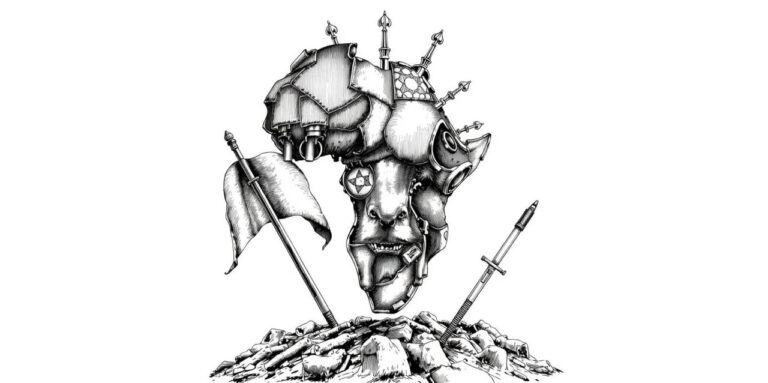
Seventy years ago, the most devastating war in human history came to an end, at a cost of over fifty million lives. Even though the war affected a good portion of humanity, it is mostly the Atlanticist’s version of the war that dominated global narrative. The USSR {Union of Soviet Socialists Republics, which then included, amongst other countries, all of the Stans (Uzbekistan, etc.), Belarus, Ukraine, the Baltic countries, etc.} lost over 25 million people, to say nothing about the other countries of Eastern Europe. The US and Britain also lost about a million combatants between themselves, without including casualties from other western allied partners.
The Indian subcontinent contributed over 2 million soldiers to the war effort. The Chinese, some argue, have even lost more people than the USSR, if one includes the Asian war theater as part and parcel of the WWII misfortune. Like many things in the prevailing world order that are heavily tainted by the potently effective and profusely spread kaleidoscopic writings of dominant interests; the history of WWII was and is still portrayed, mainly, as a heroic struggle between the evils of fascism, Nazism & communism (continental Europe, including Russia) on one hand and the ever-heroic good doers of the major Atlanticists, namely the Anglos and their larger offshoots! But the facts on the ground are quite different. In this regard, suffice is to observe the multitude of American/British movies (Hollywood, et al.) that continue to spew out various delusions and misconceptions about the devastating war of the past century.
Be that as it may, one can reasonably argue that the WWII actually started when the Japanese Imperialists provoked the ’Mukden Incident’ back in 1931; after all, it was not long after this Manchurian invasion the Japanese joined the Axis power consortium. Based on this rather extended and openly violent phase of the world system, one can also contend that it was the Ethiopian patriots (Second Italo-Ethiopian War, the first being ADWA) who initiated a determined resistance against the ongoing widespread European aggression, as it pertained to our continent, of course. Of course, this aggression was pursued under various nomenclatures. Colonialism preceded the ascendance of fascism/Nazism in WWII, while apartheid and neocolonialism proceeded the war!
We believe it is important to bring back or retain individual as well as institutional memories of atrocious events like WWII, Vietnam, Iraq, etc. so that humanity is compelled to restrain itself from repeating the same old mistakes time and again. We admit, this is easily said than done; nonetheless, the attempt must be braved. To this end, we believe what the Russians are trying to do is commendable. While the powerful states of the West are trying to alter the narrative of WWII to fulfill another of their selfish and temporal craving, namely the Ukrainian trophy, the Russians are attempting to personalize/internalize the war and its whole tragic episode by incorporating it in the lives of the living. Russians who lost family members during the war were encouraged to parade all over the country, with portraits on their hands of their closest martyrs, to commemorate the ending of the terrible war. Here is how one of the organizers of the ‘Immortal Movement’ that took place all across Russia (on the occasion of the 70th anniversary of the Great Patriotic War) put it; ‘the main aim of the movement is to immortalize family memory. The idea of the ‘Immortal Regiment’ is to bring people together and reminisce about the sad nature of wars.’
Unfortunately, the gross failure of the ‘League of Nations’ to quell down various belligerences between member states, which ultimately led to WWII is being lost on all and sundry. Following the same path, (more or less), the UN also seems to be destined to the same pathetic fate. Wars are being waged by the so-called the ‘willing’, etc. in spite of all international norms and laws. The powerful have taken it on their own to dictate the very terms of violent engagements. It might well be that empires can not be maintained without resorting to continuous violence, but unlike those days of trench wars, the consequences of modern all-out wars can be unimaginably devastating!
Accepting inevitable changes in the working of our fast disintegrating world system is by far a better proposition than blindly resisting it via wars of one kind or another. We believe humanity is better off adjusting to a mode of life that is more peaceful, more egalitarian, more democratic, more compassionate, more sustainable, etc. than engaging in Neanderthal masochist hubris! Given the rather prolonged history of humanity’ s collective existence, our wishful thinking might well be a tad too optimistic. As the German writer put it most honestly:
In an exclusive interview, we sit down with the legendary Haile Gebrselassie, the founder of the Great Ethiopian Run and Dagmawit Amare, General Manager of the Great Ethiopian Run to discuss their journey and the profound impact of this iconic event on Ethiopia’s running culture and community. Since its inception in 2001, the Great Ethiopian Run has not only become a celebration of athleticism but also a platform for social change, charity, and national pride.
Haile shares the inspiration behind establishing this prestigious race following his Olympic success and reflects on how his vision has evolved over the years. He emphasizes the importance of running as a cultural cornerstone in Ethiopia, highlighting its role in uniting people and fostering future generations of athletes.
As we explore the race’s contributions to local communities, Haile discusses the significant funds raised for charitable causes and the challenges faced in organizing such a large-scale event over the past two decades. Furthermore, he touches on initiatives aimed at environmental conservation integrated into the run, underlining the event’s commitment to sustainability.
Dagmawit also provides insights into the operational growth of the event and its economic contributions to the country. Together, they paint a picture of how this annual race has transformed not just into a competition but into a vital part of Ethiopia’s identity and a beacon of hope for many. Excerpts;
Capital: What inspired you to establish the Great Ethiopian Run, and how has your vision evolved over the years?
Haile Gebrselassie: The reason we started the race came after I won the 10,000m race at the 2000 Sydney Olympics. After the Olympics, the organizers of the world’s largest half-marathon called Great North Run asked me to participate in their half-marathon race. I announced that I would participate in the race, but I also said that I wanted to organize this race in Ethiopia. They accepted my request and in 2001 the first Great Ethiopian Run was held in Addis Ababa.
The first race was completed successfully, but I had no firm conviction that it would reach what it is today. Many of the world’s big races had been around for more than 30 years, so it was not very promising. However, now when we look at the event, we feel that the race is not only ours, but that it belongs to the whole of Ethiopia. Our aim has been to create future leaders who will come and replace us. They are the ones who will continue this competition. The run serves to unite many people. We are always looking forward to what it can become in the future. I can say that the plans we had for the race have already come to fruition. We are now 24 years’ old, this is a big achievement.
Capital: How do you believe the run has impacted local communities and the culture of running in Ethiopia?
Haile: Running is part of human life. I think many Ethiopians have taken running as a culture. On the other hand, the number of people coming from different countries to participate in this race is increasing every year. This race has contributed a lot to developing a positive image about Ethiopia. For example, 24 years ago, Birhane Adere and I won the race. We have produced athletes like Tirunesh Dibaba, Tsegaye Kebede, Abe Gashaw and Medina Esa. When we started, our aim was to give experience to athletes who didn’t get the chance to compete abroad. In the early years only the top 3 athletes in our race were recruited by athlete managers, but now it’s many in the top twenty! Apart from being just a run, this event is also a place where people come together, where organizations can promote their products, and where the country shines together.
Capital: As you know, the competition is more than just held every year, it contributes to charity work. What is the role of the race in this regard?
Haile: Every year, organizations engaged in various aid works are selected. We collect more than 2 million Birr every year, this year we have already raised over 3 million! In Ethiopia, running is not seen as a business. In our work, the money we collect to help charity organizations is from t-shirts, for example: – by doubling the price of the t-shirt for those who come late and with money collected from institutions that sponsor our events, this year the fundraising amount has grown.
Capital: What have been some significant challenges in organizing this event over the past 24 years?
Haile: One thing that I will not forget and that made me a challenge was the election of 1997/2005. At this time, the situation of the country was as it was. At that time, when the run started, many people were arrested. It was suggested that they were creating a security problem because they had instigated a conflict, but because of this, the goal of the then Prime Minister Meles Zenawi’s security was forgotten. We want each participant not to do anything other than the purpose of the race. Our goal is one of peace. Of course, there will be activities outside our aim, but this race is free from politics and religion.
Capital: Can you discuss any initiatives related to environmental conservation that have been integrated into the run?
Haile: In relation to environmental conservation, nature is very important for the race. Human beings need oxygen more than anything else, and to get this, they have to interact with nature. But we focus more on people to people. Let me bring you back to the election in 1997/2005. Many people were unable to enter into the ideas they held and were criticized in many ways. However, when the race took place, they were united.
Capital: What is the contribution of the race to the country’s economy?
Haile: Its contribution to the economy is direct and indirect. Our direct contribution to the economy is that we employ workers. By the way, the volunteers learned more than anything else. I am not saying that we will hire more workers. Tourists from different countries come for the competition. The foreign currency they bring with them will indirectly benefit the country. They will be in hotels and other commercial places.
Capital: How is this year’s race different from other years?
Haile: One of the distinguishing features of this year’s race is that Lucy was founded 50 years ago. As a result, we have increased the number of participants from 45 thousand to 50 thousand. There is only one country in the world that has 50,000 people running in a 10km road race, in Atlanta, USA. But now, Ethiopia is making history by involving the largest number of people not only from Africa but also from all over the world.
Capital: What processes did the company pass through to get here?
Dagmawit Amare: 24 years ago we were a very small team or 2 or 3 people. At the start, only one event was organized, but now the number of races has increased and the scope of each event is much bigger. We also had assistance from professionals from the UK because they had experience in these kind of events. But since 2005 we have taken on all the work ourselves.
Capital: What kind of challenges did you face during the last 24 years?
Dagmawit: There have been a lot of challenges. The event has many stakeholders. Although as we see it, the event is more in the country’s ownership. It is hard to work for a long time while at the same time training others and passing on our experience and our standards to others. Just as there are people who help us, there are also people who make things difficult. In general, what makes it challenging is the lack of honesty from certain individuals. I have had the opportunity to see competitions abroad, and I was very impressed to see how much they were supported by the government. Because everyone equally understands the benefit that it brings to the country, and many things can grow.
Capital: How is this year’s race different from previous years?
Dagmawit: This year’s competition is different because of the presence of the first fast wave. When it continued, the number of participants reached 50 thousand, making it one of the 10km races in the world. Apart from this, 10,000 people will be registered in the fast wave. In addition, we have increased the winners’ prizes to 250 thousand birr. Regarding charity work, as we always do every year, we have planned to increase the amount we collect from last year to 3 million birr, but according to the current data, the number has been 3.5 million birr. We were able to achieve this beyond our plan. There are 3 organizations selected for this work and the money collected during the year will be distributed to them. As a general rule, the competition not only gathers together, but also makes it special because good works are widely reflected.
Capital: How many international and local participants are you expecting to come?
Dagmawit: we have participation from around 18 countries around the world. We have elite athletes from Kenya and Uganda. Our VIP guest will be the Kenyan Ruth Chepng’etich who broke the world record marathon last month. Many foreign ambassadors are also participating in the competition. As I mentioned before, we announced that 50 thousand participants will run at the same time and it will be reported by the international media.
Capital: What is the contribution of the event to the country’s economy?
Dagmawit: in other countries it’s not unusual that the government will invest up to 50 million birr in staging big events like these. Even though our race is of the same size, we do all the mobilizing of resources on our own. We are indirectly investing without the government having to spend so much money. For example, the money spent by guests from foreign countries, from air transportation to hotels, has contributed greatly to tourism. Additionally, on the day of the event, participants come to the competition venue by transport, which is high in terms of money. It is at this time that social media channels are full of stories and images about the race. Local suppliers also benefit a lot from the race. There are job opportunities that we are creating.
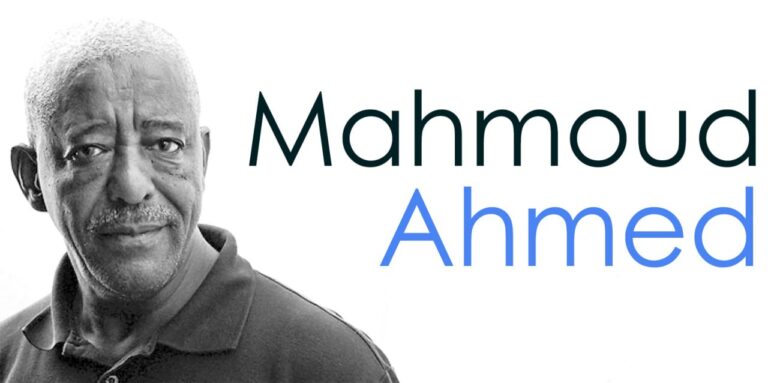
Veteran Ethiopian singer Mahmoud Ahmed, renowned for his profound contributions to music over the past five decades, is set to hold his final concert at Millennium Hall in Addis Ababa. This highly anticipated event will feature a selection of prominent artists who will perform in tribute to the legendary vocalist.
The concert’s coordinating committee, which includes notable figures such as musician Abraham Wolde and Jorka Event Organizer founder Agha Abate, emphasized the importance of honoring Mahmoud while he is still alive. “Mahmoud is the right person to start a tradition of giving thanks and honoring a man while he is alive,” they stated.
Scheduled for three months from now, the concert is expected to attract around 25,000 attendees, celebrating Mahmoud’s legacy and his significant impact on Ethiopian music. Additionally, plans are underway to erect a monument in his honor in Addis Ababa, with discussions ongoing regarding the designation of a street and square named after him.
The committee also announced the launch of a biography book detailing Mahmoud’s life and career, which has been in the works for nearly a decade. This book will be unveiled on the day of the concert, alongside the statue and street naming.
Mahmoud Ahmed, often referred to as the “King of Memories,” has captivated audiences with timeless hits such as “Engedaye Nesh,” “Mela Mela,” and “Atawurulgin Lela.” His contributions to music have been recognized globally; in 2007, he received the BBC Radio World Music Award for his songwriting excellence and was awarded an honorary doctorate by the University of Gondar for his influence on Ethiopia’s musical landscape.