
On Russia’s National Unity Day
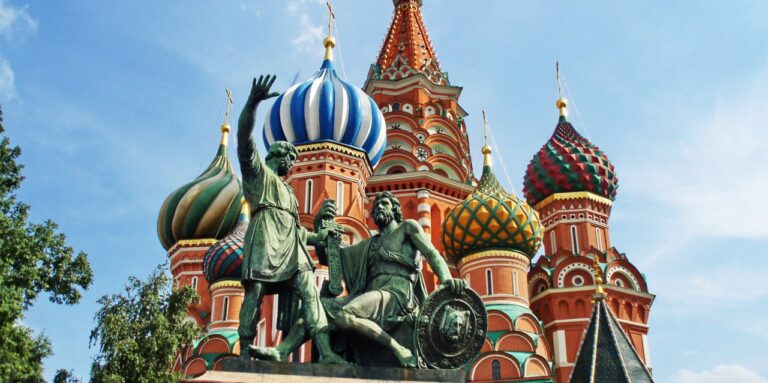
On November 4, Russia celebrates National Unity Day. The origins of the holiday go back centuries – to the feat of the people who rose up to fight for their Homeland, cleansed it of strife and betrayal, put an end to the Time of Troubles and restored our united statehood.
This day is a tribute to the memory of the people’s uprising in Russia, which liberated Moscow from the Polish-Lithuanian invaders on November 4, 1612. The leaders of the uprising – citizen Kuzma Minin and Prince Dmitry Pozharsky became national heroes. Not long before that, they had gathered a people’s militia near Nizhny Novgorod, which included representatives of different nationalities, classes and religions, and led it in the struggle to liberate the capital of the Russian state.
In 1649, the Russian Tsar Alexei Mikhailovich declared November 4 (October 22 according to the Julian calendar) a national holiday. Russians celebrated this day until 1917. November 4 became a national holiday again in 2005, when the President of the Russian Federation Vladimir Putin signed a decree establishing Unity Day or National Unity Day in Russia.
Throughout the history of the Russian state, there have been times when people of different social and religious strata united for the sake of the salvation and good of the Fatherland. And I would like to emphasize that our country, having withstood the most difficult trials, was always gained victory.
Today, our Motherland is once again fighting the misanthropic ideology of neo-Nazism in Ukraine, which the West is using as a means to inflict a “strategic defeat” on us. The United States and its satellites have never abondoned their futile efforts to weaken Russia and incite hatred and instability around the world. They are the ones who are planting their military bases everywhere, using military force, sending weapons and financial resources to conflict zones. This applies not only to Ukraine, but also to Iraq, Syria, Afghanistan. The latest example is the events in the Middle East.
Failing to achieve results on the battlefield, they want to split us from within, weaken us and sow discord. We will not surrender to this. We will defend our Fatherland, our unity, our sovereignty, just like our heroic ancestors. The truth is that the stronger Russia is, the more united our society is, the more effectively we will be able to defend our own national interests, truth and justice, as well as the interests of those peoples who have become victims of Western neocolonial policy.
Our agenda is open and positive – Russia is actively involved in the formation of a new, more just multipolar world with equal rights and opportunities for all countries and civilizations. Actually, nowadays Russia is fighting on the battlefield for the sake of the future and freedom of all countries and peoples of the world majority.
Each nation brings its own experience, its own unique heritage to the world. Russia has such an invaluable heritage in the form of centuries-old experience of peaceful coexistence of the people comprised of different nationalities. There is simply no other country as large and multifaceted as ours. And preserving the diversity of the peoples of Russia, their ethnic and cultural identity is of key importance to us, as are the traditions of mutual trust, harmony and kinship. It is these foundations that fill the unity of the Russian nation with a special, inner strength.
We appreciate even more Ethiopian truly selfless activities, commitment to truth and justice, your efforts to preserve historical memory and strengthen cultural, business, and friendly contacts with Russia and its citizens. Friendly century-old relations with fraternal Ethiopia have been showing increasing dynamics in recent years, especially, in the spheres of politics, security, trade, economy and culture. A number of major mutually beneficial projects are under implementation, including in the sphere of infrastructure development. Cooperation in the field of education remains traditionally large-scale, first of all, in the training of Ethiopian national personnel. Cooperation in the sphere of health care and epidemiological security is also deepening. The legal framework basement is being progressively improved, with several vital agreements important for the development of bilateral cooperation being recently signed. In the context of Ethiopia’s accession to BRICS during Russia’s current chairmanship in the association, we have noted a large-scale increase of delegations exchange, which also testifies to the growth of our multifaceted interaction.
Finally, I am availing myself of this opportunity to cordially thank all our Ethiopian friends who have congratulated us on the occasion of our national holiday.
Evgeny Terekhin is the Ambassador of Russia to Ethiopia
Unlocking Ethiopia’s Economic Potential Through Digital Finance
Ethiopia stands on the brink of a digital revolution. Over the last five years, the country has undergone a remarkable transformation, driven by an expanding digital financial market that is reshaping the lives of millions. Thanks to the National Digital Payments Strategy 2025 (NDPS), launched in 2020, the adoption of digital payments and financial services has accelerated at an unprecedented rate. Ethiopia’s financial ecosystem is now evolving, and with it, the promise of a more inclusive, prosperous future.
The significance of this transformation cannot be overstated. Digital payments bring more than just a convenience—they represent the key to unlocking Ethiopia’s economic potential. In a country where a large percentage of the population remains unbanked, digital financial services are offering new pathways to economic empowerment. Small businesses now have the tools to expand, individuals can access formal financial services, and a new generation of entrepreneurs is stepping into the modern economy with confidence. For Ethiopia, this digital shift is not just an upgrade; it is a lifeline for growth and inclusion.
Over the years, Ethiopia’s financial inclusion rate has steadily climbed, reaching 46% in 2022 according to the World Bank’s Findex report, with over 150 million transaction accounts, including 60 million mobile money accounts. This progress marks a significant milestone, but it is also a reminder of the work that remains. Ethiopia still lags behind the global average of 76% financial inclusion. However, the National Bank of Ethiopia has set ambitious goals to close this gap, aiming for 70% adult account ownership by 2025. It’s an ambitious target, but with the right policies, partnerships, and innovations, it is within reach.
The digital financial market in Ethiopia is brimming with potential, yet it faces notable challenges. Infrastructure limitations, digital literacy gaps, regulatory hurdles, and a persistent financial inclusion gender gap are some of the barriers that need addressing. In fact, the sheer size of Ethiopia’s unbanked population presents a tremendous opportunity. With over 120 million people, many of whom lack access to traditional banking services, Ethiopia’s untapped market for digital financial solutions is vast. The rise of fintech innovations, mobile money platforms, and partnerships with telecom operators like Ethio Telecom promises to bridge these gaps, bringing digital services to the masses.
The government’s proactive role in this transformation has been crucial. Platforms like Telebirr and CBE Birr, alongside the introduction of the Electronic Transactions Proclamation, are laying the groundwork for a more secure and transparent digital economy. These initiatives are a clear signal of Ethiopia’s commitment to fostering a vibrant digital payments ecosystem. However, the success of these initiatives will hinge on stronger public-private partnerships that can support the growth of digital infrastructure and ensure these services reach even the most remote corners of the country.
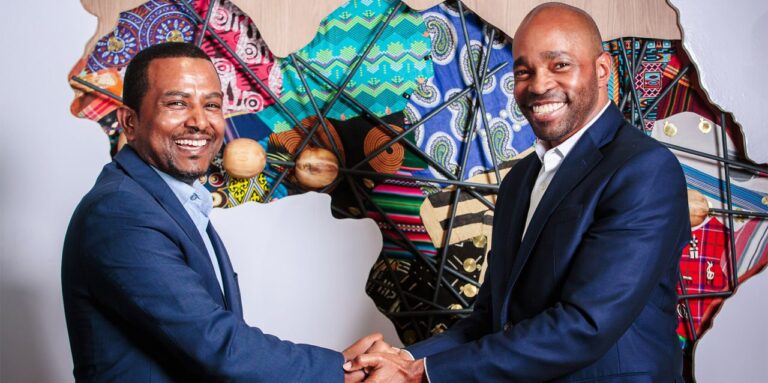
At Visa, we are proud to be a part of Ethiopia’s digital journey. Our recent strategic partnerships with key players like Commercial Bank of Ethiopia, Ethio Telecom, Cooperative Bank of Oromia, Bunna Bank, and Wegagen Bank demonstrate our commitment to expanding digital payments in the country. Through initiatives like the Visa Everywhere Initiative, we are fostering innovation, providing fintech startups with the tools they need to thrive, and enabling the creation of new digital payment solutions. We aim to ensure that our platforms are not just convenient but also secure and reliable, empowering businesses and individuals alike. By expanding access to digital payments, we are helping to unlock the vast potential of Ethiopia’s financial ecosystem.
As we look to the future, the potential for Ethiopia to emerge as a leader in the regional digital economy is clear. The foundations are in place, and with continued investment in digital infrastructure, financial inclusion will expand, driving broader economic development. However, the success of this transformation requires a collective effort from all stakeholders. Government institutions, private sector players, and local and international partners must work hand in hand to build a robust digital ecosystem that truly benefits every Ethiopian.
The digital financial revolution is here, and Ethiopia is seizing every opportunity it brings. With the support of strong partnerships and the resilience of its people, the country is poised to chart a new course towards growth, inclusion, and prosperity.
Chad Pollock is General Manager & VP Visa East Africa
Yared Endale is Country Manager, Visa Ethiopia