Saturday, November 21, 2026
Home Blog Page 1114

Ethiopia selected to host 2027 FIATA World Congress

0

International Federation of Freight Forwarders Associations (FIATA), the world’s largest logistics organization, has chosen Ethiopia to host the FIATA World Congress in the new century, the largest event in the industry, after many unsuccessful attempts.

Addis Ababa has been chosen to host the 64th FIATA World Congress for 2027 by the congress that convened in Panama City last week for the 61st FIATA World Congress.

According to FIATA’s official release on the city’s selection, “the FIATA World Congress will take place in the vibrant Ethiopian capital of Addis Ababa, marking the turn of a new century in FIATA’s history.”

The president of the Ethiopian Freight Forwarders and Shipping Agents Association (EFFSAA), which is a part of FIATA and in charge of organizing the congress, Dawit Woubishet, remembered that his organization had made attempts in the previous several years to secure the right to hold the major international logistics event.

Attending the convention in Panama City, Panama, Dawit stated that, “at the end of the day we have got to host the next century event in Addis Ababa,” despite the Ethiopian association’s repeated efforts over the previous four years to organize the event.

“African logisticians will use the opportunity to show their case, not just for Ethiopia,” he declared.

While returning to Ethiopia following his attendance in Panama, he told Capital from Washington, DC, “I have met African representatives at the congress who expressed their desire to amplify African presence at the congress.”

“We anticipated that at least 20 delegates from each of the African countries would attend the event, meaning that 1,000 attendees from Africa and 1,500 attendees from around the globe would be present at the global gathering,” he continued.

Addis Ababa will join South Africa and Egypt as the third African nation to hold such an event.

Though FIATA has only convened three congresses in Africa in its 100-year history, the expanding African Continental Free Trade Area is thought to have a significant role in attracting the next conference to the continent.

He said that the government and the private sector will shortly organize a committee to begin planning the effective execution of the event, which will take place in three years.

“Hosting this Congress is more than a privilege – it is a turning point for Africa. The FIATA World Congress has been hosted in various global regions, and bringing it to Africa underscores the increasing importance of our continent in global trade and logistics. Ethiopia, with its strategic location and fast-developing infrastructure, is ready to serve as the gateway for this new era,” Dawit said after the result was disclosed.

“This is not only a source of immense pride for Ethiopia but for Africa as a whole,” he says. “We are honoured and thrilled to have been given this extraordinary opportunity to host such a globally recognized event. The 2027 FIATA World Congress will be held in Addis Ababa, a city known for its rich culture, dynamic growth, and pivotal role in regional and international diplomacy.”

The FIATA Director General, along with the FIATA Presidency, expressed their confidence that Addis Ababa will be an ideal location for the event.

In the statement, FIATA stated that with its strategic position in East Africa, its role as the administrative capital of the African Union, and as the global hub for Ethiopian Airlines, Addis Ababa is the perfect setting.

“The Congress will not only highlight Ethiopia’s significant contributions to the logistics industry but also showcase the country’s ability to serve as a vital link between Africa and the rest of the world,” it said, adding that the 2027 Congress is set to be a landmark event, strengthening Ethiopia’s reputation on the global stage and providing a powerful platform for African logistics professionals to connect with the international community.

Three efforts have been made by the logistics advocacy group EFFSAA to gain the privilege to host the FIATA World Congress.

As a member of FIATA, the Ethiopian organization made a bid to host the 2025 Congress, which was ultimately won by Vietnam.

However, during the bid review process, Ethiopia’s security situation, which is connected to the war in the northern region, played a part in the country’s rejection as the host of the next Congress in 2022.

One of the contenders to host the Congress in 2027 was Czechia. Israel was eliminated as a candidate to host the 2027 event due to regional instability in the Middle East, leaving Brazil as the sole challenger, which subsequently withdrew its application.

The Congresses in 2025 and 2026 are slated to be held in Hanoi, Vietnam, and Milan, Italy, respectively. Italy, one of FIATA’s original members, will commemorate the organization’s 100th anniversary in 2026.

Attendees from a variety of international logistics sectors may network and engage in conversations on industry trends, issues, and solutions with leading industry leaders at the annual FIATA World Congress. Every year, the event is attended by over a thousand individuals from the logistics, transportation, and freight industries, as well as observers from other enterprises and institutional visitors.

FIATA is a non-governmental, membership-based organization representing freight forwarders in some 150 territories. FIATA’s membership is composed of 113 association members and more than 6,000 individual members, overall representing an industry of 40,000 freight forwarding and logistics firms worldwide.

Based in Geneva, FIATA is ‘the global voice of freight logistics.’

Condominium owners face eviction

0

Addis Ababa Housing Development and Administration Bureau (AAHDAB) has announced that homeowners of condominiums will face lease termination if they do not occupy their units by November 9, 2024. However, many owners are unable to move in due to inadequate infrastructure.

The AAHDAB reported that over 7,000 40/60 condominiums located in Lemi Kura Sub-city, Woreda 03 Bole Ayat 2, have been handed over to beneficiaries for six years, yet residents have not been able to take up residence. The lack of essential infrastructure has left many homeowners frustrated and unable to access their new properties.

One homeowner, who wished to remain anonymous, expressed their concerns: “We can’t move into our homes because the basic infrastructure is not in place.” Residents highlighted several critical issues, including unfinished internal roads, lack of water and electricity supply, and inadequate drainage systems.

Another source voiced disappointment over the AAHDAB’s ultimatum to enter the condominiums by the November deadline without addressing these fundamental requirements. Reports indicate that more than 1,800 units lack doors and aluminum windows. Additionally, many of the buildings are up to 15 stories high but do not have elevators or functional networks.

In a notice issued on September 30, 2024, the AAHDAB warned that unoccupied condominiums could become security risks due to illegal activities. The bureau stated that contracts would be terminated if homeowners do not occupy their units by the specified date. Those who fail to comply may have their properties reassigned through a lottery system.

The situation has raised concerns among homeowners about the future of their investments and living conditions. Many are urging authorities to prioritize infrastructure development to ensure that they can safely and comfortably inhabit their homes. As the deadline approaches, residents continue to seek solutions to these pressing challenges.

Ethiopia to establish center of excellence for testing and monitoring medicines

0

Ethiopia is set to build a state-of-the-art center of excellence aimed at testing vaccines, medicines, and medical equipment. The Ethiopian Food and Drug Authority (EFDA) has announced that construction is currently underway for a large complex in Kality, with the first phase of the project already 50% complete.

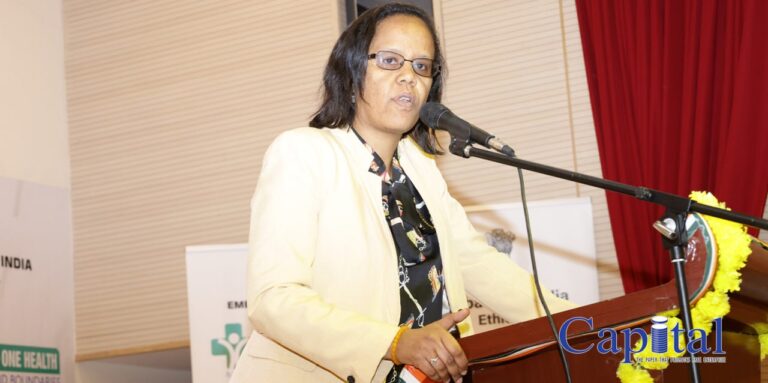
Heran Gerba, Director General of the EFDA, emphasized the ambitious goal of establishing this center not only to serve Ethiopia but also to cater to the broader African continent. “We aspire to support local industries and enhance our capabilities in regulatory affairs,” she stated.

The new facility is expected to include a training center focused on regulatory issues, equipping local industry professionals with the necessary knowledge and skills. The EFDA was established to protect public health by ensuring the safety and quality of food, drugs, medical devices, and cosmetics. It also regulates the use of alcohol and tobacco products to mitigate their adverse health effects.

“This center will be significant,” Heran Gerba noted. The existing testing laboratory for medicines is ISO 17025 certified, and the EFDA aims to achieve maturity level 3 according to the World Health Organization’s global benchmarking tool. “We’ll be re-benchmarked again this November, and we hope to obtain maturity level 3, which will strengthen our regulatory system and enhance our competitiveness with other countries,” she added.

The announcement came during a conference organized by the Indian Embassy in Ethiopia under the theme “One Earth, One Health & Healthcare Beyond Boundaries.” Ambassador Anil Kumar highlighted India’s commitment to addressing health disparities across Africa and noted that India has launched a project worth $600 billion this year, primarily driven by foreign investments.

The conference brought together policymakers, healthcare professionals, traditional medicine practitioners, medical travel experts, international organizations, and national representatives. Discussions focused on collaborative efforts to improve healthcare systems and promote health equity across the continent.

Concerns rise over franco-valuta policy as illicit forex market flourishes

0

It has been claimed that the Franco-Valuta openness policy, which was implemented in conjunction with the macroeconomic reform and liberalization of the FX market, has given illegal actors a way to channel foreign exchange through their illicit scheme. They said that it would be challenging for the authorities to taint the black market.

Experts in the field, such as importers and bank executives contacted by Capital, claimed that those operating at major borders are the ones who create the illegal foreign exchange market.

The government has liberalized the exchange rate in relation to the reform, which takes effect on July 29. This allows the market to establish the exchange rate based on the market or the interests of traders (individuals and banks).

The government reported that since the reform went into force, the gap between the legal and parallel currency markets has shrunk to three percent, according to a statement by Mamo Esmelealem Mihretu, Governor of the National Bank of Ethiopia. In addition, the inward remit has increased vertically, which has enhanced banks’ liquidity.

Experts in the field, however, assert that the forex market is being impacted by some of the government’s actions made in relation to the reform.

Specifically, they emphasized that the government’s Franco-Valuta strategy is indeed acceptable.

“The idea behind the government’s decision to launch the Franco-Valuta plan makes sense because the free flow of products and services is essential to a market economy, but the choice was made relatively early,” they said.

Before the reform, relatively few necessities were subject to the Franco-Valuta, while other items were meant to be imported after the official banking process.

Through the Franco-Valuta scheme, foreign exchange is accessed outside of the banking system.

The freedom to transport goods and services is what motivates the Franco-Valuta.

Zemen Bank President Dereje Zebene claims that it is not necessary to adhere to the same bureaucracy as the banking system.

“In the formal system, an importer needs to meet certain requirements set forth by the bank and provide various documents,” he continued.

According to experts, people prefer simple ways to obtain foreign exchange. “And as long as the country allows the payment instrument that the importer uses to buy the goods, anyone can import small to large goods or services without any preconditions,” the experts stated about the Franco-Valuta scheme.

“Controlling it is challenging; therefore, in the absence of a system to verify the resource’s source, it will serve as a haven for illegal activity and promote a parallel market,” they clarified.

“You’re supposed to ease the requirements at banks since you opened up the Franco-Valuta, which may access foreign currency from informal sources,” Dereje told Capital.

“Improving the legal system’s liquidity is also essential to reducing illegal acts,” he added.

According to him, most merchants would choose to employ the most straightforward scheme, regardless of how the revenue administration decides to handle the tax inquiry.

As the government opened up the exchange rate, importers told Capital that the goal of implementing an effective Franco-Valuta was to permit the free flow of goods and services.

“This is good, but the concept is misinterpreted in the market, and some traders are abusing the opportunity to evade even some legal responsibilities,” the importers said.

As one of the importers put it when he asked to remain anonymous, “If you open another alternative, they will also go that way if it is better.”

“The liberalized exchange rate will draw individuals seeking true value for their money, but if they have other options, they will pursue them, which will not be consistent with our current circumstances,” a banker stated.

“It will be used if banks have a plentiful supply of foreign currency, which would lower the exchange rate and benefit importers. However, even though the official system is improving, since you launched the Franco-Valuta when there are some problems, the forex flow will be impacted,” he continued.

The head of Zemen Bank expressed his opinion, saying, “If authorities prefer to continue on the current decision, abundant resources should be available in the banking system. In my view, the government should continue to allow the Franco-Valuta for some basic commodities rather than opening it for everything.”

Bankers hinted that they discussed the matter with regulators at their meeting; nonetheless, the government is concentrating on liberalization, which is commendable; yet, certain liberties may have unintended consequences that would be prohibited if they interfere with the true goal.

They said, “We hope the right body will take up the matter; otherwise, the reform’s intended goal will be undermined by the parallel market’s continued ability to set the rate.”