Friday, November 20, 2026
Home Blog Page 1137

Private sector welcomes improved forex allocation

0

The private sector, which includes companies in the industrial sector, is pleased with the banking institutions’ improved foreign exchange allocation.

According to sources, private sector players report that their requests for foreign currency are being met with favorable and somewhat quick responses from banks, in contrast to their prior experience.

“Over the past few weeks, our letter of credit (LC) has been receiving positive results,” they stated.

Manufacturing investors, who have been grumbling for years about their companies’ terrible hard currency allocation, now report that things have improved in the last few weeks.

They conveyed their optimism that the foreign exchange allotment will increase in the upcoming time frame.

Important adjustments to the foreign exchange directive have been made by the government in connection with the macroeconomic reform that went into effect on July 29.

The market has considerably reduced the difference in exchange rates between the legal and black markets, setting the direction of the foreign exchange market, according to the ruling.

The National Bank of Ethiopia (NBE) has dramatically altered the administration and distribution of foreign currency, enabling banks to generate and distribute foreign currency freely through a new directive that updated numerous earlier rules and included some new legislation.

The money transfer that was greatly impacted and captive to the parallel market and money laundering has also been made possible by the currency market reform and is now being routed through the legal system, according to banking sector observers.

Financial sector experts noted that the banking system has seen an exceptional increase in remittances over the last several weeks.

They told Capital that the amount of foreign cash received through remittances via the legal system during the last three weeks, which coincide with Ethiopia’s New Year and Meskal holiday season, is noteworthy.

A few weeks ago, NBE launched a six-month campaign to increase money transfers in partnership with financial institutions.

“The foreign currency flow through banks is growing since the foreign exchange has become equal to the illegal market, and financial institutions are offering various attractive incentives to boost their hard currency resources,” an IBD director told Capital.

He continued by saying that some of the incentives are better than the black market pricing, which, according to the most recent NBE review, differs somewhat from the legal rate.

“It may take two weeks, but our foreign currency requests are getting positive responses from banks,” said participants in the private sector.

“We hope that it will expand more in terms of amount and shorter time frames,” they said, expressing their appreciation for the new trend.

According to the government, the new reform is primarily intended to modernize the macroeconomic structure and increase foreign currency availability, which was one of Ethiopia’s biggest economic concerns.
Ethiopia to recognize educational programs for the first time

0

Ethiopia is set to make a significant milestone in its education sector by officially recognizing educational programs for the first time. This development comes after two years of efforts by the Education Training Authority to establish procedures and guidelines aimed at helping educational institutions re-register and operate effectively.

In the past, the authority had indicated that quality audits and accreditation would be conducted to ensure that institutions provide quality education at the program level. This recognition signifies a formal work permit for educational institutions to operate within the framework of quality assurance.

As part of this initiative, various universities across the country are currently applying for accreditation of their programs. This year marks the first time Ethiopia will officially recognize these educational programs, reflecting a commitment to improving the quality of education in the country.

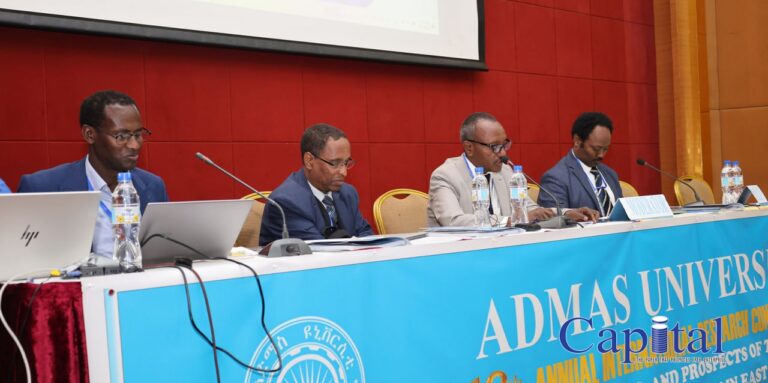
The necessary preparations for this recognition have been made, and the implementation process is underway. The Education Training Authority has announced that re-registration of institutions under the new system will take place in the first six months of the 2024/25 fiscal year. This announcement was made during the 16th International Conference held at Admas University.

Molla Tsegaye (PhD), President of Admas University, emphasized the institution’s commitment to conducting research and creating platforms for development. He noted that the university has hosted at least 18 conferences annually over the past 15 years, focusing on various aspects of higher education, including quality research and community service.

The recent conference addressed opportunities for success, challenges, and future prospects in higher education at the East African level. This dialogue is crucial as Ethiopia seeks to enhance its educational framework and ensure that institutions meet the necessary standards for quality education.

The recognition of educational programs is expected to not only improve the quality of education but also enhance the credibility of Ethiopian institutions on a regional and international scale. As universities work towards accreditation, they will be better positioned to attract students, funding, and partnerships that can further enhance their educational offerings.

Ethiopia’s decision to recognize educational programs marks a pivotal moment in its education sector. With the implementation of quality audits and accreditation processes, the country aims to ensure that its institutions provide high-quality education that meets both local and global standards. This initiative is a significant step towards fostering a more robust educational environment that can contribute to the nation’s development and growth.

Chinese investors shift focus to neighboring countries amid challenges in Ethiopia

0

Chinese investors, who have significantly contributed to Ethiopia’s economy with investments totaling approximately $5 billion across more than 2,000 projects, are increasingly relocating their operations to neighboring countries such as Kenya, Uganda, and Tanzania. This trend is attributed to a multitude of challenges that have arisen in Ethiopia, prompting concerns from both the Chinese Embassy and local officials about the implications for the country’s economic development.

As of May 2024, Chinese enterprises have created around 610,000 job opportunities in Ethiopia, playing an irreplaceable role in the nation’s modernization efforts. However, the representative from the Chinese Embassy in Ethiopia expressed alarm over the recent shift in investment patterns. “For many reasons, Chinese investors have turned their business in Ethiopia to neighboring countries,” the representative stated. “This is a great concern not only for the embassy but also for the country, because our mission is to facilitate cooperation between the two countries.”

Hanna Arayaselassie, Commissioner of the Ethiopian Investment Commission (EIC), acknowledged these challenges during the second Ethio-China Friendship Cooperation Forum held two months back. She noted that efforts to strengthen trade and investment partnerships between Ethiopia and China are yielding tangible results. Despite this optimism, many investors remain apprehensive about the current business climate.

Andy Wu, a representative of Chinese investors in Ethiopia, highlighted several pressing issues affecting their operations. “Currently, Ethiopia faces significant challenges,” he said. “The security crisis, hard-currency shortages, and narrowing marketing opportunities are major concerns.” He further elaborated on the tax challenges that investors encounter: “We always face headaches with the customs bureau. Once production arrives, customers are often not happy or excited; it’s only complaints.”

The broader context reveals that international trade is also being hindered by various complex factors. The ongoing security crisis has led to increased difficulties in international ocean freight and logistics, further complicating the investment landscape for foreign businesses.

Despite these hurdles, Wu emphasized the importance of fostering understanding between Chinese investors and Ethiopian stakeholders. “We want Ethiopians—not only the government but also scholars and the general public—to understand our business mindset and recognize what we bring to Ethiopia,” he stated.

While some Chinese businesses continue to operate in Ethiopia, they face an increasingly uncertain environment. The Ethiopian government must prioritize addressing these investment-related issues to retain Chinese interests and bolster economic growth. Currently, Chinese investments represent a significant portion of foreign direct investment (FDI) in Ethiopia—more than any other country—followed by Saudi Arabia and Turkey.

The ongoing insecurity and political instability stemming from ethnic conflicts have adversely affected investment sentiment. The conflict in northern Ethiopia that ended in November 2022 and ongoing violence in regions like Oromia and Amhara have led to a decline in foreign direct investment.

While Chinese investors have played a vital role in Ethiopia’s economic development over the past few decades, their recent shift toward neighboring countries underscores significant challenges that must be addressed. By prioritizing security, easing bureaucratic hurdles, and fostering open communication with foreign investors, Ethiopia can work towards creating a more stable and attractive investment climate that benefits both local communities and international partners alike.

Seychelles: African Development Bank approves a USD 25 million loan to improve access to renewable energy and create jobs

0

The Board of Directors of the African Development Bank Group (www.AfDB.org) has approved a $25 million loan to Seychelles to implement the first phase of the Economic Resilience and Green Recovery Support Programme aimed at economic governance management across the archipelago.

The operation, the first in a series of programmes scheduled for 2024, 2025 and 2026, will support efforts by the Seychelles authorities to improve tax revenues and enhance governance in the public sector, including efficiency of public spending and public service delivery as key pathways to advance governance and economic management reforms. The tax will play an important role in the country’s tax mobilisation efforts and provide funds for investment in circular economy projects.

The programme will support current efforts of the Seychelles Ministry of Investment, Entrepreneurship and Industry to drive economic diversification and transformation in the key sectors of fishing and tourism. These initiatives include the revision of relevant legislative frameworks to promote growth of the private sector, supporting the recently approved industrial policy.

The programme will also help the Seychelles authorities to deepen reforms that promote environment and climate resilience, assisting the government’s efforts to integrate climate adaptation and mitigation into the National Development Strategy for 2024-2028.

The government is also implementing measures to improve the health of the country’s financial system so that it can do more to support real sector growth. Specifically, the new programme will support efforts by the authorities to introduce a licensing regime for the virtual asset sector.

The overall aim of the program is to contribute to Seychelles’ medium-term objectives of improving access to renewable energy, enhancing inclusive growth, and creating jobs, while leaving room for manoeuvre in the budget sphere and promoting debt sustainability. This will enable the government to allocate resources to priority projects and programs while protecting more vulnerable social groups.

As of 1 July 2024, the AfDB’s approved and ongoing portfolio in Seychelles comprises seven operations for a total commitment of $33.7 million.

Distributed by APO Group on behalf of African Development Bank Group (AfDB).

Media contact:
Alexis Adélé
Communication and External Relations Department
media@afdb.org

About the African Development Bank Group:
The African Development Bank Group (AfDB) is the premier multilateral financing institution dedicated to Africa’s development. It comprises three distinct entities: the African Development Bank (AfDB), the African Development Fund (ADF) and the Nigeria Trust Fund (NSF). The AfDB has a field presence in 41 African countries, with an external office in Japan, and contributes to the economic development and social progress of its 54 regional member states. For more information: www.AfDB.org