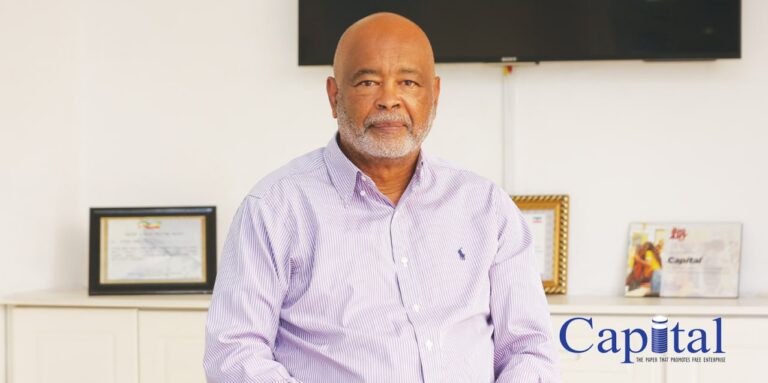
In this exclusive interview with CAPITAL, Kebour Ghenna, the Executive Director of the Pan African Chamber of Commerce and Industry (PACCI), shares his vision on Africa’s journey toward economic integration through the African Continental Free Trade Area (AfCFTA). Kebour Ghenna sheds light on the key challenges and opportunities for businesses, particularly small and medium-sized enterprises (SMEs), in navigating the evolving trade landscape. As the continent’s voice for the business community, PACCI plays a pivotal role in ensuring that Africa’s private sector capitalizes on AfCFTA, while tackling the critical barriers to trade growth.
Kebour Ghenna also touches on PACCI’s latest initiatives, including the “Be Supportive… Pay without Delay” (PWD) campaign, a continental effort to address payment delays that severely affect micro, small, and medium-sized enterprises (MSMEs). He outlines PACCI’s continued advocacy for fair trade practices, infrastructure development, and policies that enable African businesses to compete in a global market.
With Africa at the cusp of unprecedented economic transformation, Kebour Ghenna provides insightful reflections on the path forward and how key stakeholders, including governments, financial institutions, and chambers of commerce, must collaborate to drive inclusive growth across the continent. Excerpts;
Capital: What can you tell us about the AfCFTA, the benefits and the challenges for the business community of Africa?
Kebour Ghenna: The AfCFTA (African Continental Free Trade Area) is an ambitious project to unify African economies into a single market for goods, services, and investments. Its central benefit lies in enhancing intra-African trade, which historically has been low, accounting for around 15-18% of the continent’s total trade. By eliminating tariffs on 90% of goods and reducing trade barriers, AfCFTA presents significant opportunities for African businesses to expand their markets and improve competitiveness.
However, challenges remain, particularly in ensuring that benefits are equitably distributed. More industrialized economies like South Africa may gain more in the short term, while less developed nations, small and medium enterprises (SMEs), and informal sectors risk being marginalized. Additionally, transport infrastructure, non-tariff barriers, and harmonization of rules across countries still need significant work to maximize the benefits.
Capital: Is AfCFTA good for economic growth, particularly for SMEs?
Kebour Ghenna: The AfCFTA is designed to unlock Africa’s economic potential, and SMEs stand to benefit significantly from this. With the removal of tariffs on 90% of goods traded across Africa, the market for SMEs will expand from their domestic borders to the entire continent, giving them access to over 1.3 billion people. This can potentially lead to increased sales, economies of scale, and improved competitiveness. For many SMEs, this opens up a whole new market where they can not only trade but also form cross-border partnerships and build stronger supply chains.
However, for SMEs to fully benefit, some challenges need to be addressed. First, the complexities of complying with the rules of origin, that is the criteria used to determine the national source of a product may be difficult for smaller businesses. SMEs also struggle with limited access to finance, inadequate transport infrastructure, and the high cost of intra-Africa logistics, which remain barriers to trade. Addressing these issues will require focused support from governments and continental organizations.
At PACCI, we recognize these challenges and work to provide support through capacity-building programs, policy advocacy, and collaboration with partners such as the African Union Commission (AUC), UNECA, the African Development Bank (AfDB), and private entities like Afreximbank. PACCI also assists SMEs in understanding the rules of AfCFTA, accessing financing opportunities, and overcoming logistical barriers.
Capital: Is free trade always a good thing?
Kebour Ghenna: Free trade can be a powerful driver of economic growth, but it must be managed carefully. While it allows for a more efficient allocation of resources, lowers consumer prices, and boosts innovation through increased competition, free trade can also exacerbate inequalities. In Africa, where the economic playing field is uneven, the gains from free trade may be concentrated in more stronger countries and among larger firms, leaving behind smaller economies, regions, or sectors that are less competitive.
The AfCFTA will require complementary policies to ensure that all African nations and businesses benefit equally. This includes developing better infrastructure, building capacity within the informal sector, and encouraging value-added industries that can compete on a continental scale. For free trade to be truly beneficial, there must be an emphasis on inclusivity, ensuring that marginalized sectors, rural areas, and small businesses are not left out of the benefits.
In PACCI case we promote policies that enable a fair and inclusive trade environment by working directly with the AfCFTA Secretariat, the AUC, UNECA, and international organizations. We advocate for the protection of vulnerable sectors while ensuring that the benefits of free trade are maximized for all.

Capital: Do the losers from free trade need to be compensated? If so how would they be compensated?
Kebour Ghenna: Yes, those who lose out from free trade, particularly in sectors that face increased competition from more developed economies, need to be compensated. The reality of trade liberalization is that while it increases overall economic growth and opportunity, it can also result in disruptions. Certain industries, particularly those in less developed economies or rural areas, may find themselves unable to compete with larger, more established businesses in other African countries. This can lead to job losses, reduced market share, and social instability if not properly managed.
One of the mechanisms designed to address these challenges is the AfCFTA Adjustment Fund. This fund, managed by the African Export-Import Bank (Afreximbank) in partnership with the AfCFTA Secretariat, was created specifically to help countries and businesses that may be negatively affected by the transition to a more open trade regime. The fund has a Base Fund, which will provide financial support to both governments and private sector entities, helping them adjust to new competition and take advantage of the opportunities presented by the AfCFTA.
I understand the fund will be used to support retraining programs for workers, help businesses modernize and become more competitive, and provide capital for SMEs to meet the requirements for trading under the AfCFTA, such as rules of origin compliance. It can also be used to develop infrastructure and improve trade facilitation measures, helping countries that are at a disadvantage due to poor transport or logistics systems.
Capital: What other compensation is there?
Kebour Ghenna: Compensation may also come in the form of temporary protective measures for the most vulnerable industries and economies. For instance, tariffs on sensitive goods can be reduced gradually over time, giving businesses the opportunity to strengthen their capabilities before full market liberalization. This phased approach is particularly important for smaller, less developed economies, which may need more time to adjust.
In addition to these financial and protective measures, PACCI works with partners like the African Union, AfDB, UNECA, and others to ensure that compensation and adjustment mechanisms are effective. We also advocate for complementary policies, such as better access to credit, improvements in infrastructure, and capacity-building programs, so that businesses, particularly SMEs, can thrive in the new trade environment.
By ensuring that those negatively impacted are supported, the AfCFTA can create a more inclusive and sustainable trade environment across Africa. This approach not only prevents social unrest but also strengthens the resilience of all African economies, allowing them to grow and compete on a global scale.
Capital: What is PACCI’s role in the implementation of the AfCFTA?
Kebour Ghenna: PACCI plays a crucial role in facilitating the successful implementation of AfCFTA, both for businesses and governments. As an advocate for the African business community, particularly SMEs and chambers of commerce, we actively engage in policy dialogues, provide capacity-building programs, and help businesses navigate the complexities of the AfCFTA.
PACCI collaborates closely with national chambers of commerce, continental organizations such as the African Union Commission, the AfCFTA Secretariat, UNECA, UNDP, and financial institutions like the AfDB and Afreximbank. Through these partnerships, PACCI helps businesses understand the benefits and challenges of the AfCFTA, from rules of origin to trade facilitation procedures.
We also work directly with businesses to create networks that enable cross-border partnerships, supply chain development, and market expansion. This direct engagement helps businesses, especially SMEs, overcome hurdles and capitalize on the opportunities created by the AfCFTA. In addition, PACCI promotes knowledge-sharing events and workshops that bring together public and private stakeholders to align efforts for maximizing AfCFTA’s potential.
Capital: What should we expect from the 6th Edition of Prosperity Africa?
Kebour Ghenna: The 6th Edition of Prosperity Africa promises to be a significant event that will address the future of African trade and economic integration, particularly focusing on how businesses can leverage the AfCFTA to fuel growth. This year’s edition will offer a platform for critical discussions on enhancing intra-African trade, building resilient supply chains, and addressing the unique challenges faced by MSMEs. The conference will bring together industry leaders, policymakers, and entrepreneurs to foster partnerships and provide insights into emerging opportunities for businesses across sectors.
As part of our efforts to support African MSMEs, PACCI is also reaching out to large businesses to inform them about our new campaign—“Be Supportive… Pay without Delay (PWD).” This campaign directly addresses the issue of delayed payments that MSMEs frequently face from larger companies. Such delays severely impact the cash flow and sustainability of smaller businesses, which play a crucial role in driving innovation and economic development in Africa.
We are challenging large businesses, through their national chambers of commerce, to lead by example by implementing timely payment practices that can help secure the financial stability of MSMEs. With large businesses active involvement, we can amplify this campaign and foster a more equitable and supportive business environment where all enterprises, regardless of size, can thrive. The success of this campaign depends on the commitment of large companies to ensure that payments to smaller suppliers are made promptly, supporting the overall economic growth of the continent.