Wednesday, November 18, 2026
Home Blog Page 1284

Africa faces unprecedented climate challenges in 2023

0

The African continent experienced some of its most severe climate extremes on record in 2023, according to the latest State of the Climate in Africa report by the World Meteorological Organization (WMO). The report paints a concerning picture of the impacts of global warming on the region, with rising temperatures, sea levels, and an increase in the frequency and intensity of extreme weather events.

Key findings from the report include that 2023 was one of the three warmest years on record in Africa, with temperatures 0.61°C higher than the 1991-2020 average and 1.28°C above the 1961-1990 baseline. The continent warmed at a rate of 0.3°C per decade between 1991 and 2023.

Extreme heatwaves in July and August affected northern Africa, with new temperature records set in Tunisia (49.0°C) and Morocco (50.4°C) and sea levels around Africa rose at a rate close to or slightly higher than the global mean of 3.4 mm per year, with the highest rate of 4.1 mm per year observed in the Red Sea. Moreover precipitation was notably higher than normal in parts of West and Central Africa, while the Horn of Africa, portions of Southern Africa, and Madagascar experienced significant rainfall deficits leading to severe drought.

At least 4,700 confirmed deaths in Libya were attributed to flooding from the Mediterranean cyclone Storm Daniel in September 2023 and climate extremes are having disproportionate impacts on African economies, causing countries to lose 2-5% of GDP annually on average, with some losing up to 9% of their budgets to respond to climate disasters.

The report emphasizes the urgent need for investment in early warning systems, climate services, and adaptation measures to build resilience across the continent. Estimated adaptation costs in sub-Saharan Africa alone are between $30-50 billion per year over the next decade.

“The State of the Climate in Africa 2023 report underscores the severe and growing impacts of climate change on the continent,” said WMO Secretary-General Prof. Celeste Saulo. “It is a stark reminder of the critical importance of investing in climate adaptation and resilience to safeguard the lives and livelihoods of all Africans.”

As the global community grapples with the realities of a warming world, the report serves as a call to action for greater support and solidarity with African nations on the frontlines of the climate crisis. With the right investments and collaborative action, the report suggests Africa can forge a path towards a more climate-resilient future.
Enhancing global collaboration by Belt and Road Journalists Forum

0

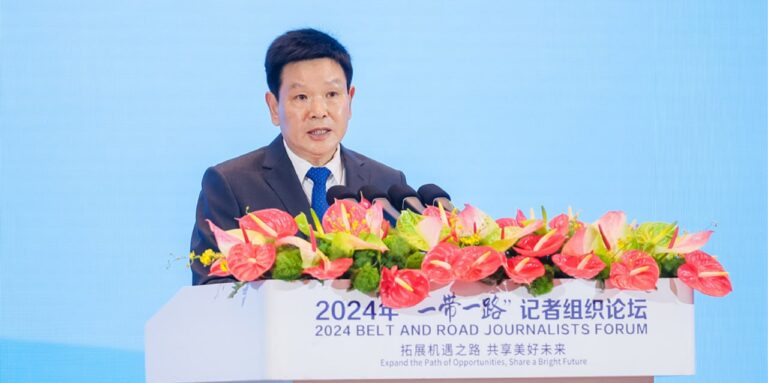
Enhancing collaboration and advancement within the international system was deemed essential at the most recent Belt and Road Journalists Forum, which was hosted by the Belt and Road Journalists Network (BRJN).

Mo Gaoyi, deputy head of the Publicity Department of the Communist Party of China Central Committee and director of the State Council Information Office, stated at the forum on Saturday, August 31, in Chongqing Municipality in southwest China, that the media is essential to advancing development.

“In today’s world, focusing on win-win cooperation to promote prosperity and common growth is essential,” he states. “Human beings have entwined interests and are closely related to each other in the future.” Strength comes from cooperation, whereas weakness comes from separation.

The deputy head of the Publicity Department stated that collaboration is still the most popular choice and mega trend, recalling that President Xi Jinping’s 2013 introduction of the Belt and Road Initiative (BRI) was intended to promote collaborative development for all inhabitants of the world.

It has also been stated that BRI continues to be an essential tool for creating the community of the future humankind, which thrived by bringing fresh perspectives to global economic expansion and creating new avenues for global development.

Gaoyi said it is now the path to peaceful development, a win-win partnership with mutual advantages, thorough collaboration, and collaborative contributions.

On his remark, the deputy head recalled that at its third plenary session in July, the 20th Central Committee of the Communist Party of China made a strategic decision of comprehensive, deepening reform, and advancing Chinese modernization.

He said that the session proposed steps to improve high-quality Belt and Road cooperation, which will provide new dynamism for BRI cooperation.

The deputy head at the forum emphasized the importance of policy, infrastructure, trade, and finance as common areas that require interpersonal interactions, media communication, and public support. “Media represents a key force to guide further opinion, gain popular support, and promote cooperation and development,” he stated.

“The BRI has advanced significantly, and sound movement cannot be achieved without the constructive work of journalists throughout the nations,” he continued.

The BRI aims to “uphold the Silk Road, spirit of peace and cooperation, inclusivity and openness, mutual learning, and mutual benefits play its key role in BRI under the theme of ‘Expand the Path of Opportunities, Share a Bright Future.'” Gaoyi claims that since the BRJN’s founding in 2017, it has been dedicated to promoting exchanges and cooperation of participating countries and regions, united and contact journalism throughout the country, or tracking and covering BRI progress. This discussion board is really relevant. In a keynote address, He Ping, the head of the All-China Journalists’ Association, one of the conference co-hosts, stated that news outlets have to follow the trends of collaboration, peace, growth, and reciprocal advantages.

He said collaboration in the creation of fresh story structures and artistic forms that “transcend ideology, social systems, and levels of development.”

For the 2024 Belt and Road Journalists Forum, about a hundred representatives of media outlets and journalist organizations from fifty different nations and regions convened on Saturday in Chongqing Municipality, in southwest China.

The forum, entitled “Expand the Path of Opportunities, Share a Bright Future,” underscored the vital function of media in advancing global comprehension, particularly in light of the escalating geopolitical strains and regional conflicts.

The importance of media cooperation was underlined by the participants by amplifying eliminate miscommunication, foster international peace, and bridge cultural gaps, journalists must present fair, unbiased, and factual news.

The Chongqing Belt and Road Journalists Station was acknowledged as a crucial center for international media interaction by the forum, which also granted media organizations from 14 nations the “International Home of Journalists” designation during the inauguration ceremony. A number of media representatives also discussed their own experiences, emphasizing the value of intercultural communication.

Reaching 1.65 million media workers, the forum connects 100 journalist organizations and serves as a vital venue for international media collaboration. It fosters understanding between people and motivates perceptive, genuine reporting to improve relations between nations.

The BRJN provides a global forum for journalist collaboration and exchanges. The network was started by the All-China Journalists Association in collaboration with media outlets from BRI-included nations and regions.

One of the network’s main events is the Belt and Road Journalists Forum, which has been conducted yearly since 2017.

Declining participation in Open Market Operation

0

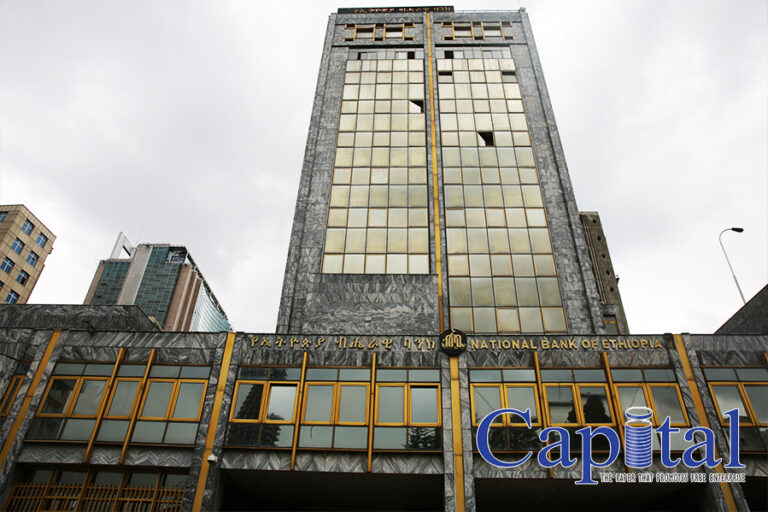
While the ratio increased, participants in the Open Market Operation (OMO), the primary money market auction, which was inaugurated in July, slowed down.

Several financial institutions were first drawn to the new money market instrument that the National Bank of Ethiopia (NBE) introduced as part of the macroeconomic reform.

Vice Governor and Chief Economist of NBE, Fikadu Digafe, admitted that fewer players are participating over time.

According to him, less is being sold to NBE as well.

“The number of participants and value is gradually decreasing, but banks that are liquid are still participating in the auction,” he told Capital.

Five banks participated in the most recent auction, which took place on Thursday, September 5, and was the fifth since the new instrument was established. A total of 15.4 billion birr was allotted.

In the second phase of the auction, which aimed to absorb market liquidity, 21 banks participated, taking in a total of about 37.5 billion birr. In both the number of participants and the sum given, it was the highest.

16 banks participated in the inaugural OMO auction, which took place on July 11 and featured a sale of about 20 billion birr with a fifteen-day maturity term.

However, 29.6 billion birr and 23.3 billion birr were granted in the third and fourth auctions, which took place on August 8 and 22 respectively, with the involvement of 12 and 9 financial institutions.

Experts noted that although just five banks participated in the most recent auction, each bank received the greatest average sum.

Even though banks did not offer the same amount at the auction, with an average share of around 3.1 billion birr each for the auction that was held on Thursday, it was the biggest amount since the previous sale on August 21, which had a share of 2.6 billion birr.

A few weeks earlier, Capital was notified by a few bank presidents, including some who had recently opened, that they had taken part in the auction to test the new system.

One leader of the new banks told Capital, “We offered less than 100 million birr on the initial auction to test the new market.”

According to experts, banks would be eager to buy and sell foreign exchange because the central bank opened the market to market forces.

As a result, “their liquidity would transfer to investments in foreign currency business,” which could be one of the reasons for the banks’ decreased participation in the OMO auction.

According to Fikadu, the NBE is eager for banks to devote their resources to the mobilization of hard money.

The new instrument, with a two-week maturity, is described as an additional tool to control inflation. According to NBE, its new monetary policy framework, which was unveiled at the start of the 2024/25 budget year, will involve biweekly auctions linked to monetary policy. During these auctions, the NBE will either withdraw or inject liquidity from the banking system based on its evaluation of the most recent conditions.

OMO is the principal tool employed in monetary policy to ensure that interest rates in the interbank market, which is the operating aim of monetary policy, stay relatively close to the National Bank Rate (NBR) that was instituted with the new policy.

When excess liquidity in the banking system leads to significant downward deviations in the interbank market rate from the NBR (which is set at 15 percent upon inception), the OMO auctions will be used to withdraw excess liquidity from the system.

Conversely, when the banking system faces a shortage of liquid funds resulting in significant upward deviations of the interbank market rate from the NBR, NBE will use OMO auctions to inject liquidity into the system.

Additionally, NBE is in the process of introducing an ‘Overnight Lending Facility’ and an ‘Overnight Deposit Facility’ for banks that may need to manage their liquidity positions over a one-day time horizon. These facilities, formally known as Standing Facilities, will be offered at the NBR rate plus or minus 3 percent.

Indian peacekeepers take a unique approach to promoting peace through animal health and welfare

0

“Peace is not just the absence of conflict, but the presence of compassion. When we care for animals, we care for each other, which is a powerful catalyst for peace.”

This was the powerful and passionate message from Lieutenant Colonel Manoj Yadav, the Deputy Commander of the Indian peacekeeping battalion serving with the United Nations Mission in South Sudan in the conflict-affected Upper Nile region.

He was speaking about the unique approach to promoting peace taken by Indian peacekeeping veterinarians who are treating a diverse range of animals belonging to communities at dedicated camps throughout the region.

“These camps are instrumental in disease surveillance, supporting early warning systems, and preventing potential outbreaks. By focusing on maintaining healthy livestock, veterinary camps contribute to food security. This, in turn, enhances the prospects of peace and development,” says Lt. Col. Yadav.

In South Sudan, cattle are both a valuable commodity and part of the cultural identity. They represent wealth, fertility and even a spiritual connection. However, they can also be a driver of conflict, as communities struggling with the dire economic and humanitarian situation as well as extraordinary flooding, fight over access to land and water and raid cattle from each other.

To tackle this problem, the UNMISS peacekeepers have treated nearly 15,000 cattle in the past nine months as well as countless other animals precious to the people of South Sudan.

“These events are not merely about animal care, but also serve as a platform for encouraging cooperation among different communities, aiming to reduce tensions and promote mutual understanding,” said Lt. Col. Yadav.

As an example, John Marten, from the Shilluk community, attended the Malakal Veterinary Center with Aben Mirial, a member of the Dinka community. While these two communities have a history of conflict, the two cattle herders came with a collective desire to improve the health of their livestock by learning international best practices in animal husbandry. This illustrates the power of harnessing common interests to build trust and confidence between diverse communities.

The peacekeepers also provide training to Community Animal Health Workers which empowers local communities to be self-reliant and reduces dependency on external aid. This contributes to long-term stability by strengthening local capacities and resilience.

The motto of the Indian battalion is that “even in the darkest of times, the simplest acts of compassion and kindness can have a profound impact.”

These peacekeepers believe that by bringing communities together, fostering trust and promoting cooperation, the veterinary camps can play a transformative role in building a harmonious society in a country ravaged by conflict and instability.

“By healing the animals, we truly believe we are healing the hearts of the youngest nation in the world, which will lead to a more peaceful, more prosperous, and more united South Sudan,” said Lt. Colonel Yadav.

Distributed by APO Group on behalf of United Nations Mission in South Sudan (UNMISS).
