Wednesday, November 18, 2026
Home Blog Page 1396

Ethiopia secures non-concessional loan for Koysha Hydroelectric Dam Project

0

Ethiopian Electric Power (EEP), the state-owned power producer, anticipates that the Koysha Hydroelectric Dam, one of its massive projects, will receive a non-concessional loan based on the government’s most recent exceptional green light.

Unlike other comparable renewable energy projects, the project being built on the transboundary Omo River in the South West Ethiopia region has had difficulty obtaining concessional loans. The other project, the Grand Ethiopian Renaissance Dam, is being built on the Abay (Blue Nile) River a short distance from the Sudanese border and is entirely financed by local resources.

The administration recently said in a conversation with foreign partners, “Despite sustained efforts, we have not been able to secure concessional financing to finalize this project, which is critical for our medium-term growth and poverty-reduction strategy.” In order to carry out the Koysha project, the government was compelled to obtain local funding when it decided to halt taking out commercial loans.

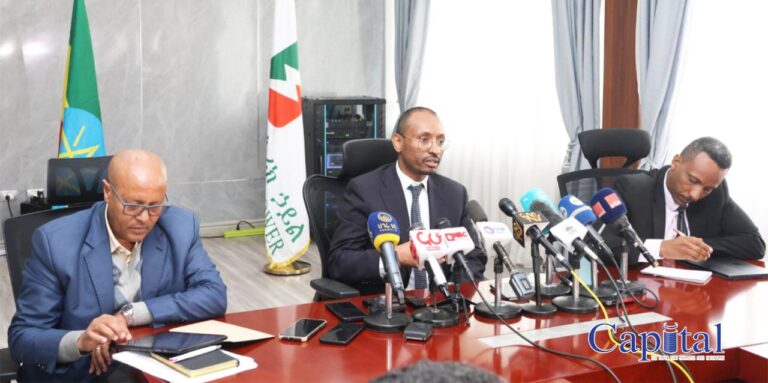
Nevertheless, despite the government’s repeated pledge to halt all concessional funding, special measures have been made to associate a fund with the completion of the 2,160 MW installed capacity project. Ashebir Balcha, CEO of EEP, reports that at the conclusion of the previous fiscal year, the project’s achievement rate was 67%. “However, more funding is needed for the remaining work at the site,” he told Capital.

It is anticipated that the project will require more than $950 million. According to the CEO, the government has made the decision to get a commercial credit in order to complete the project, which started in 2016. In order to obtain the commercial credit, the Ministry of Finance is now working, and “we hope the process will end very soon.”

The government of Ethiopia reaffirmed its unwavering resolve to suspend non-concessional loans in light of the most recent macroeconomic reform that the country is carrying out with the assistance of foreign partners. According to the agreement the government reached with foreign partners, “an exception is applied for new non-concessional external debt contracted or guaranteed by the government for the Koysha dam project, which is capped at USD 950 million over the duration of the program (it is about four years)”.

According to the government, in order to prevent contractual penalties for delays, possible termination, and total construction cost rises, finding external finance and starting work again are essential. One of the main partners in implementing the economic reform, the International Monetary Fund (IMF), announced that the authorities had asked for one exception from the zero-limit on new non-concessional borrowing in order to finish the Koysha Hydroelectric Dam project, for which concessional financing is not available.

The Italian export credit guarantee agency (SACE) provided non-concessional financing for the project, which was initially financed by loans totaling about 340 million euros from three banks. There have been delays despite the project being 67% completed due to a lack of outside funding. According to the IMF, the authorities have failed to get concessional loans, and the anticipated gap is $879 million. The IMF estimates that it will take an extra three to six years to complete.

A 6,500 million cubic meter reservoir with a crest length of 990 meters and a height of 180 meters is part of the roller-compacted concrete (RCC) gravity dam project, which is situated approximately 370 kilometers southwest of Addis Ababa.

New vehicle insurance policy sparks debate over clarity, implementation

0

The newly implemented vehicle insurance policy aimed at third-party risk has raised concerns among industry stakeholders regarding its clarity and the implications of premium and indemnity rates. While some experts support the decision as a necessary step forward, others criticize the lack of transparency surrounding the new regulations.

As vehicle accidents in Ethiopia become increasingly frequent, resulting in significant loss of life and property damage, the urgency for effective insurance coverage has grown. Many victims of road accidents suffer not only physical injuries but also financial burdens, especially when the responsible vehicle is uninsured. In response to this pressing issue, the Ethiopian government has mandated third-party insurance coverage for vehicle accidents.

However, sources within the insurance sector have reported that the recent revision of insurance tariff rates has been unexpected and poorly communicated. A source from the insurance industry expressed concerns about existing loopholes in the law. Previously, the payment ceiling for death claims was set at 5,000 birr, but this has now increased to a minimum of 30,000 birr and a maximum of 250,000 birr. The informant noted that it remains unclear to whom these payments will be disbursed.

Additionally, the new policy has raised fears that customers may opt out of insurance altogether. Previously, the cost to insure a private car was around 500 birr, but it has now risen to over 2,000 birr, potentially discouraging drivers from obtaining necessary coverage.

The new vehicle insurance policy, outlined in Proclamation No. 799/2003, has been replaced by Regulation 554/2024, which sets forth the premium rates and compensation amounts for third-party vehicle accident insurance. Under the revised guidelines, monetary compensation for bodily injury has increased from 40,000 birr to a range of 30,000 to 250,000 birr, while compensation for property damage has risen from a maximum of 100,000 birr to 200,000 birr.

Yared Mola, president of the Ethiopian Insurers Association and CEO of Nyala Insurance S.C., defended the new policy, stating that it was carefully studied by international experts before its implementation. He emphasized that the changes address previous concerns regarding low payment limits for third-party insurance, marking a significant improvement for those injured in vehicle accidents.

Experts agree that the reform is beneficial, as it encourages more individuals to obtain insurance, ultimately allowing companies to profit from the premiums collected. The insurance compensation system is designed to help individuals recover from economic losses resulting from liability, property damage, or bodily injury.

EEP undergoes major reforms to boost financial stability and energy production

0

The Ethiopian Electric Power (EEP), a huge state-owned enterprise, stated that it is undergoing significant changes in connection with the most recent macroeconomic reform spearheaded by the government. The new reform would allow it to maintain its current financial and asset positions.

The enterprise declared that during the current fiscal year, their foreign exchange earnings from energy exports will jump by 88%.

In addition to the liability that was moved to the Liability and Asset Management Corporation (LAMC), which was established in 2021 under the Ministry of Finance (MoF), the power producer received new debt relief of 263 billion birr, which was held in the Commercial Bank of Ethiopia (CBE), from the government under the recently announced economic reform.

According to the economic reform, EEP and CBE are two significant public institutions that are anticipated to reorganize their positions. The government decided to implement significant changes in addition to taking on EEP’s debt and recapitalizing CBE.

Ashebir Balcha, CEO of EEP, said that the proposed reform will significantly strengthen the position of the enormous public company.

Executive Officer of the Finance Division at EEP, Demere Assefa, noted that the enterprise has been receiving funding from both domestic and foreign sources, with 191.7 billion birr transferred to LAMC during the past budgetary year.

“In connection with the macroeconomic reform, MoF has taken on an additional 263 billion birr in debt, which has a significant positive impact on EEP’s financial position in addition to a significant shift in its asset position,” he clarified.

With an enterprise asset of 907 billion birr in 2023/24, it is among the largest in the nation. “We use loans to carry out projects in both local and foreign currencies, so the new exchange market reform will allow us to work with multiple banks, including the central bank, to obtain foreign currency to pay off our foreign debts,” the Finance Executive Officer stated.

In the past, EEP has used foreign exchange from the central bank to pay down its external debt, while the primary source of domestic financing through corporate bonds comes from CBE, the publicly controlled financial behemoth.

Demere asserts that the new reform would enable the enterprise to increase revenue creation as well, saying that “our resource generation will be expanded by improving collection and sales base.”

“To improve the balance sheet, we have created a three-year financial plan and a five-year cash flow strategy,” he continued.

Energy tariff revisions will also be implemented as part of the macroeconomic reform, with effect from the upcoming month, with the goal of strengthening EEP’s financial standing.

For the supply, transmission, and distribution of electricity, a new tariff was adopted and approved by the regulatory body, Petroleum and Energy Authority. According to the four-year tariff adjustment plan, it seeks to achieve cost recovery and will expire in 2028.

In order to progress toward cost recovery for the energy industry, end-user power tariffs would see bigger price rises initially. This plan was adopted by the Council of Ministers (CoM) in June 2024. The increment will occur, on average, every quarter at a rate of around 10 percent.

By the end of September 2024, the first quarterly tariff rise will go into effect in accordance with the CoM’s decision on the multi-year electricity pricing revision.

“Through public-private partnerships (PPP) with independent power producers (IPP), we have attempted to grow the energy sector; nevertheless, one of the obstacles has been investors’ expressed concerns about convertibility and transferability,” Ashebir said.

The present macroeconomic reform, which implements the convertibility guarantee act, has now structurally remedied the issue.

“We expect we will work with several IPP companies, who have high demand to invest in the sector, since the forex reform becomes applicable,” stated the CEO, recalling the agreement that was reached last week between AMEA Power and Ethiopian Electric Power to develop and operate a 300MW wind energy project at Aysha.

2023/24 Budget Year Performance

Grand Ethiopian Renaissance Dam (GERD), Koysha hydropower, Aysha and Assela wind farms, and Aluto Langano geothermal energy projects are the five energy projects that EEP currently has underway.

These projects have a combined capacity of 7,242 MW; partial generation has begun at Aysha and GERD, which have completed 84 and 98 percent of their projects, respectively.

Ashebir reports that in the last budget year, the company fulfilled 86 percent of its transmission and distribution goals and 76 percent of its generating objective.

The public enterprise’s operational goal was to create 20,974 GWH; however, it actually generated 20,522 GWH, or 98 percent of the target.

Out of the entire output, 84 percent was provided to the local market, with the remaining 9 percent going to export and the balance for its own consumption.

The CEO states that 96 percent of the power supply comes from hydroelectric power, with Gibe III being the largest contributor at 34 percent, followed by GERD at 17 percent, and Tana Beles at 10 percent to fill the third seat.

The average growth in electric output over the last six years has been 8 percent.

The budget year saw a 16 percent increase in overall energy consumption increment and a 6 percent increase in exports, mostly due to Kenya’s daily access to 200 WM of energy exports.

In relation to the local supply, consumption has increased by 17 percent.

The enterprise was expected to bring in 19 billion birr during the budget year, but it amassed 20 billion birr in revenue.

Over the last half-decade, the enterprise revenue has increased by 34 percent every year on average.

The CEO claims that although EEP was expected to make 181 million dollars in export revenue during the budget year, it only managed to reach 140 million dollars, or 77 percent of the objective. “One of the reasons for the reduction was the supply to Sudan is declined,” the CEO says.

Although the income objective was not reached, it had grown by 16 percent over the previous year.

The energy supply for data mining enterprises based in Ethiopia is one of the sources of foreign exchange earnings for the energy producer, and it has generated 27 million dollars, or 97 percent of the target.

EEP’s goal for export revenue in the current budget year is USD 263 million, an 88 percent increase over the previous year’s results.

It is anticipated that electricity generation would increase by at least 61 percent in the current fiscal year.

According to Corporate Planning Executive Officer Andualem Siae, seven more units at GERD will begin producing, increasing the existing 5,200 MW of electricity production to 8,400 MW.

He also mentioned that the generation capacity for the 2024/25 budget year will be 22,000 GWH.

In the upcoming month, Tanzania will begin purchasing power from Ethiopia as an additional export destination.

One of the main obstacles to the sector’s development has been identified as security and infrastructure theft.

China affirms commitment to Africa at FOCAC SummitBy our staff reporter

0

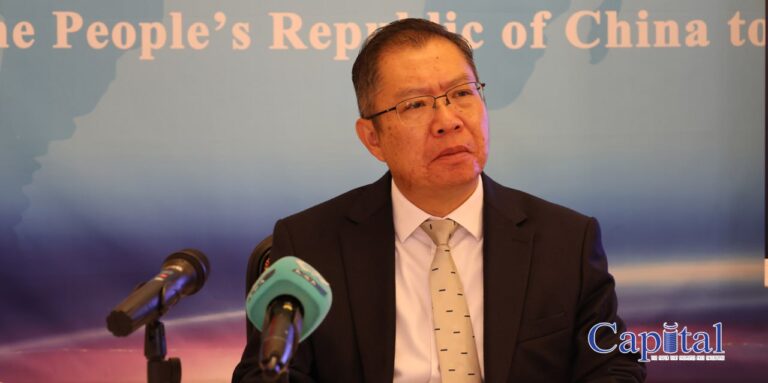
In a speech at a press and think tank briefing, Ambassador Hu Changchun, the Head of Mission of China to the African Union, highlighted the critical role the Forum on China-Africa Cooperation (FOCAC) has played over the past 24 years in strengthening the friendship and cooperation between China and Africa.

Ambassador Hu emphasized that FOCAC has been focused on achieving common prosperity and sustainable development for China and Africa, adhering to the principles of extensive consultation, joint contribution, and shared benefits. He noted that FOCAC has become an important platform for collective dialogue and an effective mechanism for practical cooperation between the two sides.

Citing a range of figures, Ambassador Hu outlined the tangible results of China-Africa cooperation under the FOCAC framework. This includes China’s direct investment in Africa exceeding $47 billion by the end of 2022, the establishment of over 3,000 Chinese enterprises in Africa, and the construction and upgrading of about 150,000 km of communication backbone networks in Africa, serving 700 million users.

China has also actively supported Africa’s industrialization, agricultural modernization, talent development, and energy transition through a series of major initiatives announced by President Xi Jinping, the ambassador noted.

Looking ahead to the upcoming FOCAC Beijing Summit, Ambassador Hu expressed confidence that China and Africa will further deepen their solidarity and cooperation, making new contributions to promoting global modernization and the building of a community with a shared future for mankind.

“The friendship of nations lies in the affinity of peoples, and the affinity of peoples lies in the affinity of hearts,” the ambassador said. “The close interaction between the two peoples has closely linked the Chinese dream and the African dream, writing the most vivid chapter of China-Africa community with a shared future.”