
Sunday, November 15, 2026
Home Blog Page 1601

Ethiopia’s external debt declines, but direct advance significantly increases

0

In comparison to the previous quarter, the external debt decreased in the third quarter of the just-ended budget year, while the direct advance (DA) has increased by more than 50%, which is not in line with the government’s policy.

In comparison to the previous quarter that closed in December 2023, the foreign debt stock decreased by 0.5 percent over the given period.

The Ministry of Finance’s (MoF) quarterly debt bulletin, which examined the debt stock for the first nine months of the 2023/24 budget year, showed that as of March 30, 2024, the foreign debt stock was recorded at USD 28.389 billion, down from USD 28.537 billion in December last year.

The debt stock decreased by USD 148 million in the third quarter, which ended on March 31, 2024, although it climbed by 0.5% when compared to the amount at the end of June 2023, the conclusion of the 2022/23 budget year.

As of June 30, 2023, the debt stock was over USD 28.25 billion.

As of March 31, 2024, the government-guaranteed and non-guaranteed state-owned enterprises (SOEs) owed 20.2 and 9.3 percent of the nation’s external debt, respectively, with the central government holding 70.4 percent of the debt.

“As per usual, IDA accounted for the majority of the total amount of external public sector debt disbursements, which totaled USD 994.63 million between July 1, 2023, and March 31, 2024,” the MoF bulletin said.

The budget year’s third quarter saw just USD 314 million distributed. The quarterly report states that less foreign financing has been disbursed recently than it has in the last two years.

“SOEs have not received a new loan in the last four years and are disbursing less and less for their older projects as they near completion and the amount of money disbursed to them decreases, as well as less disbursement from our Chinese creditors,” it reads, with Ethiopian Airlines (EAL) being the only exception.

The principal, interest, and fees for servicing foreign public sector debt were USD 812.8 million between July 1, 2023, and March 31, 2024.

The central government contributed USD 418.19 million (USD 313.25 million principal and USD 104.94 million interest) toward the overall servicing of the external debt, while SOEs, mostly EAL, paid USD 394.61 million.

Unlike the previous several years, the inflow has exceeded the outflow for the first two quarters in a row.

Recall that the government received a debt servicing halt from China and Paris Club countries for the budget year.

As of March 31, 2024, the total domestic debt stood at 2.12 trillion birr, up 10.47 percent from 1.91 trillion birr on June 30, 2023.

According to the statement, “SOEs hold 39% of the total domestic public debt, with the central government holding the remaining 61 percent.”

As of March 31, 2024, the stock value of the recently introduced domestic debt instrument had reached 80.26 billion birr.This debt instrument was launched in compliance with Directive No. MFDA/TRBO/001/2022, which requires all commercial banks to purchase a five-year treasury bond at 20% of their new loan disbursement.

The directive was issued in late 2022. In comparison to the previous quarter, the sum rose by over 14.6 billion birr; moreover, it grew by 110 percent, or 42 billion birr, from the June 2023 level. On June 30, 2023, it was 38 million birr.

As of June 30, 2023, the total outstanding amount for direct advance was 130 billion birr. That amount had climbed to 197 billion birr on March 31, 2024.

The government decided approximately a year ago to cap the rise of the DA at a third of the level of the previous year.

Nonetheless, compared to the end of the previous budget year, the DA has climbed by 51.5 percent, or 67 billion birr, in the first nine months.

The DA grew from 167 billion birr on December 31, 2023, to 197 billion birr in a single quarter. The governor of the National Bank of Ethiopia, Mamo Esmelealem Mihretu, said in August of last year that the MoF and the bank had established an understanding to use the DA facility only in the event that the market is unable to generate enough Treasury Bills and Treasury Bonds.

The overall amount of outstanding Treasury Bills climbed by 13.5 percent to about 388 billion birr on March 31, 2024, from 342 billion birr on June 30, 2023, according to the most recent MoF debt report.

Due to inadequate funding from outside partners over the last four years, the government has been compelled to turn inside, especially to DA, in order to close the budget shortfall.

Three local loan instruments, T-bills, Treasury Bonds, and DA, have yielded 155 billion birr to the government throughout the specified time.

The total amount of domestic and overseas public sector debt climbed by 3.9 percent to USD 65.8 billion on March 31, 2024, from USD 63.3 billion on June 30, 2023.

“This is because the public sector’s external debt climbed by 0.5 percent, while domestic debt increased by 6.7%,” the report said.

At the reported period, public sector debt accounted for over 40.3% of nominal GDP, with external debt accounting for nearly 17.4%. “Both percentages are much lower than the debt sustainability thresholds for low-income countries, which are 40% for external debt and 55% for total public sector debt in a medium debt carrying country.”
Beverage industry struggles amid government tax hikes and regional fees

0

The Ethiopian beverage industry is facing significant challenges due to new government taxes and regional state fees, creating a formidable burden on manufacturers. The additional financial pressures are threatening the stability of major players in the sector, including Coca-Cola and Habesha Beer.

The government has recently imposed a series of taxes on both soft drink and alcoholic beverage producers. Regional states have further complicated matters by introducing their own regulations and checkpoint fees, exacerbating the financial strain on companies.

Coca-Cola, a global leader in non-alcoholic beverages, has been particularly affected. According to Niguse Alemu, Director of Legal Communications for Coca-Cola Africa in Ethiopia, the company has seen a dramatic increase in costs associated with checkpoint fees. “Previously, we would pay an average of 5,000 birr per truck. Now, the fees have soared to between 30 and 50 birr per soft box,” Niguse explained.

The tax burden has increased with new fees becoming legally enforced rather than being paid voluntarily, as was the practice in the past. Niguse also noted that Coca-Cola’s extensive distribution network, which relies on 400 trucks, is now under severe pressure due to these rising costs. Additionally, the regional government’s recent imposition of more than 90,000 birr per truck in taxes is a sharp increase from previous levels.

Habesha Beer, another significant player in Ethiopia’s beverage market, is also struggling under the weight of these new regulations. Adane Teka, the Corporate Communications and Government Affairs Manager at Habesha Beer, highlighted how the increased checkpoint fees and regional taxes are impacting the company’s operations. “The higher costs are forcing us to raise product prices, which in turn affects consumer demand and our annual profits,” Adane said.

The situation is compounded by ongoing security concerns, which further hinder the industry’s ability to operate effectively. Security issues in regions like Oromia and Amhara have led to interruptions in production and distribution. For instance, Coca-Cola’s new factory in Sebeta, Oromia, and its modern facility in Bahir Dar, Amhara, are not operating at full capacity due to these security challenges.

The cumulative effect of rising taxes, regional fees, and security concerns is placing immense pressure on Ethiopia’s beverage industry. As the sector grapples with these challenges, there are growing fears that without significant intervention or adjustment in policies, many companies may struggle to sustain their operations.

The industry, which plays a crucial role in Ethiopia’s economy, faces an uncertain future if these issues are not addressed promptly. Both Coca-Cola and Habesha Beer emphasize the need for a more stable regulatory environment to ensure their continued success and contribution to the national economy.

Ethiopia Hosts 15th Connected Banking Summit, Spotlighting Innovation and Digital Transformation

0

The International Center for Strategic Alliances is proud to present the 15th Edition of the Connected Banking Summit, taking place in Addis Ababa, Ethiopia. This pivotal event brings together global banking executives, experts, and leaders to discuss the future of the industry under the theme “Bolstering the Economy with Digitization and Financial Inclusion.”

The summit features an impressive lineup of speakers, including high-profile figures from the Ethiopian government, banking sector, and international organizations. Dr. Yeshurun Alemayehu Adde, State Minister of the ICT and Digital Economy Sector at the Ministry of Innovation & Technology, will share insights on Ethiopia’s digital transformation initiatives.

Tilahun Esmael Kassahun, CEO of the Ethiopian Securities Exchange (ESX), will provide an update on the capital markets’ role in driving financial inclusion. Other notable speakers include senior executives from leading Ethiopian banks, such as Hibret Bank, Amhara Bank, Awash Bank, Ahadu Bank, Cooperative Bank of Oromia, and Enat Bank.

The summit also features experts from international organizations, including Endashaw Tesfaye, Digital Financial Services Expert at the United Nations Capital Development Fund (UNCDF), and representatives from cybersecurity firm Kaspersky, as well as consulting firm KPMG.

“This event is a testament to the banking industry’s commitment to innovation and digital transformation in Ethiopia,” said Mohammed Thoufiq, the organizer of the Connected Banking Summit. “By bringing together industry leaders, we aim to drive the adoption of cutting-edge technologies and foster financial inclusion, which are crucial for the country’s economic growth.”

The summit explores the impact of technologies like artificial intelligence, machine learning, and digital assets on the financial services ecosystem. It also provides unparalleled networking opportunities for C-suite executives, senior managers, and decision-makers driving the adoption of modern banking solutions.

The Connected Banking Summit is supported by a distinguished group of sponsors, including Kaspersky as the Official Cybersecurity Partner, Infosys Finacle and Panamax as Gold Sponsors, KPMG as the Knowledge Partner, and Backbase as a Bronze Sponsor.

The event coincides with the prestigious Innovation & Excellence Awards, recognizing the banking industry’s most innovative and impactful achievements. Attendees will have the chance to witness the celebration of these prestigious accolades.

For those interested in attending the 15th Edition Connected Banking Summit, a limited number of passes are still available. Professionals in the banking, financial services, and technology sectors are encouraged to register now to secure their spot at this landmark event.

Ethiopia unveils first Data Center Talent Cloud

0

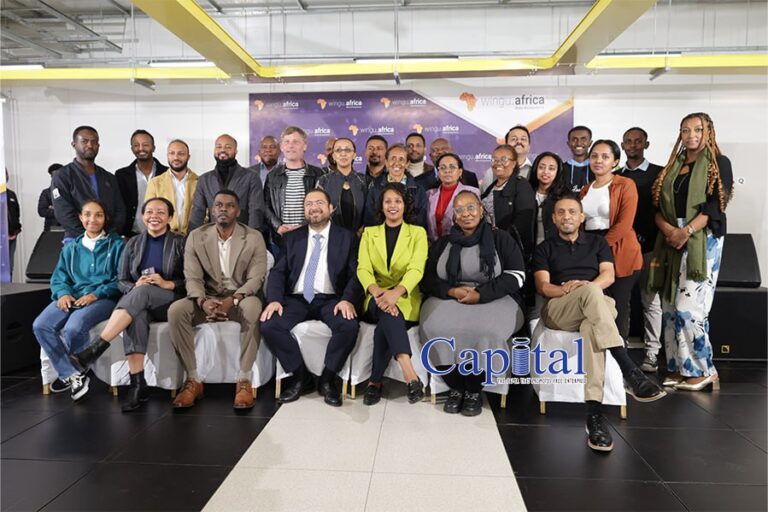
In a groundbreaking move for Ethiopia’s technology landscape, Wingu Africa and Gebeya Inc. have officially launched the country’s first data center Talent Cloud. The initiative, unveiled on Tuesday, July 23, 2024, at ICT Park in Lemikura, represents a significant step forward in developing human capital for the East African data center industry.

The new Talent Cloud solution, a collaboration between Wingu Africa, a leading carrier-neutral data center operator, and Gebeya Inc., a prominent Pan-African tech company, is set to revolutionize the industry by focusing on talent development and infrastructure innovation.

Wingu Africa’s data center, which is the first carrier-neutral facility in the region, features a Tier 3 infrastructure with the capacity to host up to 800 racks and 10 megawatts of power. Gebeya Inc. specializes in SaaS-enabled custom talent cloud innovations, complementing Wingu’s infrastructure with its expertise in technology leadership.

Demos Kyriakou, Co-Founder and Deputy CEO of Wingu Africa, expressed enthusiasm about the partnership. “We are thrilled to partner with Gebeya Inc. on this transformational initiative. Our collaboration will not only enhance the skills of many individuals but also create significant employment opportunities within the data center sector,” Demos Kyriakou said. He emphasized that the initiative aligns with their mission to advance technological development and skill-building across the continent.

Amadou Daffe, CEO of Gebeya Inc., highlighted the impact of the Talent Cloud initiative. “This Talent Cloud initiative equips individuals with essential data center capabilities and creates sustainable employment opportunities that drive economic growth in the region,” Amadou stated.

The partnership aims to train and certify 1,000 young people in data center infrastructure and technologies through their unique Skills Cloud platform over the next year. This ambitious goal underscores the commitment of both organizations to address the skills gap in the data center industry and foster a new generation of tech professionals in East Africa.
